
Writer: Adam West


Editor: Lillian Guevara-Castro


Reviewer: Ashley Fricker

Key Takeaways
Relying on a prepaid debit card can help you keep control of your expenses. Here are two I advise checking out first:
-
GO2bank™: Best overall high-limit option.
-
Current Visa Debit: Best choice for those seeking to earn points on purchases.
With the top no-limit or high-limit prepaid debit cards, you can set up a practical monthly budget without fretting about low spending caps.
A prepaid debit card isn’t a credit card. Instead of relying on a line of credit, these cards act much like a debit card and only allow you to spend whatever money you have loaded onto the card. So instead of incurring debt, these cards make it easy to complete online and in-person purchases without the risk of carrying cash.
The Best No Limit/High Limit Prepaid Debit Cards
We’ve spent a lot of time researching the best prepaid debit cards on the market to make sure our rankings reflect all of the things that matter to you, including ease of use, low costs, and high spending limits.
The best prepaid debit card options below all meet those criteria. Just remember that a prepaid debit card is not a credit card — so using one will not help you build or rebuild your credit score.

- Overdraft protection up to $300 with opt-in and eligible direct deposit*
- No monthly fees with eligible direct deposit, otherwise $5 per month
- Earn up to 7% cash back when you buy eGift Cards in the app
- Get your pay up to 2 days early – Get your government benefits up to 4 days early.*
- High-yield savings account, 4.50% APY paid quarterly on savings up to $5,000.*
*Terms and conditions apply. GO2bank™ cards are issued by Green Dot Bank, Member FDIC, pursuant to a license from Visa U.S.A., Inc. Visa is a registered trademark of Visa International Service Association. Overdraft fees may apply. Click Apply Now to learn more.

- Earn points on swipes: Earn up to 7x the points on card swipes at over 14,000 participating merchants, then redeem them for cash back in your account.*
- Get paid up to 2 days faster with direct deposit*
- If you qualify, you can access up to $1,000 before payday with a paycheck advance
- Qualifying direct deposits receive fee-free overdrafts*
- No minimum balance fees, no overdraft fees, no bank transfer fees
- Access to more than 40,000 fee-free ATMs*
- *View product disclosures here.
- Waive your monthly fee when you direct deposit $500+ in previous monthly period. Otherwise, $5.94 a month.*
- Earn 3% cash back at Walmart.com, 2% cash back at Walmart fuel stations, & 1% cash back at Walmart stores, up to $75 each year.*
- Earn 2% interest rate on up to $1,000 balance in your savings account. Plus, get chances to win cash prizes each month!*
- Get peace of mind with three coverage levels, up to $300, for purchase transactions with opt-in & eligible direct deposit.*
*Please see site for full terms and conditions.
Additional Disclosure: Walmart MoneyCard® is a debit card offer.
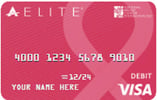
- Manage and control your money on one convenient reloadable prepaid card
- Get paid up to 2 days faster with direct deposit
- No-fee cash withdrawals of up to $100 at ACE with qualifying Direct Deposit
- Earn Payback Rewards on qualifying purchases
- Choose from 3 card designs
- As a cardholder, you can open a Tiered Optional Savings Account. Balances up to $1,000.00 currently earn up to 5.00% annual percentage yield. No minimum balance required.
What is a Prepaid Debit Card?
A prepaid debit card acts the same as a traditional bank or credit union debit card, but it does not require a bank account, checking account, or savings account for activation. Instead, you’ll create a secure card account with the card issuer where your money is stored until you spend it through your prepaid debit card.
Whereas a bank card would allow you to deposit money by visiting the financial institution, you can add money to your prepaid account by visiting a cash reload station — which varies by the card issuer.
For example, the NetSpend® Visa® Prepaid Card provides cardholders with more than 130,000 cash reload locations in the U.S., including select grocery stores, convenience stores, and check cashers.
The PayPal Prepaid Mastercard® links directly to your PayPal account and allows you to accept and send money and reload your account from several different sources.
Keep in mind that you may incur a reload fee when adding money to your account. The amount of your fee will depend on the card issuer.
You can also use any of the prepaid cards ranked above to accept direct deposits from your paycheck or other government benefits checks. This helps you get paid up to two days earlier than you would if you were to receive a paper check in the mail. Your card issuer may also allow you to access a mobile check deposit feature through its mobile application that lets you deposit a paper check virtually.
Prepaid debit cards operate on a credit card network. This means that your transactions will process through the Visa, Mastercard, or American Express network. This allows you to pay for items online or at the register while also paying bills or conducting other debit-based transactions.
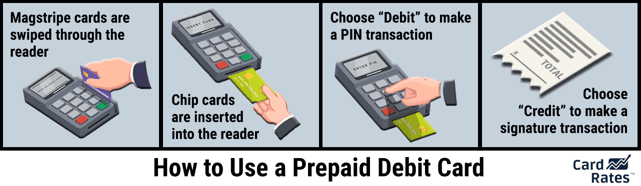
But the presence of a credit card network logo does not make this a credit card. Since your prepaid debit card does not come with an associated line of credit, your card activity will not be reported to any of the three major credit bureaus. That means that you cannot build or rebuild your credit score with a prepaid debit card.
And your reloadable prepaid card will not have a credit limit since there’s no credit attached to the account. Instead, your card may carry a daily or monthly spending limit that allows you to spend up to a certain amount of your deposited money via purchase transactions or ATM withdrawals.
Despite that limitation, a prepaid card is a great way to stick to a budget and avoid the risk of carrying large amounts of cash.
How Do I Get a Prepaid Debit Card?
A prepaid debit card is easier to obtain than a credit card because it doesn’t require a credit check or access to your credit score.
Many prepaid cards are sold over the counter at grocery stores and convenience stores, where you can purchase your card and deposit money into your card account right away at the register. You can also apply for many of the top prepaid cards online.
A prepaid card is similar to a gift card in that they allow you to load — and reload — money onto the card and spend up to your total balance to make purchases wherever you choose. You will need to provide the card issuer with some personal information when creating your account, which may include:
- Your name
- Your address (physical and email)
- Your phone number
- Your Social Security Number (though some cards don’t require a SSN)
The card issuer uses this information to verify your identity and create an account under your name. You will use this account like you would a bank account — to deposit or withdraw money and accept direct deposits and cash paper checks.
When you apply for a prepaid debit card online, the card issuer will get your card ready as soon as your account is approved. You’ll receive it in the mail within seven to 10 business days, and you can start using it immediately upon arrival.
Which Prepaid Card Has the Highest Limit?
A drawback of some prepaid debit cards is that they place different types of limits on cardholder activity. This may be a limit on how much money you can deposit into your account or a limit on how much money you can spend or withdraw from an ATM in one day.
Just as in the credit card world, you want to find a prepaid debit card with high limits that won’t restrict your financial transactions.
For instance, if your card has a low balance limit, it might stop you from getting your direct deposit paycheck. This could also be a hassle if you’re great at saving and want to set aside money for a rainy day.
All of the cards ranked above cap your balance at $15,000.
The NetSpend® Visa® Prepaid Card spending account allows cardholders to spend up to $4,999 each day using their available balance.
Although a high spending and deposit limit is a very important aspect to consider when selecting the prepaid card that’s best for you, be sure that you understand all of the other details of the card before submitting an application.
Some cards with exceptionally high limits also come with steep fees that can quickly deplete your savings, making it challenging to fully benefit from those high limits.
Can a Prepaid Card Help Me Build Credit?
A prepaid debit card does not come with an associated line of credit, so your card activity will not be reported to a credit bureau and can’t help you build credit. To build credit, consider a secured credit card that requires a refundable security deposit for approval and activation. A secured card is sometimes referred to as a prepaid credit card.
In most cases, you can qualify for a secured card without a credit check. Most of these credit cards will base your credit limit on the amount of your security deposit. For example, a deposit of $500 will yield a card with a $500 credit limit.
You can use a secured credit card as you would a traditional unsecured credit card — to make online and in-store purchases, to pay bills, or to rent a car or hotel room. Your card issuer will also report your payment and balance history to at least one credit bureau, which will help you build or rebuild your credit score over time with responsible behavior.
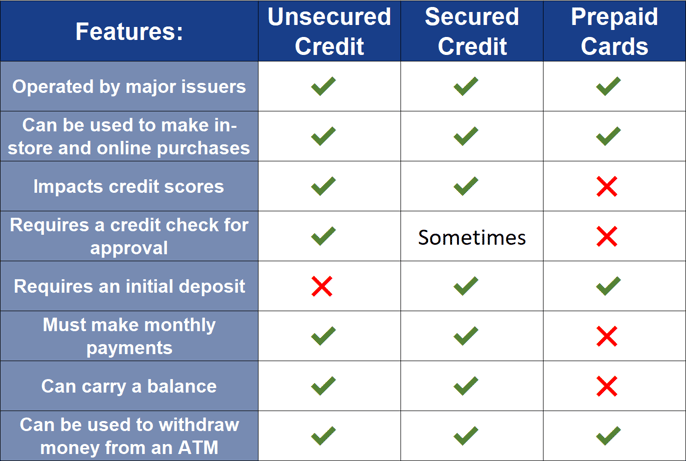
Your deposit won’t be used to pay your secured card account. Instead, the card issuer keeps it in a savings account as a safety net in case you don’t repay your credit card debt.
Think of it like when you rent an apartment. If you leave it in good shape, you get your deposit back. But if there are damages, the landlord will keep the deposit to cover those costs.
You must make a monthly payment to cover whatever charges you make with your secured credit card. Any unpaid balance will incur interest charges. When you close your account, the card issuer will refund your deposit, minus any remaining balance or fees due on your card account.
Here’s a smart way to build credit. By choosing your own credit limit, a secured credit card can help you manage your budget effectively. This way, you’re less likely to rack up debt that could spiral into financial issues.
And if you choose a secured card issuer that also provides unsecured credit card options, you could eventually qualify for a better credit card — potentially one with cash rewards — that won’t require a deposit. If that happens, the card issuer will upgrade your card and refund your security deposit automatically.
What Credit Score Do I Need to Get a Prepaid Card?
Your credit score does not matter when you apply for a prepaid debit card. That’s because a prepaid card is not a credit card and doesn’t rely on your credit history for approval.
Instead, you must deposit cash into your reloadable prepaid card account to use your card. Your purchase power is limited to the amount of money you have in your account. There is no associated revolving line of credit with a prepaid card account.
In most cases, you can apply for and receive a prepaid debit card by filling out a short online form that includes your name, address, phone number, and Social Security number.
You can visit one of your card’s reload stations (often a grocery or convenience store) to add money to your account. You can also mail in a paper check or initiate an electronic funds transfer from an existing bank account.
What Fees Do Prepaid Debit Cards Charge?
While prepaid debit cards offer convenient access to a reloadable card and account, many of them come with numerous fees that can gradually diminish your savings.
Here are some examples of the fees that your card issuer may charge. Study your card disclosure document before applying to make sure you understand just how much your card will cost you.
- Maintenance fee: This is a monthly fee that the card issuer may charge for maintaining your account. Fees vary by card type, but you could qualify for a reduced or waived monthly fee if you maintain a certain balance in your account or receive direct deposits into your card account.
- Transaction fee: You can conduct several types of transactions with your prepaid debit card, and all may come with a fee. This may include a fee when you make a purchase or withdraw money from an ATM. It may also include a fee for checking your balance through an ATM machine or even a fee when you add money to your account.
- Overdraft fee: Most prepaid cards will not allow you to spend more than the amount deposited into your account. The cards that do allow you to exceed your balance may charge an overdraft fee if you go past your account balance. You may also qualify for an overdraft protection program that reduces the fee if you go over your balance.
- Deposit and withdrawal fees: You may incur charges, such as an ATM withdrawal fee, if you attempt to withdraw money from your account through an ATM or at a reload location. A similar reload fee may apply when you deposit money into your account via cash or mobile check deposit.
- New card fee: You may have to pay a fee when the card issuer creates your first card or sends you a replacement card. This is similar to when you purchase a prepaid Visa card or a Visa debit card in a storefront and have to pay a fee for the card itself.
The fees you pay, and the amount the card issuer charges you, will vary depending on the card you add to your wallet. The possible fees listed above aren’t the only fees you may encounter but are an example of the most common fees that prepaid cards charge.
Is There a Maximum Amount You Can Load Onto a Visa Prepaid Card?
Most Visa prepaid card options will allow you to load up to $15,000 into the card account. If you’re accessing a reloadable prepaid card, you can continue to add money to your account when you spend some of your current balance.
In either scenario, though, you cannot surpass the $15,000 account balance limit.
How Can I Withdraw More Than My Card’s Daily Limit?
Some card issuers will allow you to temporarily surpass your card’s daily spending limit if you call the issuer’s customer service number located on the back of your card.
When speaking to a customer service rep, you can request a temporary spending limit increase that will allow you to complete a large transaction within a 24-hour period.
Research the Best No Limit/High Limit Prepaid Debit Cards Online
Many consumers turn to prepaid debit cards to help them securely store and save their money. These cards are great for setting a budget or helping you make online purchases where cash isn’t a payment option.
But not every prepaid debit card is the same. Some may severely limit your spending power by capping how much money you can load into your account or how much you can spend using your card each day. But with the best no limit/high limit prepaid debit cards listed above, you can build your nest egg savings and make larger purchases without worrying about a merchant declining your card.
Just remember that a prepaid card won’t help you build credit. If you want to work on improving your credit score so you can eventually qualify for a personal loan, auto loan, or mortgage, consider a secured credit card that will report your account activity and provide an affordable entry-level experience in the credit card world.
A secured card won’t disqualify you solely based on your credit score and will potentially give you a path toward qualifying for a better unsecured credit card over time.
Editorial Note: Our site content is not provided or commissioned by any credit card issuer(s). Opinions expressed on CardRates.com are the author's alone, not those of any credit card issuer, and have not been reviewed, approved, or otherwise endorsed by credit card issuers. Every reasonable effort has been made to maintain accurate information; however, all credit card offer details, including information about rewards, signup bonuses, introductory offers, and other terms and conditions, is presented without warranty. Clicking on any offer on CardRates.com will direct you to the issuer's website, where you can review the current terms and conditions of the offer.
About the Author