


Writer: Eric Bank


Editor: Lillian Guevara-Castro


Reviewer: Ashley Fricker

Twenty-one months is quite a stretch—it’s as long as an elephant’s pregnancy! This is typically the longest period available for 0% APR balance transfers, making these cards quite rare. And just to be clear, I’m talking about the cards, not the elephants.
We’ve explored the limited selection of credit cards with 21 interest-free billing cycles, as well as several more common 18-month options. These cards offer new members a smart way to tackle their credit card debt. Although some cards have limited features, many shine with additional perks.
Best 21-Month Balance Transfer Cards
These cards are like the Methuselahs of balance transfers. As a new cardmember, you get almost two years of interest-free balance transfers—a fantastic way to save money. However, be mindful of the much shorter deadlines for completing your transfers to take full advantage of the interest break.

- 0% Intro APR on balance transfers for 21 months and on purchases for 12 months from date of account opening. After that the variable APR will be 16.49% – 27.24%, based on your creditworthiness. Balance transfers must be completed within 4 months of account opening.
- There is an intro balance transfer fee of 3% of each transfer (minimum $5) completed within the first 4 months of account opening. After that, your fee will be 5% of each transfer (minimum $5).
- No Annual Fee – our low intro rates and all the benefits don’t come with a yearly charge.
- Buy now and pay later. Split your payment for eligible purchases of $75 or more into a fixed payment with Citi® Flex Pay.
- Get free access to your FICO® Score online.
Additional Disclosure: Citi is a CardRates advertiser.
Citi offers excellent balance-transfer credit cards, including the Citi® Diamond Preferred® Card. Only the balance transfers you complete in the first four months will get the 0% interest rate, after which the regular APR will kick in. Each balance transfer transaction has a fee of $5 or 5%, whichever is greater.
Apart from its balance transfer offer (and shorter 0% APR promotion for purchases), the card provides free FICO scores and special access to entertainment events. This card requires applicants to have good to excellent credit.
- 0% Intro APR on balance transfers and purchases for 18 months from date of account opening. After that, the variable APR will be 17.49% – 28.24%, based on your creditworthiness. Balance transfers must be completed within 4 months of account opening.
- There is an intro balance transfer fee of 3% of each transfer (minimum $5) completed within the first 4 months of account opening. After that, your fee will be 5% of each transfer (minimum $5).
- No Late Fees, No Penalty Rate, and No Annual Fee… Ever
- $0 liability on unauthorized charges.
Additional Disclosure: The information related to Citi Simplicity® Card has been collected by CardRates.com and has not been reviewed or provided by the issuer or provider of this product or service.
The Citi Simplicity® Card’s balance transfer promotion accompanies a 0% purchase APR. This card also targets applicants with good to excellent credit looking for a low-fee card.
As with similar Citi cards, this one limits the 0% APR to transfers you complete within the first four months. There is an introductory balance transfer transaction fee of $5 or 3%, whichever is greater, for each balance transfer you complete within four months of account opening. Balances will be subject to the regular APR after the promotional period expires.

- 0% intro APR for 21 months from account opening on purchases and qualifying balance transfers, a variable APR thereafter. Balance transfers made within 120 days from account opening qualify for the introductory rate.
- $0 Annual Fee
- Get up to $600 of cell phone protection when you pay your monthly cell phone bill with your eligible Wells Fargo card (subject to a $25 deductible).
- Through My Wells Fargo Deals, you can have access to personalized deals from a variety of merchants. Activate your deals, then shop, dine, or enjoy an experience using an eligible Wells Fargo credit card.
- Zero liability protection plus Roadside Dispatch®
Additional Disclosure: The information related to this card has been collected by CardRates and has not been reviewed by the issuer of this product.
The BankAmericard® credit card comes with no annual fee and welcomes applicants with good to excellent credit. It provides a competitive interest rate and an initial credit limit that typically ranges between $1,000 and $10,000.
You don’t need a Bank of America account for card approval. Only the balance transfers you complete in the first 60 days qualify for the 0% APR. Each transfer incurs a transaction fee ($10 minimum). The regular APR will apply when the promotional period ends.

- For a limited time, get a special 0% introductory APR on purchases and balance transfers for 24 billing cycles. After that, the APR is variable.
- Earn 4% cash back on prepaid air, hotel and car reservations booked directly in the Travel Center when you use your card
- Get up to $600 reimbursement if your cell phone is stolen or damaged when you pay your monthly cell phone with your card
- View your credit score anytime, anywhere in the mobile app or online banking. It’s easy to enroll, easy to use, and free to U.S. Bank customers.
- Get an opportunity to set up a 3-month $0 ExtendPay Plan offer each calendar year after the new account 0% introductory purchase APR offer has expired
- $0 Annual Fee
Additional Disclosure: The information related to this card has been collected by CardRates.com and has not been reviewed or provided by the issuer of this product.
The U.S. Bank Shield™ Visa® Card offers an introductory 0% APR on balance transfers and purchases. The deadline for participating balance transfers is 60 days following account opening.
The card’s balance transfer fee is 3% of each transfer amount with a $5 minimum. While this card doesn’t offer rewards, you’ll benefit from features like cellphone insurance, ID theft protection, and free credit scores. To qualify for this no-annual-fee card, you’ll need good to excellent credit.
What Are 0% Balance Transfer Credit Cards?
A 0% balance transfer credit card offers new customers interest-free financing on balance transfers for six to 21 months or longer. You can transfer existing credit card balances — up to the new card’s limit — and repay the balance interest-free during the promotional period.
These offers differ across card issuers. If you have outstanding balances on one or more credit cards, these cards can help you save a lot on interest charges. With a 0% balance transfer credit card, your payments go directly toward reducing your transferred balances without the burden of interest costs.
How Do I Get a Balance Transfer Credit Card?
You can apply online for a balance transfer card by providing information about yourself and your finances.
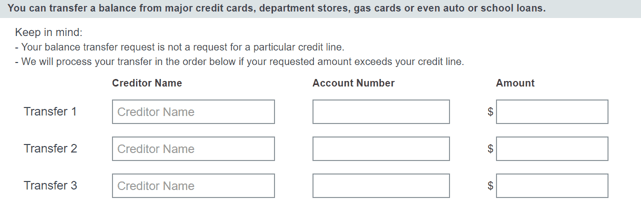
Once you’re approved, the issuer will let you know your APRs and credit limit. From there, you can sign your credit card agreement online and usually expect the card to arrive within three to 10 business days.
Do Balance Transfers Hurt Credit Scores?
Balance transfers can enhance your credit score if you use them to consolidate debt and reduce your overall credit utilization ratio (CUR). But if you start spending on your old cards, now with $0 balances, you might end up damaging your score instead.
To figure out your CUR, simply divide the total of your current credit card balances by your available credit limits. Both FICO and VantageScore take your CUR into account in their scoring models. While FICO considers a 1% CUR as ideal, VantageScore is a bit more lenient, allowing up to 30% without negatively impacting your score.
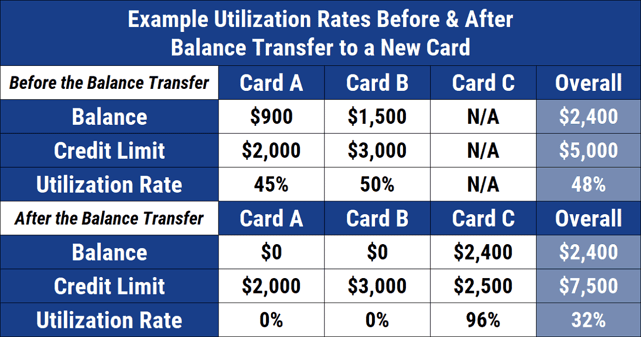
The smartest way to enhance your credit with balance transfers is to avoid racking up new credit card debt while you’re focused on clearing the transferred balance.
How Much Can I Save With a 21-Month Balance Transfer?
Your savings from a 21-month balance transfer hinge on the transferred amounts and the previous interest rates. Even with a 3% to 5% transfer fee, you could save hundreds or even thousands.
Let’s say Card A has an average monthly balance of $1,000 with a 20% APR. Over a year, you’d shell out about $200 in interest (that’s 20% of $1,000), and roughly $350 over 21 months (calculated as $200 x 21/12).
You would save $350 minus the $30 transfer fee, or $320, by transferring to Card B with its 0% APR promotion.
The following table shows estimated savings for various transferred amounts:
Potential Savings For a 0% Intro-APR Offer vs. a 20% APR Credit Card
| Amount Transferred to the New Card | Cost of 3% Balance Transfer Fee | Estimated Savings Over 21 Months |
|---|---|---|
| $1,000 | $30 | $320 |
| $2,500 | $75 | $800 |
| $5,000 | $150 | $1,600 |
| $7,500 | $225 | $2,400 |
| $10,000 | $300 | $3,200 |
The higher your balance, the more you can save.
What If I Don’t Repay the Entire Transferred Balance Within the 0% Intro APR Period?
Any unpaid transferred balances will incur the card’s standard APR once the introductory period expires. You should repay the entire transferred amount before the end of the promotion if you want to avoid extra charges.
Many balance transfer promotions extend 0% interest to transfers occurring only within the first four months from account opening. Any balance transfers you perform after the deadline will incur the card’s regular APR.
Most credit cards have the same standard APRs for purchases and balance transfers, but you can only be sure by checking the card’s fee schedule.
Remember that the issuer will likely terminate any 0% APR promotions if you miss a payment. That’s an important reason to ensure you make timely payments, especially during promotional periods.
Are 0% Balance Transfers a Good Idea?
With a balance transfer, you can reduce interest, simplify your monthly bills, and possibly give your credit score a lift by replacing multiple minimum payments with one. Still, keep an eye on the drawbacks, including transfer fees, the return of the regular APR, and the temptation to run up new balances on cards you’ve already paid down.
Pros
The advantages of balance transfers include the following:
- Saving interest costs: You may save hundreds or thousands of dollars by avoiding the typical APRs on outstanding credit card balances. These interest rates may reach as high as 36%.
- Reducing the number of monthly payments: You must remember to pay monthly on each credit card with an outstanding balance. Not only is that extra work, but it creates the possibility of forgetting to make a payment and triggering late fees. Consolidating your credit card debt resolves this problem.
- Boosting your credit score: Getting a new balance transfer card improves your credit utilization ratio by increasing your available credit. You further decrease your CUR by consolidating your balances on one card, mothballing your other cards, and paying down your single outstanding balance. Your credit score may improve as you reduce your CUR.
- Avoiding multiple minimum payments: You must pay at least the minimum amount on each card with an outstanding balance. Minimum payments mainly cover interest charges, meaning you make almost no progress repaying your balances. Consolidating your card balances in one place means a larger percentage of your monthly payment goes toward paying off your principal.
Your strongest move is to roll your credit card debt into the 0% APR window, pay down the transferred balance, and stay current on any new charges each month. Done right, this can lower your CUR and help strengthen your credit score over time.
Cons
Balance transfers have a few disadvantages:
- Reversion to regular APR: You must pay the card’s regular variable APR on any transferred balances you fail to repay by the end of the promotional period. If the card has a high regular APR, you may spend more than if you had not transferred the balance.
- Temptation: You may experience the temptation to go shopping with a credit card after you transfer its balance elsewhere. This may lead to overspending, increasing your overall debt, and possibly hurting your credit. A good rule of thumb is only to charge what you can afford to repay monthly.
- Fees: Typically, you must pay 3% to 5% of each transferred amount, reducing your net savings by a small amount.
While you can’t always avoid balance transfer fees, you can manage other potential pitfalls. By staying disciplined now, you can dodge significant debts in the future.
Do Credit Cards Ever Waive the Balance Transfer Fee?
Balance transfer fees used to be easier to avoid, but that’s rarely the case now. You may still spot an exception at some credit unions, though most cards charge a fee of about 3% to 5% of the amount you transfer.
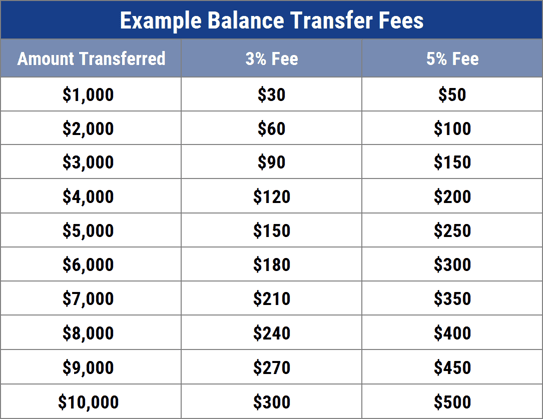
Many cards impose a 3% fee during the promotional transfer period (or by a set deadline within that period) and 5% afterwards. The minimum fee is typically $5 or $10.
Can I Serially Transfer Balances to One Card After Another?
Theoretically, it’s possible to shuffle your outstanding balance to a new 0% APR balance transfer credit card from your current one after its promotional period ends. But first, you must qualify for a new card with a suitable promotion and avoid the restrictions some issuers place on transfers between their cards.
It may make sense to transfer your credit card’s outstanding balance to another card offering a good 0% APR promotion and a high credit limit once your current promotion ends. You will have to apply for a new card, which may impact your credit score.
Also, some issuers, such as Capital One, prohibit balance transfers among their credit cards.
In sum, serial transfers are OK if you are confident about obtaining new balance transfer credit cards when necessary.
Enjoy Interest-Free Debt For 21 Months With a Balance Transfer Card
If, after reading this review, you feel 0% balance transfer for 21 months credit cards are the best things since sliced bread, you have a few good choices. If you can settle for an 18-month promotional period, many more options are available. In any case, be sure to pay off the transferred amount before the promotion expires, lest you suddenly expose yourself to the card’s variable APR.
Editorial Note: Our site content is not provided or commissioned by any credit card issuer(s). Opinions expressed on CardRates.com are the author's alone, not those of any credit card issuer, and have not been reviewed, approved, or otherwise endorsed by credit card issuers. Every reasonable effort has been made to maintain accurate information; however, all credit card offer details, including information about rewards, signup bonuses, introductory offers, and other terms and conditions, is presented without warranty. Clicking on any offer on CardRates.com will direct you to the issuer's website, where you can review the current terms and conditions of the offer.
About the Author

![0% For 24 Months Balance Transfer Cards[updated_month_year before=" (" after=")"]](https://www.cardrates.com/images/uploads/2023/08/0-Percent-For-24-Months-Balance-Transfer-Cards.jpg?width=164&height=85 "0% For 24 Months Balance Transfer Cards[updated_month_year before=\" (\" after=\")\"]")
![0% For 12+ Months: Balance Transfer Cards[updated_month_year before=" (" after=")"]](https://www.cardrates.com/images/uploads/2023/08/0-percent-for-12-months-balance-transfer-cards.jpg?width=164&height=85 "0% For 12+ Months: Balance Transfer Cards[updated_month_year before=\" (\" after=\")\"]")
![5 Best 0% Balance Transfers For 18+ Months[updated_month_year before=" (" after=")"]](https://www.cardrates.com/images/uploads/2021/05/Best-0-Balance-Transfers-For-18-Months.jpg?width=164&height=85 "5 Best 0% Balance Transfers For 18+ Months[updated_month_year before=\" (\" after=\")\"]")
![9 Best Balance Transfer & Rewards Credit Cards[updated_month_year before=" (" after=")"]](https://www.cardrates.com/images/uploads/2017/09/btandrewards.png?width=164&height=85 "9 Best Balance Transfer & Rewards Credit Cards[updated_month_year before=\" (\" after=\")\"]")
![7 Best 0% Balance Transfer Credit Cards[updated_month_year before=" (" after=")"]](https://www.cardrates.com/images/uploads/2020/11/shutterstock_1495481012.jpg?width=164&height=85 "7 Best 0% Balance Transfer Credit Cards[updated_month_year before=\" (\" after=\")\"]")
![5 Easiest Balance Transfer Cards to Get[updated_month_year before=" (" after=")"]](https://www.cardrates.com/images/uploads/2023/07/Easiest-Balance-Transfer-Cards-to-Get.jpg?width=164&height=85 "5 Easiest Balance Transfer Cards to Get[updated_month_year before=\" (\" after=\")\"]")
![5 Balance Transfer Cards For 650-700+ FICO Score[updated_month_year before=" (" after=")"]](https://www.cardrates.com/images/uploads/2023/08/Balance-Transfer-Cards-For-600-700-FICO-Score.jpg?width=164&height=85 "5 Balance Transfer Cards For 650-700+ FICO Score[updated_month_year before=\" (\" after=\")\"]")
![5 Longest 0% APR Balance Transfer Cards[updated_month_year before=" (" after=")"]](https://www.cardrates.com/images/uploads/2023/09/Longest-0-APR-Balance-Transfer-Cards.jpg?width=164&height=85 "5 Longest 0% APR Balance Transfer Cards[updated_month_year before=\" (\" after=\")\"]")