Eric Bank is an M.B.A. who has covered financial and business topics since 1985, appearing regularly on Credible, eHow, WiseBread, The Nest, Zacks, Chron, BadCredit.org and dozens of other outlets. Eric specializes in taking complex subject matters and explaining them in simple terms for consumer audiences, particularly in the world of personal finance. Eric holds a Master's in Business Administration from New York University and a Master's in Finance from DePaul University.
Ashley Fricker has more than a decade of experience as a finance contributor and editor, and has specialized in the credit card industry since 2015. Her credit card commentary is featured on national media outlets that include CNBC, MarketWatch, Investopedia, and Reader's Digest, among many others. She has worked closely with the world’s largest banks and financial institutions, up-and-coming fintech companies, and press and news outlets to curate comprehensive content and media. Ashley holds a bachelor's degree in multimedia journalism from Florida Atlantic University.
With more than 10 years of accounting experience, Danielle Marshall has a deep understanding of many financial disciplines, including personal and commercial lending, retirement annuities, financial forecasting, and general bookkeeping. She has a bachelor's degree from the University of Florida's Fisher School of Accounting and currently manages all accounts receivable and payable for the parent company of CardRates.com. She works directly with credit card issuers and advertising partners to ensure our content meets compliance expectations and regulatory standards.
Below are our ratings of 2026's top Discover® credit cards. This issuer has a well-earned reputation for offering easy-to-use rewards cards backed by excellent customer service.
Disclosure: When you apply through links on our site, we often earn referral fees from partners. For more information, see our ad disclosure
Advertiser Disclosure
CardRates.com is a free online resource that offers valuable content and comparison services to users. To keep this resource 100% free, we receive compensation for referrals for many of the offers listed on the site. Along with key review factors, this compensation may impact how and where products appear across CardRates.com (including, for example, the order in which they appear). CardRates.com does not include the entire universe of available offers. Editorial opinions expressed on the site are strictly our own and are not provided, endorsed, or approved by advertisers.
Our experts rate credit card offers based on factors like rewards, APRs, signup bonuses, fees, and approval rates, with a focus on benefits that provide the best value. We also consider cardholder needs such as credit-building potential, issuer reputation, and customer service. Our ratings are unbiased, updated regularly, and not influenced by issuers.
Get a 0% intro APR for 15 months on purchases and balance transfers; balance transfer fee applies. Then 17.74% - 26.74% Standard Variable Purchase APR applies, based on credit worthiness
INTRO OFFER: Unlimited Cashback Match for all new cardmembers. Discover will automatically match all the cash back you’ve earned at the end of your first year! There’s no minimum spending or maximum rewards. You could turn $150 cash back into $300
Earn 5% cash back on everyday purchases at different places you shop each quarter like grocery stores, restaurants, gas stations, and more, up to the quarterly maximum when you activate. Plus, earn unlimited 1% cash back on all other purchases
Our experts rate credit card offers based on factors like rewards, APRs, signup bonuses, fees, and approval rates, with a focus on benefits that provide the best value. We also consider cardholder needs such as credit-building potential, issuer reputation, and customer service. Our ratings are unbiased, updated regularly, and not influenced by issuers.
0% intro APR for 15 months on purchases and balance transfers; balance transfer fee applies. Then 17.74% - 26.74% Standard Variable Purchase APR will apply
UNLIMITED BONUS: Unlimited mile-for-mile match for all new cardmembers. Discover gives you an unlimited match of all the miles you’ve earned at the end of your first year. There’s no signing up, no minimum spending or maximum rewards. Just a mile-for-mile match. You could turn 35,000 miles into 70,000 miles
Automatically earn unlimited 1.5x miles on every dollar of every purchase
No annual fee
Turn miles into cash. Or redeem as a statement credit for your travel purchases like airfare, hotels, rideshares, gas stations, restaurants, and more. Redemption rates for these options may vary and are subject to change
Our experts rate credit card offers based on factors like rewards, APRs, signup bonuses, fees, and approval rates, with a focus on benefits that provide the best value. We also consider cardholder needs such as credit-building potential, issuer reputation, and customer service. Our ratings are unbiased, updated regularly, and not influenced by issuers.
Get a 0% intro APR for 18 months on balance transfers and 0% intro APR on purchases for 6 months; balance transfer fee applies. Then 17.74% to 26.74% Standard Variable APR applies, based on credit worthiness
INTRO OFFER: Unlimited Cashback Match for all new cardmembers. Discover will automatically match all the cash back you’ve earned at the end of your first year! There’s no minimum spending or maximum rewards. You could turn $150 cash back into $300
Earn 2% cash back at Gas Stations and Restaurants on up to $1,000 in combined purchases each quarter, automatically. You'll still earn unlimited 1% cash back on all other purchases
Our experts rate credit card offers based on factors like rewards, APRs, signup bonuses, fees, and approval rates, with a focus on benefits that provide the best value. We also consider cardholder needs such as credit-building potential, issuer reputation, and customer service. Our ratings are unbiased, updated regularly, and not influenced by issuers.
0% intro APR on purchases for 6 months, then the standard variable purchase APR of 16.74% - 25.74% applies
INTRO OFFER: Unlimited Cashback Match for all new cardmembers. Discover will automatically match all the cash back you’ve earned at the end of your first year! There’s no minimum spending or maximum rewards. You could turn $50 cash back into $100. Or turn $100 cash back into $200
Earn 2% cash back at Gas Stations and Restaurants on up to $1,000 in combined purchases each quarter, automatically. You'll still earn unlimited 1% cash back on all other purchases
Our experts rate credit card offers based on factors like rewards, APRs, signup bonuses, fees, and approval rates, with a focus on benefits that provide the best value. We also consider cardholder needs such as credit-building potential, issuer reputation, and customer service. Our ratings are unbiased, updated regularly, and not influenced by issuers.
0% intro APR on purchases for 6 months, then the standard variable purchase APR of 16.74% - 25.74% applies
INTRO OFFER: Unlimited Cashback Match for all new cardmembers. Discover will automatically match all the cash back you’ve earned at the end of your first year! There’s no minimum spending or maximum rewards. You could turn $50 cash back into $100. Or turn $100 cash back into $200
Earn 5% cash back on everyday purchases at different places you shop each quarter like grocery stores, restaurants, gas stations, and more, up to the quarterly maximum when you activate. Plus, earn unlimited 1% cash back on all other purchases
Editor’s Note: Capital One completed its acquisition of Discover Financial Services on May 18, 2025. Capital One intends to continue offering Discover credit card products as Discover-branded cards alongside its own consumer card lineup. The cards, rewards, and benefits described in this guide remain available, though the integration between the two companies is ongoing. We’ll update this page as changes are announced.
1. How Does a Discover Credit Card Work?
There really isn’t anything surprising in how Discover credit cards work — if you’ve ever owned a credit card, you’ll understand how to use your Discover card.
Discover offers cards to consumers of all credit types, from no credit to excellent credit. If your application is accepted, you’ll receive your plastic card in about a week, and you can start using it after you activate it online or over the phone.
An unsecured Discover card will have a credit limit based on your creditworthiness. You can charge purchases on your Discover card up to the credit limit without incurring any interest charges if you pay your entire balance by the next monthly payment date.
If you wish, you can stretch out your payments over multiple billing cycles as long as you make the minimum payment each month. You’ll be charged interest on your unpaid balances at the annual percentage rate (APR, which is based on the prime rate) you were given when the card was issued.
All Discover cards report your payment activity to the three credit bureaus (Experian, TransUnion, and Equifax). Your credit score depends on whether you pay your bills on time and control your use of credit.
Most credit scores are eligible for a Discover card, but the variable APR and credit limit will depend on your score.
2. Is Discover Card a Good Credit Card?
Note: Capital One completed its acquisition of Discover Financial Services in May 2025. Discover cards continue to be issued under the Discover brand, and existing cardholder accounts, rewards, and benefits remain unchanged. This guide reflects current Discover card offerings.
We’ve always liked the credit cards issued by Discover due to their competitive APRs, low fees, solid benefits, and a variety of reward schemes. Discover cards are structurally sound, with wide acceptance, no annual fees, 25-day grace periods, no penalty APRs, and no penalty fee on the first time you miss a payment date.
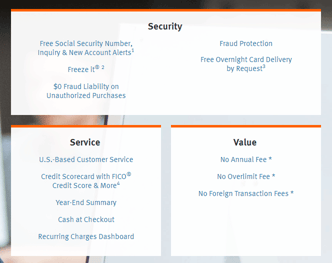
Popular benefits found on all Discover credit cards.
Core features found on Discover cards include Cashback Match™ (see FAQ #6), cash advances, balance transfers, and free overnight card replacement. The Freeze it® feature allows you to lock your card against new purchases, balance transfers, and cash advances while allowing recurring bills and other selected activities to continue.
You’ll also have free access to your FICO Score from TransUnion, and free identity alerts informing you about new inquiries, new accounts, and Dark Web activity.
On the minus side, Discover cards do not offer the traditional welcome bonus cash rewards. However, they do offer new cardmembers a 0% intro purchase APR (and possibly balance transfers, where fees apply) after opening the account. The regular APR will apply at the end of the promotional period.
A Discover credit card offer for cash back is structured as a flat, tiered, or rotating reward scheme. Unless stipulated otherwise, Discover cards offer Cashback Match that doubles the cash back you earn for the first year.
The following are the rewards offered by each card:
Discover it® Cash Back: This rewards card provides bonus cash back when you activate quarterly rotating categories of merchants, up to the quarterly maximum. You earn unlimited 1% cash back on all other everyday purchases. An introductory 0% APR offer may apply to purchases and/or balance transfers, after which the standard APR will apply.
Discover it® Miles: Provides a flat reward of miles on all purchases. You get an unlimited mile-for-mile match that automatically matches all the miles you earned at the end of the first year. You can redeem your miles for travel or cash, and miles never expire. An introductory 0% APR offer may apply to purchases and/or balance transfers, after which the standard APR will apply.
Discover it® Chrome: Another rewards card with tiered cash back offering bonus cash back on up to $1,000 in combined quarterly purchases at restaurants and gas stations. Everyday purchases earn unlimited 1% cash back. An introductory 0% APR offer may apply to purchases and/or balance transfers, after which the standard APR will apply.
Discover it® Student Cash Back: You get bonus cash back after activation in merchant categories that rotate quarterly, up to the quarterly maximum. All other purchases earn unlimited 1% cash back. The card also offers an introductory 0% APR period on purchases to new cardholders. After the promotional period, the 16.74% - 25.74% Variable APR applies.
Discover it® Student Chrome: You earn bonus cash back on up to a set purchase limit in combined quarterly purchases at gas stations and restaurants. All other purchases earn unlimited 1% cash back. A new cardholder also enjoys an introductory 0% APR period on purchases. Once the promotional period ends, the 16.74% - 25.74% Variable APR applies.
Always read any card’s fine print to verify rewards and restrictions. You may also find special promotions, including fee discounts or waivers, available until a specified expiration date.
4. What Can I Redeem My Rewards For?
Your Discover miles or cash rewards never expire and are redeemable in any amount. Cash back rewards can be redeemed in several ways, including for a statement credit, gift card, or an electronic deposit to your bank account, among other options. You can also redeem rewards for:
A donation to select charities
An instant eCertificate from partnering merchants
Purchases at Amazon.com
Purchases with PayPal
The Discover it® Miles card pays rewards in miles. You can convert the miles to cash at the rate of 100 miles = $1.00 and redeem the cash as described above for cash back cards.
You can also apply your miles for a travel purchase credit on your statement made within the last 180 days. Travel purchases include:
Car rentals
Charter/tour bus lines
Commercial airline tickets
Cruises
Hotel rooms
Local and suburban commuter transportation, including ferries and passenger railways
Taxicabs and limousines
Tour operators
Vacation packages purchased through airlines, travel agents, and online travel sites
You earn rewards only on purchases, excluding balance transfers, cash advances, and illegal transactions. You also don’t earn rewards when you get a cash advance at the checkout line at selected merchants.
Discover rewards do not expire for the life of the account, and if your account is closed, Discover will send you a check or credit the account with the remaining rewards balance.
5. How Does the Unlimited Discover Cashback Match™ Work?
Discover cards are famous for their Cashback Match™ feature. It pays you $1 for each $1 you earned in cash back rewards during the first 365 days (or 12 consecutive billing cycles, whichever is less) after opening the account. In effect, you get double rewards for the first year.
The matching cash will be rewarded within two billing periods after the end of the first year. The 365-day limit on matches applies to when cash back is processed, not the transaction date.
There are no minimum or maximum spending limits to earn the Cashback Match, but you will forfeit your Match if you close your account before your card’s one-year anniversary.
You can redeem cash back at any time without affecting your Cashback Match. Visit Discover’s Cashback Summary page to track how much cash back you’ve earned. You must be a new cardholder to qualify for Cashback Match.
6. Which Discover Credit Card is the Best?
The best Discover credit card is the one that best matches your lifestyle. They all offer Cashback Match (or mile-for-mile match) and no annual fee, among other perks.
The Discover it® Cash Back is a good choice for many consumers. You can get bonus cash back in rotating quarterly merchant categories — up to the quarterly purchase limit — when you activate the bonus category each quarter.
Doing a little math, during the first year, you can earn 5% x $1,500 per quarter x 4 quarters per year x 2 (for Cashback Match). That’s $600 cash back, plus whatever else you earn on 1% non-bonus purchases.
If you spend $20,000 on the Discover it® Cash Back card during the first year, of which $6,000 earns 5% cash back and $14,000 earns 1%, you can earn ($600 + (1% x $14,000 x 2 for Cashback Match)), or $880 in first-year cash back.
Before selecting this card, consider whether you want to deal with the quarterly rotating merchant category scheme. To extract maximum value, you need to activate the new category each quarter and plan your spending to maximize your benefit from the current category. If you forget to activate the quarterly category or fail to spend the limit, you’ll earn less than the maximum possible.
A simpler choice is the Discover it® Chrome since it offers a lesser reward rate on gas stations and restaurant spending. Naturally, if you don’t drive much or regularly dine out, this card may not be a good choice.
You may prefer the Discover it® Miles if you regularly travel and want to accumulate travel rewards. You can use the miles you earn on purchases with this card to pay for travel-related expenses, including plane tickets, hotel stays, car rentals, and dining out.
You can also convert the miles to cash if you prefer. If you spend $20,000 to earn 30,000 miles and convert them to cash, your first-year reward would be 30,000 miles x ($1 per 100 miles) x 2 for Cashback Match = $600 cash back earned in Year One.
While that’s $280 less than the Discover it® Cash Back example, you don’t have to track or activate quarterly categories or worry about purchase limits. You can relax knowing that the Discover it® Miles card rewards you equally for all your purchases.
If you are a student, Discover beats most of its competitors by offering not one student credit card, but two options.
7. Is it Hard to Get a Discover Credit Card?
Discover’s credit cards approve consumers with no credit all the way to excellent credit. In other words, most folks can qualify for an unsecured Discover card.
You can apply for a Discover credit card online through the Apply Now links above that will direct you to Discover’s website.
8. Which Discover Card is the Easiest to Get?
Generally, secured credit cards are the easiest to obtain, but a student card is also easy to obtain. Discover offers a solid pair of student cards (see FAQ #12).
9. Which FICO Score Does Discover Use?
FICO from the Fair Isaac Company dominates the credit score market, and it is used by 90% of top lenders. FICO publishes several different scoring models, but the one used by almost every credit card issuer or bank advertiser is FICO Score 8, with a score range of 300 to 850.
The three credit bureaus implement FICO Score 8, but the results need not be identical because of variations in the data available to each bureau. Discover provides cardmembers free access to their FICO Score 8 from TransUnion. The score Discover provides represents a monthly snapshot, so always note the as-of date when you access your score.
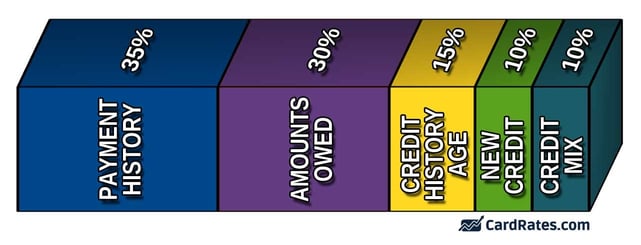
The FICO Score 8 system calculates your score using five credit-related factors. Each factor comprises a percentage of your total score, as follows:
Other scoring systems use different schemes to calculate your credit score.
10. Which Discover Card is Best for Students?
Discover has a pair of student credit cards that are offered to students who typically have little or no credit history. The Discover student cards offer cash back rewards, charge no annual fee, and help you build your credit history.
Your choice of student credit card rests on which rewards scheme you prefer:
Discover it® Student Cash Back: This card has a more complex and more generous reward scheme. It uses a quarterly rotating set of merchants at which you receive bonus cash back on purchases up to the quarterly spending limit. You must activate the card each quarter to receive the bonus cash back, and all other purchases earn 1%. It offers a 0% Intro APR for 6 months on purchases made by new cardmembers, after which the standard APR applies.
Discover it® Student Chrome: This card offers bonus cash back on purchases at restaurants and gas stations, and 1% on all other purchases. The bonus cash back is capped each quarter at a slightly lower spending limit. Like the card above, it also offers a 0% Intro APR for 6 months on purchases made by new cardmembers, after which the standard APR applies.
The Discover it® Student Cash Back pays more if you’re willing to activate categories and hit the quarterly spending limits. The Discover it® Student Chrome is simpler but earns less. Both cards offer an introductory APR on purchases, which is worth considering if you’re planning any larger purchases early on.
11. Does Discover Allow Balance Transfers?
Balance transfers allow you to consolidate the balances from two or more credit cards onto a single card. All Discover cards do indeed permit balance transfers and several cards offer introductory 0% APR promotional financing to new cardmembers, after which the promotional APR will revert to the standard purchase APR. However, the introductory APR promotion for balance transfers isn’t available on all cards.
With a Discover card balance transfer, you instruct a Discover representative to transfer the balances from your other credit cards. Alternatively, you can submit a balance transfer application online.
Either way, each transfer will usually take one to two weeks and will incur a one-time fee. You can transfer only up to your card’s credit limit minus any outstanding balance. The reasons to transfer credit card balances include:
Save money: You save money on interest when you transfer balances to a credit card with a lower APR. The benefit is maximized when you transfer to a credit card with a 0% APR promotion on balance transfers.
Faster debt payoff: You can speed up debt repayment by saving on a lower APR and by avoiding multiple minimum payments when you have balances on multiple cards. You can instead concentrate on paying off the one card holding the transferred balances.
Easier scheduling: After you consolidate your credit card balances, you have only one card payment to make each month assuming you leave the other cards dormant. This makes it much easier to avoid missing a payment and triggering penalties.
If you do go through with a balance transfer, consider how you can stay out of debt during the process. You can start by curbing spending so you don’t accumulate more debt as you pay down your transferred balances. It’s helpful to choose a card with a 0% APR promotion period of at least 12 months so that you have enough time to pay off your balance.
It’s not a good idea to string together multiple cards offering 0% APR promotions. Doing so will cost you extra fees and reduce your motivation to pay off your balance quickly. While you should avoid using your old cards when paying down your balance, don’t cancel the old cards, since that will increase your credit utilization and can hurt your credit score.
12. How Can I Increase My Discover Credit Limit?
If you find yourself in a good financial position, a higher credit limit may be a worthwhile idea. A higher limit lets you make bigger purchases on a single card. It also has the potential to provide bigger cash advances if you face a financial emergency.
Phone: By calling 1-800-347-2683 and speaking to a customer representative.
Online: Log onto your account at the Discover website and complete the request form.
Get a new card: If you are using an old Discover card with a low credit limit, your credit history may allow you to obtain another Discover card with higher limits. This is especially true if you have one of the student cards offered by Discover.
Be patient: Discover may reward you for exemplary credit habits by offering you a credit limit increase without a request from you.
If you need to negotiate a higher limit with a customer rep, discuss why you earned it rather than why you need it. Point out things like a higher salary, lower fixed costs, a second job, and your history of on-time payments.
13. Is Discover Better than Visa?
Discover operates as both a card issuer and a payment network — a dual role it shares with American Express. That dynamic shifted in May 2025 when Capital One completed its $35.3 billion acquisition of Discover. Capital One now owns the Discover network and has begun issuing some of its own cards on it, though Discover-branded cards remain available and continue to operate as before.
Visa is simply a payment network. It works with outside banks and credit unions that issue their own Visa-branded credit card products.
Comparing Discover to Visa reveals that they both are both widely accepted in the United States and abroad. They also charge similar processing fees. Discover stands out for its first-year Cashback Match and low fees.
Of course, many different cards bear the Visa logo and thereby offer a much greater variety than the eight available Discover cards. But not all Visa cards have the standard perks of a Discover card, such as no annual or foreign transaction fees.
14. How Many Discover Cards Can You Have?
Discover limits you to owning no more than two of its cards at any one time. You must own your first Discover card for a year before applying for the second card. But it’s worth noting that the two-card limit rule may evolve as Capital One integrates the brand.
This is a simple, albeit strict, cap on the number of Discover cards you can own at any one time. Chase has its 5/24 Rule, which prevents you from getting a new Chase card when you’ve opened five or more new credit accounts within the past two years.
Other credit card companies also place limits on card ownership. Citi, the issuer of the Citi Double Cash® Card, makes you wait a set number of days to apply for other Citi credit cards. The waiting period is determined by whether you are seeking a personal or business card, as well as the number of Citi cards currently in your possession.
The American Express 4/4 Rule prevents you from having more than four charge cards and four credit cards. Capital One allows you to own no more than two of its credit cards at the same time. Doubtlessly, other credit card companies impose their own arbitrary ownership rules.
15. Does Discover Give Instant Approval?
Discover has a preapproval process that will get you an answer in just a few minutes. Preapproval doesn’t require a hard inquiry on your credit report and therefore won’t hurt your credit score, so there’s no harm in checking. If you’re not preapproved, you save yourself from a hard inquiry that lowers your credit score.
To start the preapproval process, fill out the online form and select a customized preapproved credit card offer. If preapproved, add any other information required to receive final approval. Bear in mind: Discovery states that preapproval does not guarantee final approval.
Editorial Note: Our site content is not provided or commissioned by any credit card issuer(s). Opinions expressed on CardRates.com are the author's alone, not those of any credit card issuer, and have not been reviewed, approved, or otherwise endorsed by credit card issuers. Every reasonable effort has been made to maintain accurate information; however, all credit card offer details, including information about rewards, signup bonuses, introductory offers, and other terms and conditions, is presented without warranty. Clicking on any offer on CardRates.com will direct you to the issuer's website, where you can review the current terms and conditions of the offer.
The information on this page was reviewed for accuracy on .
About the Author
Eric Bank
Finance Expert
Eric Bank is an M.B.A. who has covered financial and business topics since 1985, appearing regularly on Credible, eHow, WiseBread, The Nest, Zacks, Chron, BadCredit.org and dozens of other outlets. Eric specializes in taking complex subject matters and explaining them in simple terms for consumer audiences, particularly in the world of personal finance. Eric holds a Master's in Business Administration from New York University and a Master's in Finance from DePaul University.
Share the Knowledge!
Our finance experts work hard to show you the best credit cards. Want to show your appreciation? Share this page!
Advertiser Disclosure: The credit card offers that appear on this site are from credit card companies from which CardRates.com receives compensation. This compensation may impact how and where products appear on this site (including, for example, the order in which they appear). CardRates.com does not include all credit card companies or all available credit card offers. See the credit card issuer's website for specific terms and conditions of each card.