
Writer: Eric Bank


Editor: Lillian Guevara-Castro


Reviewer: Ashley Fricker

High spending limits paired with 0% interest might just be the best duo since burgers and fries. We’ve cooked up an article all about the top high-limit 0% APR credit cards, providing a smorgasbord of ideas for those of you with good credit.
Spending large amounts without interest is a tempting idea, as long as you manage it wisely and avoid piling up debt. With a bit of self-control, you can enjoy these cards without worry.
-
Navigate This Article:
High-Limit Credit Cards With 0% APRs For Good-to-Excellent Credit
Let’s make it clear from the start: you can only snag a high-limit credit card with a 0% introductory APR if your credit score is good to excellent. These features are costly and increase the issuer’s risk if the cardholder defaults. That’s why only those with solid credit scores (670 and up in the FICO system) qualify.
These superb cards fit the bill, offering maximum credit limits and introductory 0% APRs for six or more months.

- $200 online cash rewards bonus after you make at least $1,000 in purchases in the first 90 days of account opening.
- Earn 6% cash back for the first year in the category of your choice. You’ll automatically earn 2% cash back at grocery stores and wholesale clubs, and unlimited 1% cash back on all other purchases. After the first year from account opening, you’ll earn 3% cash back on purchases in your choice category.
- Earn 6% and 2% cash back on the first $2,500 in combined purchases each quarter in the choice category, and at grocery stores and wholesale clubs, then earn unlimited 1% thereafter. After the 3% first-year bonus offer ends, you will earn 3% and 2% cash back on these purchases up to the quarterly maximum.
- No annual fee and cash rewards don’t expire as long as your account remains open.
- Turn daily purchases into everyday wins. Simply use your Customized Cash Rewards credit card for the things you already buy – from gifts to groceries – BofA Rewards™ members earn more cash back.
- 0% Intro APR for 15 billing cycles for purchases, and for any balance transfers made in the first 60 days. After the Intro APR offer ends, a Variable APR that’s currently 17.74% – 27.74% will apply. A 3% Intro balance transfer fee will apply for the first 60 days your account is open. After the Intro balance transfer fee offer ends, the fee for future balance transfers is 5%. Balance transfers may not be used to pay any account provided by Bank of America.
- This offer may not be available elsewhere if you leave this page. You can take advantage of this offer when you apply now.
Additional Disclosure: Bank of America is a CardRates advertiser.
At least one forum contributor claims a $14,000 starting credit limit on the Bank of America® Customized Cash Rewards credit card. The card has a long 0% intro APR on purchases and balance transfers, after which the regular APR will kick in.
The balance transfer offer is only valid for transactions made within the first 60 days after opening your account. The card comes with no annual fee and lets you choose a bonus-reward merchant category.
- Limited Time Offer! $250 online cash rewards bonus after you make at least $1,000 in purchases in the first 90 days of account opening.
- Earn unlimited 1.5% cash back on all purchases.
- No limit to the amount of cash back you can earn and cash rewards don’t expire as long as your account remains open.
- No annual fee.
- Turn daily purchases into everyday wins. Simply use your Unlimited Cash Rewards credit card for the things you already buy – from gifts to groceries – BofA Rewards™ members earn more cash back.
- 0% Intro APR for 15 billing cycles for purchases, and for any balance transfers made in the first 60 days. After the Intro APR offer ends, a Variable APR that’s currently 17.74% – 27.74% will apply. A 3% Intro balance transfer fee will apply for the first 60 days your account is open. After the Intro balance transfer fee offer ends, the fee for future balance transfers is 5%. Balance transfers may not be used to pay any account provided by Bank of America.
- This offer may not be available elsewhere if you leave this page. You can take advantage of this offer when you apply now.
Additional Disclosure: Bank of America is a CardRates advertiser.
Bank of America® Unlimited Cash Rewards credit card is the cash back version of the bank’s Travel Rewards card. The two cards share 0% APR promotions, and one forum contributor boasts a $99,000 credit limit with this card.
The card’s simple reward structure attracts consumers uninterested in rotating or tiered categories. The cash back rewards are unlimited and don’t expire while the account remains open and in good standing.
- Intro Offer: Earn a $200 Bonus after you spend $500 on purchases in your first 3 months from account opening
- Enjoy 5% cash back on travel purchased through Chase Travel℠, our premier rewards program that lets you redeem rewards for cash back, travel, gift cards and more; 3% cash back on drugstore purchases and dining at restaurants, including takeout and eligible delivery service, and 1.5% on all other purchases.
- No minimum to redeem for cash back. You can choose to receive a statement credit or direct deposit into most U.S. checking and savings accounts. Cash Back rewards do not expire as long as your account is open!
- Enjoy 0% Intro APR for 15 months from account opening on purchases and balance transfers, then a variable APR of 18.99% – 28.49%.
- No annual fee – You won’t have to pay an annual fee for all the great features that come with your Freedom Unlimited® card
- Keep tabs on your credit health, Chase Credit Journey helps you monitor your credit with free access to your latest score, alerts, and more.
- Member FDIC
Additional Disclosure: Non-Monetized. The information related to Chase Freedom Unlimited® was collected by CardRates and has not been reviewed or provided by the issuer of this product/card. Product details may vary. Please see issuer website for current information. CardRates does not receive commission for this product.
We love the Chase Freedom Unlimited®, but it comes behind the Bank of America cards for having slightly shorter 0% terms. The Visa Signature version of this card provides a starting credit limit of at least $5,000. But cardholders with excellent credit may receive a significantly higher credit limit.
This Visa credit card offers a signup offer and higher bonus cash back on Chase Travel purchases. All eligible purchases earn Chase Ultimate Reward points redeemable for cash, gift cards, and travel, among other things.
- Get a 0% intro APR for 15 months on purchases and balance transfers; balance transfer fee applies. Then 17.74% – 26.74% Standard Variable Purchase APR applies, based on credit worthiness
- INTRO OFFER: Unlimited Cashback Match for all new cardmembers. Discover will automatically match all the cash back you’ve earned at the end of your first year! There’s no minimum spending or maximum rewards. You could turn $150 cash back into $300
- Earn 5% cash back on everyday purchases at different places you shop each quarter like grocery stores, restaurants, gas stations, and more, up to the quarterly maximum when you activate. Plus, earn unlimited 1% cash back on all other purchases
- Redeem cash back for any amount. No annual fee
- Terms and conditions apply
The highest Discover it® Cash Back spending limit we’ve come across is $56,500. That’s much more than the card’s $500 minimum starting credit limit. This cash back credit card offers a 0% intro APR on new purchases and balance transfer transactions.
Remember that regular interest rates resume after the introductory period ends. The card pays a bonus cash back rate on activated quarterly rotating merchant categories up to a purchase limit. It provides several security safeguards, including the Freeze it® on/off switch.
- 0% intro APR for 15 months on purchases and balance transfers; balance transfer fee applies. Then 17.74% – 26.74% Standard Variable Purchase APR will apply
- UNLIMITED BONUS: Unlimited mile-for-mile match for all new cardmembers. Discover gives you an unlimited match of all the miles you’ve earned at the end of your first year. There’s no signing up, no minimum spending or maximum rewards. Just a mile-for-mile match. You could turn 35,000 miles into 70,000 miles
- Automatically earn unlimited 1.5x miles on every dollar of every purchase
- No annual fee
- Turn miles into cash. Or redeem as a statement credit for your travel purchases like airfare, hotels, rideshares, gas stations, restaurants, and more. Redemption rates for these options may vary and are subject to change
- Terms and conditions apply
We assume all Discover cards for good credit, including the Discover it® Miles, can have similar credit limits. This card is for those who prefer to earn travel miles over cash back. But they’ll still earn an unlimited mile-for-mile match for the first year of card ownership.
You can redeem your miles for cash or purchases via Amazon.com and PayPal. Your miles never expire, even if you close your account.
- Earn a one-time $200 cash bonus after you spend $500 on purchases within 3 months from account opening
- Earn unlimited 1.5% cash back on every purchase, every day
- $0 annual fee and no foreign transaction fees
- Earn unlimited 5% cash back on hotels, vacation rentals and rental cars booked through Capital One Travel
- No rotating categories or sign-ups needed to earn cash rewards; plus, cash back won’t expire for the life of the account and there’s no limit to how much you can earn
- 0% intro APR on purchases and balance transfers for 15 months; 18.74% – 28.74% variable APR after that; balance transfer fee applies
- Top rated mobile app
According to the online forums, the Capital One Quicksilver Cash Rewards Credit Card may raise your credit limit to $10,000 over time. The intro 0% APR promotion for purchases and balance transfers runs longer than one year.
The card also offers a signup bonus, cash back on all eligible purchases, and it charges no annual or foreign transaction fees. Book your rental cars and hotel stays through Capital One Travel for extra rewards.
- Earn a one-time $200 cash bonus once you spend $500 on purchases within the first 3 months from account opening
- $0 annual fee and no foreign transaction fees
- Earn unlimited 3% cash back at grocery stores (excluding superstores like Walmart® and Target®), on dining, entertainment and popular streaming services, plus 1% on all other purchases
- Earn 8% cash back on Capital One Entertainment purchases
- Earn unlimited 5% cash back on hotels, vacation rentals and rental cars booked through Capital One Travel
- No rotating categories or sign-ups needed to earn cash rewards; plus cash back won’t expire for the life of the account and there’s no limit to how much you can earn
- 0% intro APR on purchases and balance transfers for 12 months; 18.74% – 28.74% variable APR after that; balance transfer fee applies
- Top rated mobile app
You may be surprised that the maximum credit limit is $30,000 for the Capital One Savor Cash Rewards Credit Card, according to a forum comment. That’s pretty good for a no-annual-fee card from Capital One.
The intro 0% APR applies to balance transfers and purchases. Bear in mind that a flat fee applies to each balance transfer transaction during the introductory period.
- Earn a bonus of 20,000 miles once you spend $500 on purchases within 3 months from account opening, equal to $200 in travel
- $0 annual fee and no foreign transaction fees
- Earn unlimited 1.25X miles on every purchase, every day
- Miles won’t expire for the life of the account and there’s no limit to how many you can earn
- Earn 5X miles on hotels, vacation rentals and rental cars booked through Capital One Travel
- Use your miles to get reimbursed for any travel purchase—or redeem by booking a trip through Capital One Travel
- Transfer your miles to your choice of 15+ travel loyalty programs
- Enjoy 0% intro APR on purchases and balance transfers for 15 months; 18.74% – 28.74% variable APR after that; balance transfer fee applies
- Top rated mobile app
The Capital One VentureOne Rewards Credit Card is the no-annual-fee sibling of the Venture card, which offers higher rewards on purchases but no 0% APR promotions. Alas, being the younger sibling also means a lower credit limit than the Venture card, but credit limits as high as $10,000 have been reported.
- 0% Intro APR on balance transfers for 21 months and on purchases for 12 months from date of account opening. After that the variable APR will be 16.74% – 27.49%, based on your creditworthiness. Balance transfers must be completed within 4 months of account opening.
- There is an intro balance transfer fee of 3% of each transfer (minimum $5) completed within the first 4 months of account opening. After that, your fee will be 5% of each transfer (minimum $5).
- No Annual Fee – our low intro rates and all the benefits don’t come with a yearly charge.
- Buy now and pay later. Split your payment for eligible purchases of $75 or more into a fixed payment with Citi® Flex Pay.
- Get free access to your FICO® Score online.
Additional Disclosure: Citi is a CardRates advertiser.
Citi® Diamond Preferred® Card offers an extraordinary introductory period for 0% APR balance transfers and new purchases. A forum contributor reports an $11,900 credit limit, but we expect higher limits to be achievable.
You can receive automatic account alerts by email or text and choose any payment due date within the month. All it takes is a tap on the card reader to shop safely with this contactless, chip-enabled card.
What Is a 0% APR Credit Card?
A 0% APR card offers you an introductory period in which you can carry balances from month to month without incurring interest. These periods typically extend six to 21 months from account opening.
Credit cards may offer intro 0% APR promotions on purchases, balance transfers, or both. Sometimes, the intro period differs for the two types of transactions. Your unpaid balances will accrue interest at the card’s standard annual percentage rate (APR) after the introductory period expires.
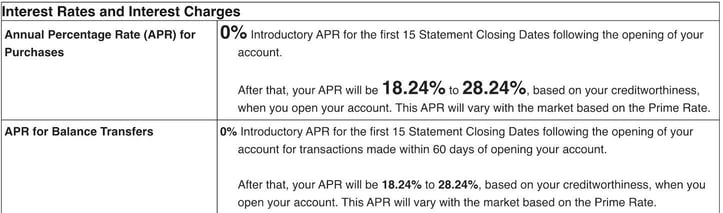
You can view the no-interest introductory period as an extended grace period. Normally, grace periods extend from the end of a billing cycle (the statement date) to the payment due date, typically 21 to 27 days.
You’ll avoid interest on purchases if you pay your entire balance no later than the end of the grace period. With a few exceptions, most credit cards have grace periods.
Grace periods and 0% intro APR offers do not apply to cash advances. You incur compound interest daily until you repay a cash advance. Fees of 3% to 5% usually apply for cash advances. The cash advance interest rate may differ from the standard purchase and balance transfer APRs.
You must still make the monthly minimum payment even in the 0% APR introductory period. If you miss a payment, the card issuer can cancel the 0% introductory APR offer, charge you a late fee, and perhaps impose a high penalty APR. Moreover, the issuer will report missed payments to a credit bureau after 30 days, damaging your credit score.
It’s really important to dig into the fine print for details on the introductory 0% offer. Consider the benefits of each card to understand what trade-offs you’re making for that 0% rate.
How Do Banks Decide My Credit Limit?
Banks determine your credit limit by reviewing your credit risk, credit card history, debt capacity, and any previous experience you had with the issuer. Each card has its special sauce for calculating credit limits, but most consider similar data.
Let’s take a closer look at the four factors that help set your credit limit:
- Credit risk: The major credit bureaus assign your FICO and VantageScore scores using credit report information. Credit card issuers use your reports and scores to decide whether to approve your application and how much credit to extend. You can expect a higher credit limit if you have a good or excellent credit score. This score takes into account your payment history and credit utilization ratio (CUR), which offer evidence of how reliable you are and how much you rely on credit. So, this may be the most important aspect of a bank’s determination.
- Debt capacity: Issuers want to set credit limits to reflect your ability to pay your bills. They use metrics such as your debt-to-income (DTI) ratio to measure your debt capacity. Reducing your existing debt before applying for a new credit card is a good idea. A high DTI may cause a credit card issuer to decrease your credit limit.
- Your previous experience with the issuer: Credit card companies are like elephants: They never forget. Unlike credit bureaus that must remove items from your report after specified periods, card issuers maintain enduring customer records. You can expect any issuer that has ever written off your credit card balance due to default or bankruptcy to reject your new card application.
What’s great is that numerous credit card issuers are available in this country. If one doesn’t quite match your needs, you can always check out other possibilities.
If you notice any of these categories affecting your application negatively, it’s time to make a plan to tackle them. Even small improvements can boost your chances of qualifying for a credit card — and maybe even get you better interest rates and terms.
Which Card Will Give Me the Highest Credit Limit?
Among generally available credit cards, Chase Sapphire Reserve® and Chase Sapphire Preferred® Card have the highest credit limits, potentially as high as $50,000 to $100,000. But they don’t currently offer 0% APR promotions.
Boutique no-preset-spending-limit (NPSL) cards, such as the Centurion Card from American Express (the “Black Card”), may provide spending limits as high as seven figures.
If you want a $10,000 minimum credit line, check out a World Elite Mastercard or Visa Infinite credit card. These top-level cards offer the highest starting limits and best perks. American Express offers its high-limit Platinum Card, a tier below its Centurion Card. Cards at these levels charge annual fees ranging from $95 to $695 and up.
What Credit Score Do I Need to Qualify For a 0% APR Promotion?
Generally, it would be best if you had a good credit score (above 670 in the FICO scoring system/660 VantageScore) to get a 0% APR credit card promotion. If you have poor or average credit, consider recruiting a cosigner or applying for a card from a credit union with more favorable terms.
Here are the ranges FICO and VantageScore use to determine your credit standing:
| FICO Score Categories | Score Range | VantageScore Categories | Score Range |
|---|---|---|---|
| Exceptional | 800-850 | Excellent | 781-850 |
| Very Good | 740-799 | Good | 661-780 |
| Good | 670-739 | Fair | 601-660 |
| Fair | 580-669 | Poor | 500-600 |
| Poor | Below 580 | Very Poor | 300-499 |
The 670 threshold isn’t universal. Some 0% APR cards may reject applicants with higher scores or approve lower-scoring ones. In other words, credit scores may be the most crucial underwriting factor, but card issuers also look at additional information when evaluating card applications.
For example, you may receive approval if you’ve recently improved from a poor to an average credit score.
How Do I Increase My Credit Limit?
Short of dramatically improving your credit score, you may be able to increase your credit limit by updating your income, applying for a new card, asking your current issuer for a higher limit, or waiting for the card’s standard re-evaluation cycle.
Several issuers, including Capital One, Discover, Chase, Bank of America, and Citi, provide automatic credit limit increases to patient cardmembers. Let’s dig deeper:
- Improve your credit score: Higher scores often presage higher spending limits. Good habits that can raise your credit score include paying bills on time, reducing indebtedness, keeping old accounts open, and avoiding new credit applications.
- Update your income: A higher income decreases your debt-to-income ratio and helps you justify a larger credit line. Be sure to include all household income sources from work, government benefits, financial aid, pensions, and alimony.
- Apply for a new card: A new issuer may view your credit history more favorably and offer you a card with a higher limit.
- Ask for an increase: Contact a customer rep and explain why you deserve (rather than need) a credit boost. Cite your card loyalty, timely payments, and low debt levels. You can try dangling balance transfers as an incentive, as issuers love to inherit your outstanding card balances (and the fees they generate). Limit your requested increase to a range of 10% – 25%, as greediness may backfire.
- Be patient: Do all things come to those who wait? Well, maybe. But many issuers periodically review your credit performance and provide increases to responsible cardmembers without any prompting.
While there’s no guarantee these steps will succeed, they definitely improve your chances of getting a credit limit increase.
How Does a 0% Balance Transfer Work?
A 0% intro APR balance transfer promotion lets you consolidate the outstanding balances from your other credit cards to your new one without interest charges during the promotional period. Each transfer will trigger a balance transfer fee, usually between 3% to 5% or higher.
The promotion period must last at least six months but sometimes reaches 21. The typical period is 15 to 18 months. Any remaining transferred balance will accrue interest at the card’s standard balance transfer APR once the promotional period ends.
It’s pretty easy to transfer credit card balances. Many issuers also provide an online form to move one or more balances, although you can arrange the transfers by speaking with a customer rep.
When you ask, your new card issuer will reach out to your existing cards to settle your balances either fully or in the amounts you choose.
When you pay off a card’s entire balance, you’ll shift future payments to the new card. However, if you transfer only part of the old card’s balance, you’ll need to make payments to both your old and new cards.
Here is a look at how much you could save on a balance transfer card with a 0% APR offer vs. a credit card with a 20% APR over one full year, depending on how much you transfer:
| Amount Transferred | 3% Balance Transfer Fee | Interest Savings Over 12 Months |
|---|---|---|
| $1,000 | $30 | $200 |
| $2,500 | $75 | $500 |
| $5,000 | $150 | $1,000 |
| $7,500 | $225 | $1,500 |
| $10,000 | $300 | $2,000 |
It takes five days to three weeks to complete the balance transfer process. You should continue to make at least the minimum payments to the old card until it confirms the transfer. You can collect a refund If you accidentally overpay on the old card.
Make sure your new card’s APR is lower than your old one if you don’t plan to pay off the consolidated balance before the intro period ends. Otherwise, you’ll face higher interest rates along with the balance transfer fee.
Knowing whether you must complete your transfers within a specified period to participate in the promotion is crucial. For example, a card may offer a 0% APR on transferred balances for 18 months but impose a 90-day deadline for completing the participating transfers.
If you miss the deadline for transferring funds, you’ll start accruing interest at the card’s regular rate. Be sure to carefully review the card agreement, as most balance transfer cards include this type of deadline.
Your new balance transfer card should have a credit limit sufficient to accommodate all your existing balances so you can consolidate your credit card debt. Otherwise, you’ll need to make multiple monthly payments. Failure to fully consolidate makes it more challenging to pay down your balances and increases the odds of forgetting to pay on time.
It’s wise to compare your old balances with the new card’s credit limit, current balance, and transfer fee to ensure a full balance transfer is doable. Also, check if the new card limits the amount you can transfer within a certain period.
Does Carrying a Balance on a 0% APR Card Hurt My Credit?
Carrying a balance on your credit card can negatively impact your credit score because it increases your credit utilization ratio (that is, credit used divided by total credit available). FICO suggests keeping this ratio at 1%, while VantageScore starts penalizing when it climbs above 30%.
CUR relates only to revolving credit card accounts, not installment loans or home equity lines of credit. The cards include those from the four major issuers — Visa, Mastercard, Discover, and American Express — plus store and gas cards.
Here is how your credit utilization is calculated across multiple card accounts:
| Card A | Card B | Card C | Overall | |
|---|---|---|---|---|
| Balance | $500 | $0 | $2,150 | $2,650 |
| Credit Limit | $2,000 | $3,000 | $5,000 | $10,000 |
| Utilization Ratio | 25% | 0% | 43% | 26.50% |
Many online sources misstate that CUR’s impact on your FICO score is worth 30% of your total. CUR is only part of a category that contributes 30% to your score. The category also contains several other unrelated metrics.
Installment debt has a negligible impact on your credit scores. Additionally, credit scores often decline after you pay off installment debt. So, if you have installment and credit card debt, paying off the cards first will maximize the positive impact on your credit scores.
What are the Drawbacks of a 0% APR Credit Card
While introductory 0% APR promotions can benefit cardholders who use them wisely, they can also have some drawbacks.
When you take advantage of a 0% introductory APR offer on a new credit card, you may feel justified in spending more money early on in the promotional period. This can lead to overspending and accumulating a high amount of debt.
If you overspend and don’t keep up with your payments, you might end up with a balance when the 0% APR offer finishes. In that case, you’ll owe the remaining balance with interest, potentially leaving you in a worse financial situation than when you initially applied.
If you have a balance after the promotional period ends, you’ll pay the card’s regular interest on it. So make sure you have a plan to eliminate the balance before that happens.
The downside is that if you miss a payment, the promotion could end immediately, and the card will revert to its standard APR. Such financial mistakes can negatively affect both your current and future financial well-being.
Using a 0% APR credit card offer can be incredibly advantageous for some of you. But if managing credit cards isn’t your strong suit, don’t expect it to solve financial issues magically.
A High-Limit, Interest-Free Card Is Just Minutes Away
After diving into the best high-limit 0% APR credit cards, we’ve found a wealth of options for you if you have good or excellent credit. These cards are perfect for financing those big purchases you’d like to pay off over the next year or more.
Cards with a significant signup bonus are extra tasty, so if you’re craving a scrumptious new credit card, bon appetit!
Editorial Note: Our site content is not provided or commissioned by any credit card issuer(s). Opinions expressed on CardRates.com are the author's alone, not those of any credit card issuer, and have not been reviewed, approved, or otherwise endorsed by credit card issuers. Every reasonable effort has been made to maintain accurate information; however, all credit card offer details, including information about rewards, signup bonuses, introductory offers, and other terms and conditions, is presented without warranty. Clicking on any offer on CardRates.com will direct you to the issuer's website, where you can review the current terms and conditions of the offer.
About the Author