Brittney is a Credit Strategist and Finance Expert who has spent years honing her knowledge of the credit industry both personally and professionally. Brittney applies her more than a decade of research experience to crafting in-depth consumer guides designed to help CardRates readers make better, more informed financial decisions.
Lillian Guevara-Castro brings more than 30 years of editing and journalism experience to the CardRates team. She has worked at The Atlanta Journal and Constitution, Gwinnett Daily News, Gainesville Sun, and The New York Times, where she covered demographics, consumer issues, and the business and financial sectors. Lillian has a degree in journalism and communications from Georgia State University and brings her fact-checking expertise to ensure Digital Brands content is accurate and engaging.
Ashley Fricker has more than a decade of experience as a finance contributor and editor, and has specialized in the credit card industry since 2015. Her credit card commentary is featured on national media outlets that include CNBC, MarketWatch, Investopedia, and Reader's Digest, among many others. She has worked closely with the world’s largest banks and financial institutions, up-and-coming fintech companies, and press and news outlets to curate comprehensive content and media. Ashley holds a bachelor's degree in multimedia journalism from Florida Atlantic University.
Small business owners often use credit cards to manage cash flow, separate expenses, and earn rewards on everyday spending. The best business credit cards offer generous signup bonuses, strong rewards rates, and tools that make expense tracking easier. Whether you’re running a startup, freelancing, or managing a growing company, the cards below offer some of the best options available in 2026.
Disclosure: When you apply through links on our site, we often earn referral fees from partners. For more information, see our ad disclosure
Advertiser Disclosure
CardRates.com is a free online resource that offers valuable content and comparison services to users. To keep this resource 100% free, we receive compensation for referrals for many of the offers listed on the site. Along with key review factors, this compensation may impact how and where products appear across CardRates.com (including, for example, the order in which they appear). CardRates.com does not include the entire universe of available offers. Editorial opinions expressed on the site are strictly our own and are not provided, endorsed, or approved by advertisers.
Our experts rate credit card offers based on factors like rewards, APRs, signup bonuses, fees, and approval rates, with a focus on benefits that provide the best value. We also consider cardholder needs such as credit-building potential, issuer reputation, and customer service. Our ratings are unbiased, updated regularly, and not influenced by issuers.
Earn a one-time welcome bonus of 100,000 miles once you spend $10,000 on purchases within the first 3 months from account opening
Earn unlimited 2X miles per dollar on every purchase, everywhere, no limits or category restrictions, and miles won't expire for the life of the account
Receive up to $220 in credits: Receive an annual $50 travel credit for bookings through Capital One Business Travel, up to an annual $50 statement credit for purchases at qualifying advertising or software merchants, plus up to a $120 credit for Global Entry or TSA PreCheck® every four years. Terms and conditions apply
Unlimited 5X miles on hotels, vacation rentals and rental cars booked through Capital One Business Travel
Transfer your miles to 15+ travel loyalty programs
Redeem your miles instantly for any travel-related purchases, from flights and hotels to ride-sharing services
$95 annual fee
Free employee cards which also earn unlimited 2X miles from their purchases
Bank of America® Business Advantage Customized Cash Rewards Mastercard® credit card
4.9/5.0
About this rating
Our experts rate credit card offers based on factors like rewards, APRs, signup bonuses, fees, and approval rates, with a focus on benefits that provide the best value. We also consider cardholder needs such as credit-building potential, issuer reputation, and customer service. Our ratings are unbiased, updated regularly, and not influenced by issuers.
$500 Online Cash Rewards Bonus Offer: Get a $500 online cash rewards bonus after you make at least $5,000 in purchases in the first 90 days of your account opening.
Earn 3% cash back in the category of your choice: gas stations & EV charging stations (default), office supply stores, travel, TV/telecom & wireless, computer services or business consulting services, 2% cash back on dining purchases and 1% cash back on all other purchases.
You'll earn 3% cash back on purchases in the category of your choice and 2% cash back on dining purchases (for the first $50,000 in combined choice category/dining purchases each calendar year, 1% thereafter), and 1% cash back on all other purchases.
You can earn up to 75% more cash back on every purchase, if you have a business checking account with Bank of America and qualify for our highest Preferred Rewards for Business tier. That means you could earn up to 5.25% cash back in your selected choice category and up to 3.5% cash back on dining purchases on the first $50,000 in those combined purchases each calendar year, and up to an unlimited 1.75% cash back on all other purchases.
No annual fee.
Choose how to redeem your cash rewards-as a deposit into your eligible Bank of America® checking or savings account, as a card statement credit or as a check mailed to you. Cash rewards don’t expire as long as your account remains open.
To change your choice category for future purchases, you must go to the Mobile Banking app or Business Advantage 360, our small business online banking. You can change it once each calendar month, or make no change and it stays the same.
0% Introductory APR on purchases for your first 7 billing cycles. After the intro APR offer ends, a Variable APR that's currently 16.74% to 26.74% will apply.
Contactless Cards - The security of a chip card, with the convenience of a tap.
This offer may not be available if you leave this page or visit our website. You can take advantage of this offer when you apply now.
Intro (Purchases)0% Intro APR for 7 billing cycles for purchases
Intro (Transfers)N/A
Regular APR16.74% - 26.74% Variable APR on purchases and balance transfers
Bank of America® Business Advantage Unlimited Cash Rewards Mastercard® credit card
4.8/5.0
About this rating
Our experts rate credit card offers based on factors like rewards, APRs, signup bonuses, fees, and approval rates, with a focus on benefits that provide the best value. We also consider cardholder needs such as credit-building potential, issuer reputation, and customer service. Our ratings are unbiased, updated regularly, and not influenced by issuers.
$500 Online Cash Rewards Bonus Offer: Get a $500 online cash rewards bonus after you make at least $5,000 in purchases in the first 90 days of your account opening.
Earn unlimited 1.5% cash back on purchases, or join Preferred Rewards for Business for no fee, and earn up to an unlimited 2.62% cash back on all purchases if you have a Bank of America® business checking account and qualify for our highest Preferred Rewards for Business tier.
No annual cap and cash rewards don’t expire as long as your account remains open.
No annual fee.
Choose how to redeem your cash rewards – as a deposit into your eligible Bank of America® checking or savings account, as a card statement credit or as a check mailed to you.
0% Introductory APR on purchases for your first 7 billing cycles. After the intro APR offer ends, a Variable APR that's currently 16.74% to 26.74% will apply.
Contactless Cards - the security of a chip card, with the convenience of a tap.
This offer may not be available if you leave this page or visit our website. You can take advantage of this offer when you apply now.
Intro (Purchases)0% Intro APR for 7 billing cycles for purchases
Intro (Transfers)N/A
Regular APR16.74% - 26.74% Variable APR on purchases and balance transfers
Bank of America® Business Advantage Travel Rewards World Mastercard® credit card
4.8/5.0
About this rating
Our experts rate credit card offers based on factors like rewards, APRs, signup bonuses, fees, and approval rates, with a focus on benefits that provide the best value. We also consider cardholder needs such as credit-building potential, issuer reputation, and customer service. Our ratings are unbiased, updated regularly, and not influenced by issuers.
50,000 Online Bonus Points Offer: Earn 50,000 online bonus points after you make at least $5,000 in purchases in the first 90 days of your account opening.
Earn unlimited 1.5 points for every $1 spent on all purchases everywhere, every time – no matter how much you spend, or join Preferred Rewards for Business for no fee, and earn up to an unlimited 2.62 points for every $1 spent on all purchases if you have a Bank of America® business checking account and qualify for our highest Preferred Rewards for Business tier.
No limit to the amount of points you can earn and points don't expire as long as your account remains open.
No annual fee and no international transaction fees.
Redeem points for a statement credit to offset travel and dining purchases, and for travel when booked through the Bank of America® Travel Center.
0% Introductory APR on purchases for your first 7 billing cycles. After the intro APR offer ends, a Variable APR that's currently 16.74% to 26.74% will apply.
Contactless Cards - The security of a chip card, with the convenience of a tap.
This offer may not be available if you leave this page or visit our website. You can take advantage of this offer when you apply now.
Intro (Purchases)0% Intro APR for 7 billing cycles for purchases
Intro (Transfers)N/A
Regular APR16.74% - 26.74% Variable APR on purchases and balance transfers
Bank of America® Platinum Plus® Mastercard® Business card
4.8/5.0
About this rating
Our experts rate credit card offers based on factors like rewards, APRs, signup bonuses, fees, and approval rates, with a focus on benefits that provide the best value. We also consider cardholder needs such as credit-building potential, issuer reputation, and customer service. Our ratings are unbiased, updated regularly, and not influenced by issuers.
New Offer: 0% introductory APR on purchases for the first 15 billing cycles. After the intro APR offer ends, a Variable APR that's currently 14.74% - 25.74% will apply.
Save money on interest with a competitive purchase APR.
No annual fee.
Get employee cards at no additional cost to you and with credit limits you set.
Contactless Cards - The security of a chip card, with the convenience of a tap.
This offer may not be available if you leave this page or visit our website. You can take advantage of this offer when you apply now.
Intro (Purchases)0% Intro APR for 15 billing cycles for purchases
Intro (Transfers)N/A
Regular APR14.74% - 25.74% Variable APR on purchases and balance transfers
Our experts rate credit card offers based on factors like rewards, APRs, signup bonuses, fees, and approval rates, with a focus on benefits that provide the best value. We also consider cardholder needs such as credit-building potential, issuer reputation, and customer service. Our ratings are unbiased, updated regularly, and not influenced by issuers.
Our experts rate credit card offers based on factors like rewards, APRs, signup bonuses, fees, and approval rates, with a focus on benefits that provide the best value. We also consider cardholder needs such as credit-building potential, issuer reputation, and customer service. Our ratings are unbiased, updated regularly, and not influenced by issuers.
Limited-time online offer: Get 70,000 bonus points and a $99 Companion Fare (plus taxes and fees from $23) after you make $4,000 or more in purchases within the first 90 days of opening your account.
Earn another Companion Fare ($99 fare plus taxes and fees from $23) each account anniversary after spending $6,000 or more on purchases within the prior anniversary year.
Free checked bag for any cardholder and up to 6 guests on the same reservation when you pay for your flight with your card – that’s a savings of $70 per person roundtrip!
Preferred boarding for any cardholder when you pay for your Alaska Airlines or Hawaiian Airlines flight with an Atmos™ Rewards Business Card.
Earn 3 points for every $1 spent on eligible Alaska Airlines and Hawaiian Airlines purchases. Earn 2 points for every $1 spent on eligible gas, EV charging station, shipping and local transit (including rideshare) purchases. Earn 1 point per $1 spent on all other purchases.
Earn a 10% rewards bonus on all points earned from card purchases if your company has an eligible Bank of America® business account.
Enjoy 20% back on Alaska Airlines and Hawaiian Airlines inflight purchases when you pay with your Atmos™ Rewards Business Card.
Get $100 off an annual Alaska Lounge+ Membership purchased with your Atmos™ Rewards Business Card
Plus, no international transaction fees and a low annual fee of $70 for the company and $25 per card.
This offer may not be available if you leave this page or visit our website. You can take advantage of this offer when you apply now.
Intro (Purchases)N/A
Intro (Transfers)N/A
Regular APR19.49% - 27.49% Variable APR on purchases and balance transfers
Our experts rate credit card offers based on factors like rewards, APRs, signup bonuses, fees, and approval rates, with a focus on benefits that provide the best value. We also consider cardholder needs such as credit-building potential, issuer reputation, and customer service. Our ratings are unbiased, updated regularly, and not influenced by issuers.
Our experts rate credit card offers based on factors like rewards, APRs, signup bonuses, fees, and approval rates, with a focus on benefits that provide the best value. We also consider cardholder needs such as credit-building potential, issuer reputation, and customer service. Our ratings are unbiased, updated regularly, and not influenced by issuers.
Earn 200,000 bonus points after you spend $30,000 on purchases in your first 6 months from account opening and with more than $2,500 in annual value, there's no competition.
Earn 8x points on Chase Travel℠ for airline tickets, hotels, including The Edit℠, car rentals, cruises, activities and tours.
Earn 5x total points on Lyft rides through 9/30/27.
Earn 4x points on flights & hotels booked direct.
Earn 3x points on social media & search engine advertising.
Get the most flexible travel credit compared to any other card, with up to $300 in statement credits each anniversary year on travel purchases.
Enjoy complimentary access to the Chase Sapphire Lounge® by The Club network and Priority Pass™ Select membership. Two guests may accompany the Primary Cardmember to the lounges free of charge.
Member FDIC
Intro (Purchases)N/A
Intro (Transfers)N/A
Regular APRFlex for Business APR: 18.49% - 26.49% Variable
Our experts rate credit card offers based on factors like rewards, APRs, signup bonuses, fees, and approval rates, with a focus on benefits that provide the best value. We also consider cardholder needs such as credit-building potential, issuer reputation, and customer service. Our ratings are unbiased, updated regularly, and not influenced by issuers.
Earn 90k bonus points after you spend $8,000 on purchases in the first 3 months from account opening. That's $900 cash back or $1,125 toward travel when redeemed through Chase Travel℠
Earn 3 points per $1 on the first $150,000 spent on travel and select business categories each account anniversary year. Earn 1 point per $1 on all other purchases
Round-the-clock monitoring for unusual credit card purchases
With Zero Liability you won't be held responsible for unauthorized charges made with your card or account information.
Redeem points for cash back, gift cards, travel and more - your points don't expire as long as your account is open
Points are worth more when you redeem for travel through Chase Travel℠
Purchase Protection covers your new purchases for 120 days against damage or theft up to $10,000 per claim and $50,000 per account.
Our experts rate credit card offers based on factors like rewards, APRs, signup bonuses, fees, and approval rates, with a focus on benefits that provide the best value. We also consider cardholder needs such as credit-building potential, issuer reputation, and customer service. Our ratings are unbiased, updated regularly, and not influenced by issuers.
Earn $350 when you spend $3,000 on purchases in the first three months and an additional $400 when you spend $6,000 on purchases in the first six months after account opening
Earn 5% cash back on the first $25,000 spent in combined purchases at office supply stores and on internet, cable and phone services each account anniversary year
Earn 2% cash back on the first $25,000 spent in combined purchases at gas stations and restaurants each account anniversary year. Earn 1% cash back on all other purchases
With Zero Liability you won't be held responsible for unauthorized charges made with your card or account information.
No Annual Fee
Redeem rewards for cash back, gift cards, travel and more through Chase Ultimate Rewards®.
0% introductory APR for 12 months on purchases
Member FDIC
Intro (Purchases)0% Intro APR on Purchases 12 months
Review Breakdown: How We Rated the Best Business Credit Cards
We evaluate business credit cards based on signup bonus value, ongoing rewards rates, annual fees, financing options, and the overall usefulness of business management features. We also consider whether cards offer category bonuses on common business expenses such as office supplies, travel, advertising, shipping, and software subscriptions.
In addition to rewards, we look at tools that help business owners manage expenses more efficiently, including employee cards, spending controls, accounting integrations, and detailed reporting. The best business credit cards combine strong rewards potential with practical features that help business owners manage cash flow and simplify financial management.
Some issuers provide compensation to CardRates for featured placements or when users apply through our links. This compensation may influence how and where certain cards appear on the page, but it does not affect our evaluation of each card’s features, value, or overall ranking criteria.
Our experts rate business credit cards based on reward rates, fees, bonuses, APRs, and business management tools. We focus on value for business owners and compare offers to find the best fit for managing company expenses and maximizing rewards. Issuers have no influence on our ratings.
16.74% - 26.74% Variable APR on purchases and balance transfers
★★★★★
4.9
Bank of America® Business Advantage Customized Cash Rewards Mastercard® credit card
4.9/5.0
About this rating
Our experts rate business credit cards based on reward rates, fees, bonuses, APRs, and business management tools. We focus on value for business owners and compare offers to find the best fit for managing company expenses and maximizing rewards. Issuers have no influence on our ratings.
16.74% - 26.74% Variable APR on purchases and balance transfers
★★★★★
4.8
Bank of America® Business Advantage Unlimited Cash Rewards Mastercard® credit card
4.8/5.0
About this rating
Our experts rate business credit cards based on reward rates, fees, bonuses, APRs, and business management tools. We focus on value for business owners and compare offers to find the best fit for managing company expenses and maximizing rewards. Issuers have no influence on our ratings.
16.74% - 26.74% Variable APR on purchases and balance transfers
★★★★★
4.8
Bank of America® Business Advantage Travel Rewards World Mastercard® credit card
4.8/5.0
About this rating
Our experts rate business credit cards based on reward rates, fees, bonuses, APRs, and business management tools. We focus on value for business owners and compare offers to find the best fit for managing company expenses and maximizing rewards. Issuers have no influence on our ratings.
14.74% - 25.74% Variable APR on purchases and balance transfers
★★★★★
4.8
Bank of America® Platinum Plus® Mastercard® Business card
4.8/5.0
About this rating
Our experts rate business credit cards based on reward rates, fees, bonuses, APRs, and business management tools. We focus on value for business owners and compare offers to find the best fit for managing company expenses and maximizing rewards. Issuers have no influence on our ratings.
Our experts rate business credit cards based on reward rates, fees, bonuses, APRs, and business management tools. We focus on value for business owners and compare offers to find the best fit for managing company expenses and maximizing rewards. Issuers have no influence on our ratings.
19.49% - 27.49% Variable APR on purchases and balance transfers
★★★★★
4.7
Atmos™ Rewards Visa Signature® Business Card
4.7/5.0
About this rating
Our experts rate business credit cards based on reward rates, fees, bonuses, APRs, and business management tools. We focus on value for business owners and compare offers to find the best fit for managing company expenses and maximizing rewards. Issuers have no influence on our ratings.
Our experts rate business credit cards based on reward rates, fees, bonuses, APRs, and business management tools. We focus on value for business owners and compare offers to find the best fit for managing company expenses and maximizing rewards. Issuers have no influence on our ratings.
Our experts rate business credit cards based on reward rates, fees, bonuses, APRs, and business management tools. We focus on value for business owners and compare offers to find the best fit for managing company expenses and maximizing rewards. Issuers have no influence on our ratings.
Our experts rate business credit cards based on reward rates, fees, bonuses, APRs, and business management tools. We focus on value for business owners and compare offers to find the best fit for managing company expenses and maximizing rewards. Issuers have no influence on our ratings.
Small business owners often rely on credit cards to manage cash flow, cover expenses, and earn rewards on everyday purchases. While large corporations may rely on major credit lines or loans, most small businesses simply need flexible financing for everyday expenses.
The best business credit cards can help cover short-term costs, separate personal and business spending, and provide valuable rewards on purchases you already make.
1. What is a Business Credit Card?
A business credit card is a credit card designed specifically for business-related purchases. It works similarly to a personal credit card but helps separate business expenses, track spending, and often includes rewards tailored to business purchases.
A business credit card works just like a personal credit card that can be used to make purchases, up to the available credit limit. The only way it differs from a personal card is that the primary applicant must be a business owner.
Whether you walk dogs for a living, manage an Etsy shop, or run a Fortune 500 company, the best business credit cards can suit a variety of business expenses and reward you for your eligible net purchases. Most business cards design their rewards programs around the things business owners buy most.
For example, Chase rewards cardholders with Chase Ultimate Reward points for purchases made in select business categories that include social media and search engine advertising as well as internet and cable providers, among others. Whereas other business cards, like the Capital One® Spark Cash line of cards, offer flat-rate cash back on all purchases.
So, if you’re a handyman who drives across town regularly to perform jobs, a business card that rewards fuel purchases may make sense. But if your business operates in an office and you have office supplies on auto-ship, a business card that offers bonus rewards for office store purchases, such as the Ink Business Cash Credit Card does, can help you save on those purchases.
You’ll then make monthly payments to the credit card company on or before your due date, just as you would for a personal credit card. And, you’ll receive zero fraud liability for any unauthorized transactions made with your business credit card account.
2. How Do You Get a Business Credit Card?
To get a business credit card, you apply through a credit card issuer using your business information and personal credit profile. Most applications require basic business details and either an Employer Identification Number (EIN) or Social Security number.
For the most part, applying for a business credit card is the same as applying for a consumer credit card. You simply select your card, click the “apply” button, and start filling out the application. You’ll likely see the expected queries, such as your business’s name and address, as well as questions asking for financial information, including your company’s income.
The main variation from a consumer credit card application will likely be that you will need your business’s Employer Identification Number (EIN), which can be obtained through the IRS. In some cases, you may be operating your business using your personal credit, in which case you will use your Social Security number instead.
In essence, an EIN is the business equivalent of a Social Security number. The EIN will be associated with all of your business’s financial operations, including taxes and business credit.
You’ll need an EIN to open up business checking and savings accounts, as well as to apply for most types of business financing.
For example, when applying for a small business credit card, you’ll use your business’s EIN rather than your Social Security number on the application. This associates the credit account with your company’s credit instead of your own personal credit.
Similarly, any trade lines or other credit products you open for your business will typically require an EIN to establish.
3. Is a Business Credit Card a Good Idea?
A business credit card is a good idea if you want to be rewarded for your business expenses but you won’t roll over a large balance from month to month. Credit cards can charge high APRs that are based on your personal credit score unless you already have established business credit.
As you can see in the chart above, many cardholders now face APRs well above 25% if they carry a balance. A low-rate business loan may be a better option if you need capital to make a few necessary purchases and want to pay it off over time.
Alternatively, you can look for a business card that offers 0% financing on new purchases for a promotional period. These promotional rates last about 12 months or so and most come with rewards for all the eligible net purchases you make during that period.
This means you’ll actually come out ahead, assuming your balance is paid by the time the promotional period expires. You may even be able to achieve a signup bonus, which would really make getting a business card a good idea.
4. How Do I Compare the Best Credit Card Offers and Deals?
When it comes to choosing between the best business cards, you’ll need to consider a few points, including the card’s APR, whether it charges an annual fee, and (most importantly for some) what kind of rewards it offers.
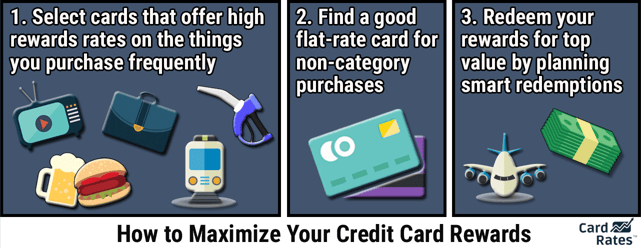
In the modern credit card world, the vast majority of credit cards — both consumer cards and small business credit cards — provide some kind of purchase rewards. A good business rewards credit card can be extremely lucrative if you select one that lets you earn rewards on the purchases you make most frequently.
To get the most out of your business rewards credit card, comparing rewards cards will involve looking at where you tend to spend most of your cash. You’ll also need to consider how you’re most likely to use your rewards, namely if you want cash back, travel rewards, or flexible points.
Cash back rewards are the most straightforward and can be easily redeemed for a statement credit or check, but points and miles typically provide more redemption options.
Rewards Type
Typical Value
Best For
Cash Back
1%–5% back
Simple redemption
Points
1–2¢ per point
Flexible rewards
Miles
1–3¢ per mile
Travel-heavy businesses
With most rewards programs, cardholders earn unlimited rewards at a low flat rate, while some programs will also provide bonus rewards for purchases made in specific categories, like gas or office supplies. If many of your business expenses fall into these popular categories, a program that provides bonus rewards can provide significant value.
For the rare small business owner who doesn’t care about credit card rewards, a card that provides an introductory APR deal can be a good investment. Typically offering 12 months or more of 0% APR on new purchases, intro APR cards can provide significant savings for business owners who need to carry a balance from month to month. Find one without an annual fee to stack the savings.
5. What Are the Best Business Credit Cards?
Although life (and business) would certainly be simpler if there were a single “best” product for everyone, in most cases, it’s more about finding the best one for you — and that includes your small business credit card. That being said, the cards that typically earn the distinction as being one of the best business credit cards share a few commonalities.
Firstly, most great business cards will offer some type of purchase rewards, be it cash back, travel rewards, or points. The type of reward that’s best for you will be the type you’re most likely to use.
For example, if your annual traveling is limited to a single round-trip flight to visit your relatives, a travel card may not be worthwhile. If you’re a frequent flyer, however, travel rewards can be lucrative.
In addition to rewards, you’ll want to look at the interest rate charged by your card. If you tend to carry a balance from month to month, the best card for you will be one with a low ongoing APR or an intro APR deal that provides a 0% interest rate for a set period after opening the account. You may also find cards that offer intro APR deals on balance transfers, although balance transfer deals aren’t as prevalent in business cards as they are in the consumer market.
Another popular differentiator for many cardholders is the card’s signup bonus. A good signup bonus can work out to hundreds — sometimes even thousands — of dollars in cash back, points, or frequent flyer miles. Most signup bonuses have a minimum spending requirement to earn the bonus, with the size of the spending requirement varying with the size of the bonus.
The fringe benefits available to cardholders may also factor into your decision. This can be anything from whether the card charges foreign transaction fees to the verification structure (most U.S. cards use chip-and-signature technology, while many European countries believe a secure credit card is one that requires a PIN).
All being considered, you’ll see our top-rated business card listed as #1 above. We like that particular Chase business credit card for its hefty signup bonus, solid rewards structure, and all the great travel insurance and purchase protections that Chase credit cards are notorious for having.
6. What is the Best Credit Card for a Small Business?
While it’s not the answer many business owners want, the fact of the matter is that there is no “best” card. The best credit card for your business will vary based on your specific needs and spending habits. This includes everything from the card’s APR and fee structure to the type of rewards it offers.
These days, one of the most differentiating factors between credit cards is the rewards. You’ll need to choose between cash back, travel rewards, or points, as well as figure out the rewards credit card structure you prefer.
Bonus category programs reward credit cardholders with bonus cash back, points, or travel rewards for spending in popular categories, like office supplies and internet or cellphone service purchases.
For more general spending, a flat-rate unlimited rewards card may be best. These reward cardholders with consistent earnings no matter where they spend.
Depending on the size of your business, the best credit card for your company may end up being the one with a spending limit that can accommodate your monthly business expenses. While most credit card issuers don’t advertise maximum credit limits, you can often find information on average limits by researching small business credit card reviews.
7. Do Business Credit Cards Build Credit?
Yes, many business credit cards help build business credit when issuers report account activity to business credit bureaus. Responsible use — including on-time payments and low balances — can strengthen your company’s credit profile over time.
Between the swipe-and-go convenience and rewards offered by your typical business credit card, the list of reasons to apply keeps getting longer. But while nearly any business can benefit from bonus rewards on binders, a big incentive for obtaining a small business credit card is the ability to build your business credit profile.
Indeed, because the vast majority of business credit card issuers will report to the three major business credit bureaus (Dun & Bradstreet, Experian, and TransUnion), your business credit card can boost your business credit and diversify your profile. If your credit card company doesn’t report to the bureaus, you can still get recognition for the account by listing it as a trade reference.
Of course, your business credit card only helps your business credit profile if you maintain your credit card account in good standing. This means always paying your card as agreed; as with consumer credit, business credit is heavily influenced by your payment history.
If you have a charge card, this means paying your balance in full each month. For a revolving credit line, be sure to make at least the minimum payment by the due date.
8. How Do I Earn a Signup Bonus?
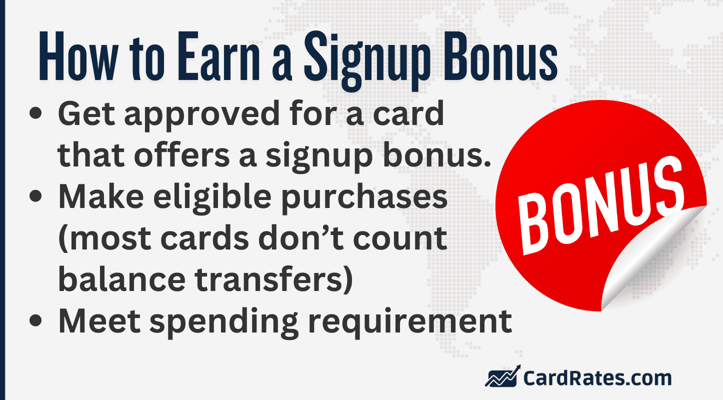
Signup offers reward cardholders with a one-time bonus of cash back, points, or miles, often worth several hundred dollars. In most cases, signup bonuses — sometimes referred to as a welcome bonus — require you to meet a minimum spending amount within a set period of time (usually within the first 90 days, though this can vary).
Once you meet the spending requirement, your welcome bonus should be automatically credited to your account.
In the consumer credit market, signup bonuses are often used by “churners” to rack up stockpiles of points or miles. Though business cardholders are significantly less likely to churn cards, signup bonuses can still be quite lucrative.
For example, with the right travel rewards card signup bonus, you could earn enough miles to book a free round-trip flight in just a few weeks.
By the rules of most credit card companies, you can only earn one signup bonus per card per 24-month period. In other words, if you earned a specific sign-up bonus one year, you typically won’t be eligible to earn a sign-up bonus for that card again until two years later.
Amex is the most prominent exception to this guideline, limiting signup bonuses to once per card, period. So if you’ve already earned a signup bonus for the The Business Platinum Card®, for example, you won’t ever be eligible to earn another Business Platinum Card® signup bonus.
Note that balance transfers and cash advances almost never qualify toward the minimum required spending amount to achieve a signup bonus (nor do they qualify to earn rewards), so if you think you can transfer a balance from one card to another and earn a hefty sum of rewards, think again.
9. How Do I Earn and Redeem Points on Business Purchases?
While business credit cards can be quite useful, perhaps the most fun part is earning and redeeming your rewards — especially flexible rewards points. Most points programs offer a wide range of redemption options, including everything from cash back or statement credits to merchandise from popular brands to travel credits.
Another popular way to redeem points is to transfer them to an airline or hotel loyalty program. Many popular brands have credit card partnerships that allow you to transfer your points to your frequent flyer or hotel loyalty account.
Business owners who issue employee cards can potentially earn points incredibly fast, as each employee card will earn points on every eligible purchase. Those points are added to any points earned by the primary cardholder — and any other employee cards — so you could earn your way to awesome rewards in next to no time.
10. Do Small Business Credit Card Rewards Expire?
While it’s all well and good to rack up tons of rewards, what if you can’t use them right away, such as when you’re saving miles for a future trip?
Well, thankfully, credit card rewards aren’t a use-it-or-lose-it commodity; in fact, most credit card rewards won’t expire at all, so long as your account remains open and in good standing (but check with your issuer just in case).
Rewards Policy
What It Means
No Expiration
Rewards remain valid while your account stays open and in good standing
Inactivity Expiration
Rewards may expire if your card isn’t used for a certain period
Account Closure
Unredeemed rewards may be forfeited if the account is closed
But be sure to read the fine print of your credit card agreement because some cards do let rewards expire if not used within a certain period. The Consumer Financial Protection Bureau (CFPB) maintains a database of credit card agreements, but you can also find this information easily on the card issuer’s website.
You can secure credit card rewards by making sure you spend a little on your card (or make a rewards redemption) at least once every few months. This will keep your account open and active, reducing the likelihood of your account being closed due to inactivity.
11. Do Business Cards Charge Annual Fees?
In the credit card business, an annual fee is similar to a maintenance fee and is charged once a year, typically on your card’s anniversary. Just like personal credit cards, some charge annual fees and others don’t. Annual fees are often used to offset the cost of the card for the issuer.
For instance, the business credit cards with the most lucrative rewards tend to charge the highest annual fees as a way to compensate for the perks. Check out the Amex Business Platinum Card’s annual fee as an example.
That said, many credit card issuers are now offering a variety of cards without annual fees as a way to differentiate their cards from other options. With a little research, you can even find a quality card that will reward credit cardholders without charging an annual fee for its privileges.
12. What Are Some Common Business Credit Card Fees?
Whether we like it or not, of course, annual fees and foreign transaction fees are just the tip of the proverbial iceberg when it comes to credit cards. When comparing business credit cards, in particular, look out for cards that charge fees for additional employee cards, as these can get costly if you have a big team.
Fee Type
Typical Cost
When It Applies
Annual Fee
$0–$695+
Charged once per year for card membership
Foreign Transaction Fee
0%–3%
Applied when purchases are made in another currency
Late Payment Fee
Up to ~$40
Charged if the minimum payment is not made by the due date
Cash Advance Fee
3%–5% of the transaction
Applied when withdrawing cash from your credit line
Balance Transfer Fee
3%–5%
Charged when transferring a balance from another credit card
Employee Card Fee
$0–$95 per card
Some issuers charge for additional employee cards
Other fees to look out for include fees for extra services, such as cash advance fees and balance transfer fees. The best way to avoid these fees is to avoid the associated services (cash advances are always a bad idea, anyway).
Another common fee is the dreaded late fee, which you’ll be charged for making late credit card payments. You can avoid late fees simply by making at least the minimum payment before your due date. Remember that, as far as your credit card issuer is concerned, late is late. It doesn’t matter if you’re a month late or a day late; you’ll likely be charged a late fee either way.
Of course, when it comes to late payments, the fees may actually be the least of your worries. As you work to build your business credit, your payment history will be extremely influential, and late payments are an easy way to wreck your budding business credit. If you think paying on time will be an issue, set up automatic payments to ensure you’re never late.
Remember, building a business takes a lot of time and dedication — and so does building business credit. The right business credit card can make a huge difference, both by providing the necessary financing to get you through the ebb and flow of your business’s income streams, but also by helping to build up your business credit profile.
Editorial Note: Our site content is not provided or commissioned by any credit card issuer(s). Opinions expressed on CardRates.com are the author's alone, not those of any credit card issuer, and have not been reviewed, approved, or otherwise endorsed by credit card issuers. Every reasonable effort has been made to maintain accurate information; however, all credit card offer details, including information about rewards, signup bonuses, introductory offers, and other terms and conditions, is presented without warranty. Clicking on any offer on CardRates.com will direct you to the issuer's website, where you can review the current terms and conditions of the offer.
The information on this page was reviewed for accuracy on .
About the Author
Brittney Mayer
Credit Analyst
Brittney is a Credit Strategist and Finance Expert who has spent years honing her knowledge of the credit industry both personally and professionally. Brittney applies her more than a decade of research experience to crafting in-depth consumer guides designed to help CardRates readers make better, more informed financial decisions.
Share the Knowledge!
Our finance experts work hard to show you the best credit cards. Want to show your appreciation? Share this page!
Advertiser Disclosure: The credit card offers that appear on this site are from credit card companies from which CardRates.com receives compensation. This compensation may impact how and where products appear on this site (including, for example, the order in which they appear). CardRates.com does not include all credit card companies or all available credit card offers. See the credit card issuer's website for specific terms and conditions of each card.