
Writer: Gerri Detweiler


Editor: Lillian Guevara-Castro


Reviewer: Ashley Fricker

Opinions expressed here are ours alone, and are not provided, endorsed, or approved by any issuer. Our articles follow strict editorial guidelines and are updated regularly.
There’s often a moment of dread before you look at your credit card statement. Discovering your payment is a lot higher than you expected can turn that anxiety into a gut punch.
One Redditor shared their experience with a payment jump:
“I got a call from my wife that she was 7 days late on paying [her credit card bill] and the normal payment is $66 but now they want $204! This seems crazy to me. Does anyone know what can be done aside from just eating the cost and paying it? Usually you are given a 21 or 30-day grace period.”
Does that sound like something you’ve experienced? This situation is more common than you may realize, but figuring out why can take some investigating.
Here are the seven main reasons you can see your minimum payments rise:
1. Your Overall Balance Increased
The most likely reason your credit card minimum payment increased is that your balance went up.
Your payments are usually calculated as a percentage of your balance, and when the balance rises, your minimum payments can, too. The minimum payment is usually calculated as 1% to 2% of the principal balance plus interest.
The principal is the amount you charged on the card, so when you spend more, your minimum payment can increase. And sometimes it can increase a lot.
2. Late Fees and Penalty APRs
Another reason your payment can spike is due to late payments, which can trigger late fees and/or higher interest rates.
Credit card late fees of $25 to $40 are common. The late fee may be added to your minimum payment (depending on how your issuer calculates it), making your payment jump.
There’s another risk of paying late: a penalty interest rate. Credit cards often have a standard annual percentage rate (APR) and a penalty APR that’s usually higher.
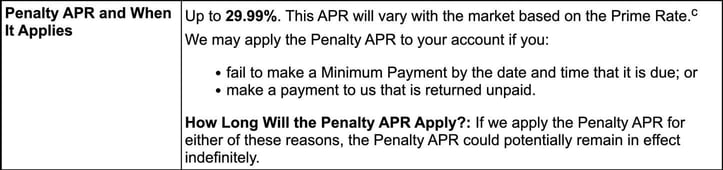
The penalty rate may kick in for new purchases if you miss a payment. Fall behind on your minimum payment by 60 days or more, and your issuer may also apply the penalty rate to your outstanding balance, not just new purchases.
There is often a way out, though. If you then make your next six payments on time each month, your rate may revert to the standard APR.
Note that the 60-day requirement applies to consumer cards, not to business credit cards. If you miss your payment on your business credit card by just a few hours, your rate on your current balance could jump to the penalty rate.
3. Your Promotional APR Window Ended
A low-rate balance transfer or a 0% intro APR offer can lower your interest costs, and may even help you pay off your debt faster, since most (or all) of your monthly payment will go toward paying principal rather than interest.
But there is a catch: You must pay off the balance that is covered by the promotional rate before that offer expires. If you don’t, the interest rate will likely be significantly higher, which can trigger a higher minimum payment.
Special promotional interest rate offers usually come in one of two flavors:
Deferred interest: You may see these plans marketed as “No interest during the first 12 months” or something similar. You pay no interest during the promo period, but if you don’t pay the balance in full before that period ends, you will be charged interest on the entire balance, not just the remaining balance. Ouch.
Low or no-interest promotional rates: These plans offer a low rate or 0% financing during the promotional period, but any balance remaining afterward will incur a higher interest rate.
Either way, the higher rate can certainly affect your minimum payment.
4. Your Variable Interest Rate Changed
Most credit cards feature variable interest rates tied to the prime rate or another index. This means that when interest rates change, your minimum payment can change — even if your balance doesn’t.
The Federal Reserve sets monetary policy, which in turn affects interest rates. It started raising rates in March 2022, after historically low rates during the pandemic. Rates continued to rise until September 2024, when rate cuts resumed.
Federal Funds Rate (March 2022 – April 2026)
The Fed has been lowering rates at a slow and fairly steady pace, and at least for now, it doesn’t look like they will reverse course soon. Further rate cuts may provide a little relief on your credit card interest. Of course, that could change in the future.
5. Cash Advances With Higher APRs
If you use your credit card to get cash at an ATM or bank, you’ll likely pay a cash advance APR that’s often higher than the purchase APR.
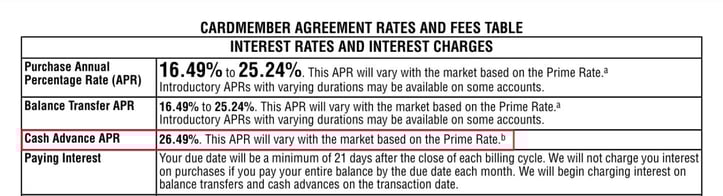
You’ll probably also pay a fee of up to 5% of the cash advance amount. The combination of the higher rate and this fee can translate to a higher minimum payment.
6. An Update to the Minimum Payment Formula
Card issuers can change the formula they use to calculate the minimum payment; for example, moving from 1% of the balance plus interest to a flat 2% of the balance.
But they have to give you 45 days' advance written notice.
You won’t have an opportunity to say no to a change in the minimum payment formula, but at least you’ll have a heads-up that your payment may change.
7. You Close Your Account Due to Changes in Terms
If you get a notice that your card issuer is making significant changes to your card terms, you often have the option to close the account and pay it off under your previous terms.
If you close your account due to the change, the issuer may require you to pay the balance off in five years or less, or may double the percentage of the balance required for the minimum payment.
Don’t Let Higher Minimum Payments Surprise You
Increases in your credit card minimum payments can throw off your budget. But the biggest jumps often happen if you fall behind on your minimum payments.
Federal Reserve research has found that the percentage of Americans who expect to miss a minimum payment is growing.
Knowing what’s coming up may help you plan and try to avoid falling behind.
But if you are having trouble keeping up, think about reaching out for help from a nonprofit credit counseling agency. You may want to do it before you fall behind to avoid consequences that could be worse than a higher minimum payment.
Editorial Note: Our site content is not provided or commissioned by any credit card issuer(s). Opinions expressed on CardRates.com are the author's alone, not those of any credit card issuer, and have not been reviewed, approved, or otherwise endorsed by credit card issuers. Every reasonable effort has been made to maintain accurate information; however, all credit card offer details, including information about rewards, signup bonuses, introductory offers, and other terms and conditions, is presented without warranty. Clicking on any offer on CardRates.com will direct you to the issuer's website, where you can review the current terms and conditions of the offer.
About the Author