
Writer: Gerri Detweiler


Editor: Jon McDonald


Reviewer: Ashley Fricker

Opinions expressed here are ours alone, and are not provided, endorsed, or approved by any issuer. Our articles follow strict editorial guidelines and are updated regularly.
You go to make a purchase with your credit card and discover the credit limit you were counting on is suddenly slashed. It can happen to anyone, whether you have good credit or bad credit.
Enough people have experienced credit limit cuts that the Consumer Financial Protection Bureau (CFPB) researched it for a 2022 report.
It explained that “credit line decreases (CLDs) are an industry practice where a credit card issuer reduces a consumer’s credit limit amount on their existing open account.” It also found that “during a CLD, issuers often cut the vast majority of available credit.”
There are several common reasons. Here’s why your credit limit may be cut, and if it happens, what you can do about it.
Individual Behavioral Triggers
How you use your card (or don’t use it) may impact your credit limit in the future.
1. Inactivity or Infrequent Use
Card issuers make money when you use your card, mainly through a combination of the swipe fees businesses pay (called “interchange fees”) and through interest you pay if you carry a balance.
A credit limit involves a decision about risk, and if you’re not a profitable customer, the issuer may decide it would rather lower your available credit and possibly raise the limit for someone who will use it.
2. Over-Extension and Utilization Spikes
If you frequently charge up to your limit or carry high balances, your issuer may decide you’re a higher credit risk and lower your limit. High utilization (the balance compared to the credit limit) can lower your credit scores, which in turn raises your risk profile.
| Behavioral Trigger | Why the Issuer Cares | The Impact on You |
|---|---|---|
| Inactivity / Infrequent Use | Issuer loses out on swipe fees (interchange fees) and interest. They prefer to give that credit to profitable customers. | Loss of an emergency safety net and increased financial stress. |
| Over-Extension & Spikes | Rapidly charging up to your limit signals higher default risk. | Slashes your available credit, cutting off your ability to pay essential bills. |
Issuers won’t usually lower your limit below your current balance, according to the CFPB, but dropping your limit close to your outstanding balance can be painful.
It will cut off access to the credit you may rely on to pay essential bills. And even if you don’t use that extra available credit, knowing it is available can mean less financial stress.
Overall Financial Health Indicators
Card issuers don’t just monitor how you manage your account. They also often monitor how you manage other accounts to keep tabs on your overall financial health.
3. Credit Report and Score Fluctuations
When you apply for a credit card, the card issuer will almost always check your personal credit score with one of the major credit bureaus.
If you get approved, an issuer will often review your credit from time to time to see whether you may be a good candidate for a credit limit increase or another card offer. And don’t worry, that credit review will involve a soft inquiry that doesn’t impact your credit scores.
| Financial Health Indicator | What Triggers a Credit Cut | Recommended Action |
|---|---|---|
| Credit Report & Score | Significant drops during periodic soft inquiries. | Monitor your credit health regularly to catch drops early. |
| Negative Data & Fraud | Collections, charge-offs, or multiple rapid inquiries; identity theft flags. | File an identity theft fraud affidavit with the three major bureaus. |
| Income & Employment | Reporting a reduced income when prompted on the issuer’s app/website. | Understand that updates can trigger an automatic limit review. |
But sometimes these credit reviews can trigger a credit limit decrease if your credit scores have dropped significantly, for example.
4. Negative Data and Identity Theft Red Flags
Issuers monitor risk all the time, and may cut credit limits even if you continue to pay your card on time. Negative items on your credit reports, such as collection accounts or charge-offs, can signal that you’re struggling financially.
Multiple credit inquiries in a short period of time may also be associated with higher risk.
Identity theft can also impact your credit scores. An issuer may reduce your credit limit as a precaution. If you’ve been a victim of identity theft, file an identity theft fraud affidavit with the three major credit bureaus.
5. Income and Employment Updates
Have you logged into your card issuer’s website or app and seen a question about your current income?
Credit reports don’t include income or verified employment information, so issuers usually get this information by asking.
Understand that a reduced income may prompt a review that could affect your credit limit.
Economic Forces
It’s hard not to take a credit limit decrease personally. But sometimes it really, truly, has nothing to do with you.
6. Uncertainty and Volatility in the Economy
During the 2008 financial crisis, many card issuers lowered cardholders’ credit limits to the amount they owed, giving them no ability to charge more on the card.
During the COVID-19 pandemic, the CFPB study I mentioned earlier also found that “credit card limits on existing accounts were cut … particularly for high credit score borrowers.”
| Economic Event | Issuer Action / Strategy | Primary Target Affected |
|---|---|---|
| 2008 Financial Crisis | Slashed limits down to match existing balances (“chasing the balance”). | Broad consumer base across all tiers. |
| COVID-19 Pandemic | Proactively lowered limits to cut exposure to potential sudden job losses. | Surprisingly, hit high-credit-score borrowers hard. |
| General Market Volatility | Tightening risk models to meet federal banking regulations. | Accounts caught in broad automated portfolio sweeps. |
When the economy gets rocky, issuers know the number of cardholders who can’t pay their debts will increase, and they try to get ahead of the downturn to cut their exposure.
7. Portfolio and Risk Policy Adjustments
Most credit cards are issued by banks that must follow federal banking regulations for safety and soundness. The credit limits they offer, and the borrowers they offer them to, will be part of their evaluation by regulators.
That may mean that the credit limit you got a few years ago is considered riskier today. When banks adjust their risk policy, you may get swept up in that change, even if you did nothing wrong.
How You Can Respond to a Credit Limit Decrease
You should get a notice from your card issuer if your credit limit is decreased, which spells out the top reasons behind that decision.
First, read it carefully. Then consider taking one or more of the following actions:
Contact the Issuer for Reconsideration
It doesn’t hurt to call your card issuer and politely ask whether your credit limit can be restored. You may not immediately get back the limit you had before, but you may be able to get enough that you’ll have a little more breathing room.
Asking for reconsideration can be especially appropriate if your account was swept up in a change that affected multiple accounts.
If the answer is no, ask when you should try again, then mark your calendar.
Better Manage Your Credit Utilization
Higher credit scores often translate to higher credit limits. Often, one of the fastest ways to boost credit scores is to lower credit utilization on an account with a high balance compared to the credit limit.
If your balance is at 50% of your available credit, for example, and you can get it down to 25%, you may see a meaningful jump in your credit score.
That’s because credit scoring models, such as FICO, like to see your credit utilization ratio below 30%. If you ever get up to, say, 90% credit utilization, that is a major red flag to issuers.
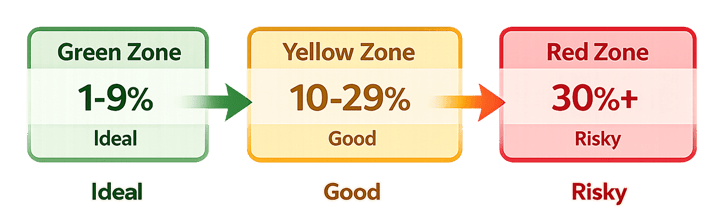
You can learn how to improve credit utilization through guides like this one: How to Use “Credit Utilization Zones” to Target Credit Score Increases
Check In on Your Credit Health
If you haven’t been checking your credit regularly, a CLD may be the push you need to start monitoring your credit health.
This can alert you to issues that may be bringing down your scores before you feel the consequences of a credit limit decrease, and also motivate you to create a plan of action.
Know How to Move Forward if Your Limit Goes Down
A credit limit decrease can feel like a financial gut punch, but it doesn’t have to knock you down. If it happens, take a deep breath, find out what was behind it, and decide what you want to do about it right now and in the future.
Issuers make these decisions based on risk, and the same factors that help improve your credit scores can help you reduce your chances of having your limit cut. Take steps to pay off high balances, make payments on time, and even consider getting another card so you’re not relying on one or two issuers’ evaluation of your profile.
Editorial Note: Our site content is not provided or commissioned by any credit card issuer(s). Opinions expressed on CardRates.com are the author's alone, not those of any credit card issuer, and have not been reviewed, approved, or otherwise endorsed by credit card issuers. Every reasonable effort has been made to maintain accurate information; however, all credit card offer details, including information about rewards, signup bonuses, introductory offers, and other terms and conditions, is presented without warranty. Clicking on any offer on CardRates.com will direct you to the issuer's website, where you can review the current terms and conditions of the offer.
About the Author