
Writer: Eric Bank


Editor: Lillian Guevara-Castro


Reviewer: Ashley Fricker

Key Takeaways
Most prepaid cards are free to acquire online. Here are the best available:
-
Current Visa Debit is best for everyday banking with no monthly fee.
-
GO2bank™ is best for free cash deposits at Walgreens.
-
Walmart MoneyCard® is best for cash back on Walmart purchases.
A prepaid or debit card can make everyday spending convenient, but fees can chip away at your balance. If you’re looking for free prepaid debit cards, focus on options with no monthly fee, an easy fee waiver, or free ways to reload and withdraw money.
Our picks below include prepaid cards and debit accounts with features that help keep costs down. Some still charge monthly subscriptions or fees for certain transactions, so we’ll help you compare what’s free — and what you may have to pay for.
-
Navigate This Article:
Free Prepaid Debit Visa Cards
Several top prepaid debit cards carry the famous Visa logo, representing the world’s largest payment network. You can use these cards online and in person to pay bills, add funds, and make purchases wherever Visa debit cards are accepted.


- Earn points on swipes: Earn up to 7x the points on card swipes at over 14,000 participating merchants, then redeem them for cash back in your account.*
- Get paid up to 2 days faster with direct deposit*
- If you qualify, you can access up to $1,000 before payday with a paycheck advance
- Qualifying direct deposits receive fee-free overdrafts*
- No minimum balance fees, no overdraft fees, no bank transfer fees
- Access to more than 40,000 fee-free ATMs*
- *View product disclosures here.
- Overdraft protection up to $300 with opt-in and eligible direct deposit*
- No monthly fees with eligible direct deposit, otherwise $5 per month
- Earn up to 7% cash back when you buy eGift Cards in the app
- Get your pay up to 2 days early – Get your government benefits up to 4 days early.*
- High-yield savings account, 4.50% APY paid quarterly on savings up to $5,000.*
*Terms and conditions apply. GO2bank™ cards are issued by Green Dot Bank, Member FDIC, pursuant to a license from Visa U.S.A., Inc. Visa is a registered trademark of Visa International Service Association. Overdraft fees may apply. Click Apply Now to learn more.
These cards free you from nasty overdraft fees, and you can get them without worrying about your credit score since no credit check is required. In addition, Visa’s Zero Liability Policy protects you against lost, stolen, and fraudulently used cards.
Free Prepaid Debit Mastercard
Mastercard is the second-largest payment network behind Visa. Its logo graces dozens of the best credit, debit, and prepaid cards. All Mastercard prepaid debit cards offer Mastercard ID Theft Protection™, a free service that alerts you to suspicious activity.
Here’s a solid pick for a Mastercard prepaid debit card:
- Waive your monthly fee when you direct deposit $500+ in previous monthly period. Otherwise, $5.94 a month.*
- Earn 3% cash back at Walmart.com, 2% cash back at Walmart fuel stations, & 1% cash back at Walmart stores, up to $75 each year.*
- Earn 2% interest rate on up to $1,000 balance in your savings account. Plus, get chances to win cash prizes each month!*
- Get peace of mind with three coverage levels, up to $300, for purchase transactions with opt-in & eligible direct deposit.*
*Please see site for full terms and conditions.
Additional Disclosure: Walmart MoneyCard® is a debit card offer.
Another feature is Mastercard rePower®, which lets you instantly add funds to an eligible Mastercard prepaid card at participating locations.
Paid Prepaid Card Alternatives For Kids & Families
A prepaid debit card for families can give your kids an introduction to money management. Parents retain control while children get some freedom to spend the money available on their cards.
These options charge subscription fees, but their accompanying mobile apps offer tools such as automatic allowances, savings goals, and spending alerts. If those features would be useful for your family, the following cards may be worth the cost:

- Greenlight is a debit card for kids, managed by parents
- Parents set flexible controls and receive real-time alerts while kids monitor their balances, set goals, and learn how to manage money
- Feel secure knowing Greenlight blocks unsafe spending categories
- Receive Mastercard’s Zero Liability Protection
- Upload a photo of your choice to create a unique custom card
- Debit cards are FDIC-insured up to $250,000
- Easily turn your Greenlight card on or off and receive real-time spending notifications
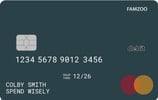
- Great for families who wish to store money on multiple prepaid cards linked together
- No risk of debt, overdraft, or hidden fees
- Retain parental visibility and control while empowering kids of all ages
- Separate funds into multiple purpose-driven accounts
- Alert parents and children about card activity and the remaining balance in real time
- A paid FamZoo subscription entitles you to use all of the active prepaid cards in your FamZoo family for as long as your subscription remains active. Adding family members and adding cards does not impact your subscription fee.
Parents can monitor their children’s spending and lock or unlock their cards through the app. Compare subscription costs and included features to decide which option fits your family’s needs and budget.
Can I Get a Prepaid Debit Card For Free?
Prepaid debit cards are typically free to obtain when you sign up online. However, they often incur various fees for the services they offer, such as:
- Purchasing or activating a card at a retail location. Typically, this is a one-time fee of about $3.
- Plan fees in the form of a flat monthly fee (about $5 to $10 per month) or a per-use fee of around $1.50.
- A cash reload fee at specified locations or via a mobile banking app.
- Money transfers, such as those made to a PayPal account.
- Having a low balance or account inactivity
- Cash withdrawals from ATMs, cash reload locations, and financial institutions. The ATM fee may not apply to in-network ATMs.
- Declined transactions
- Replacement or custom cards
This is not a complete list of possible fees. The fee amounts you’ll pay depend on how you use the card, and several fees are avoidable, including a monthly fee or a per-use fee.
It’s really worth taking some time to go over a card’s fee schedule in the cardholder agreement. In fact, reading the entire agreement before signing up is a smart move.
How Does a Prepaid Debit Card Work?
If you have ever used a debit card linked to your savings or checking account, you’re already familiar with most of the concepts involved in the workings of a prepaid debit card. The difference between a bank (or other financial institution) debit card and a prepaid debit card is their funding:
- The money in your bank account funds a bank debit card.
- A prepaid debit card is funded by the money you deposit into the card’s account — no bank account is needed.
The two card types share certain features:
- No credit score is required.
- No credit is offered — you can spend only the amount in your account. However, some cards may provide a small purchase cushion (~$10) to handle minor overdrafts.
- Purchases and cash withdrawal transactions are immediately deducted from the account balance.
- No overdraft fee (except for accounts with a purchase cushion that goes unpaid).
- No late payment fees.
- Both types of cards are accepted by the same merchants.
- Do not affect your credit score nor credit history.
Some similarities exist between a prepaid debit card and a secured credit card in that a secured credit card is backed by your cash deposit. The difference is that you don’t deplete a secured card’s deposit by using the card — you are using credit instead.
Occasionally, you’ll hear the term “prepaid credit card” to refer to a prepaid debit card. But a prepaid credit card is a misnomer that really shouldn’t be used.
Signup costs and ATM fees vary by card. Check whether the provider offers free online enrollment or fee-free ATM withdrawals before applying.
Can I Add Money to a Prepaid Card Online?
A prepaid card differs from a gift card in that it is a reloadable prepaid card — you can’t reload a gift card the way you can a reloadable prepaid card. You usually have more than one way to add money to a prepaid card. Unless you reload the card online, expect to pay a fee for the privilege.
- Retail locations: You can add money to your prepaid spend card by sauntering into a designated reload location (for example, a Walmart store) and plunking down cash, a check, or a money order.
- Reload packs: You can purchase a reload pack from designated locations and then do a debit card transfer (online or via an app) from the pack to the prepaid card.
- Transfers: An online debit card transfer allows you to move money to your prepaid card from another one of your accounts, including those at banks, as well as your Venmo or PayPal account.
- Direct deposits: You can have your employer or a government agency directly deposit money into your prepaid card account. Typically, direct deposits are free and shave two days off the waiting time to receive funds.
- MoneyGram/Western Union: You can use Western Union Reload+ to reload your prepaid card at an agent location. If you prefer, you can transfer money at a MoneyGram agent location or kiosk.
- Mobile check deposit: You can use your mobile app to scan and transmit a check to reload your card.
The prepaid card’s fee schedule will detail how much each reload method will cost.
For example, GO2bank offers free direct deposit and free mobile check cashing with its 10-day funding option. Faster check funding costs 1% for eligible preprinted payroll and government checks or 5% for other eligible checks, with a $5 minimum fee.
Do Prepaid Cards Require a Bank Account?
They don’t. In fact, that’s one of their biggest advantages because many people opt for them instead of a traditional bank account. Some folks avoid banks for reasons like limited disposable income, fear of fees, or simply as a stance against the system.
Checking accounts can and do charge high fees for overdrafts and insufficient funds. If you’ve ever been burnt by this kind of fee, you may be a good candidate for a prepaid account instead.
If you choose carefully, you’ll be able to get a low-cost prepaid card that may save you hundreds of dollars annually relative to the fees you may pay for a checking account.
No matter why you prefer to steer clear of banks, a prepaid card offers you the ease of using a debit card without needing a checking account.
Another option is to open a share account at a credit union. These are usually less expensive than bank checking accounts, especially when it comes to items like overdrafts. Also, a credit union savings account may pay more interest than its neighboring banks do.
Are There Drawbacks to Prepaid Cards?
Prepaid cards are not all rainbows and unicorns. Perhaps their biggest drawback is that you can’t use them to establish or build your credit score. Your prepaid card activity is not reported to the credit bureaus and doesn’t figure into the calculation of your credit score.
This chart summarizes some of the most significant differences between secured, debit, and prepaid cards:
| Secured Credit Cards | Debit Cards | Prepaid Cards | |
|---|---|---|---|
| Operated by major issuers | ✅ | ✅ | ✅ |
| Can use for in-store purchases | ✅ | ✅ | ✅ |
| Can use for online purchases | ✅ | ✅ | ✅ |
| Connected to a bank account | ✅ | ✅ | ❌ |
| Uses a line of credit for purchases | ✅ | ❌ | ❌ |
| Reports to the credit bureaus | ✅ | ❌ | ❌ |
| Can impact credit scores | ✅ | ❌ | ❌ |
| Can carry unpaid credit card debt | ✅ | ❌ | ❌ |
You might already have a high credit score and not be concerned about how your prepaid card activity appears. Or perhaps your score is low, and it still doesn’t bother you.
One downside of prepaid cards is that, generally, they don’t offer rewards, although a few Netspend cards provide Payback Rewards tailored to your spending. In contrast, a rewards credit card often delivers more substantial benefits than even the most rewarding prepaid cards.
Compare Free Prepaid Debit Cards Online
Prepaid cards and debit accounts can make everyday spending convenient, and some offer ways to avoid monthly, reload, or ATM fees. And you can use them as you would a credit card to charge purchases without paying interest or late fees.
We’ve made it simple for you to compare different prepaid debit cards by providing links to their websites, where you can check out all the specifics, including the costs. Just hit APPLY NOW, and you’ll be on your way to a more straightforward, cost-effective alternative to traditional bank or credit cards.
Editorial Note: Our site content is not provided or commissioned by any credit card issuer(s). Opinions expressed on CardRates.com are the author's alone, not those of any credit card issuer, and have not been reviewed, approved, or otherwise endorsed by credit card issuers. Every reasonable effort has been made to maintain accurate information; however, all credit card offer details, including information about rewards, signup bonuses, introductory offers, and other terms and conditions, is presented without warranty. Clicking on any offer on CardRates.com will direct you to the issuer's website, where you can review the current terms and conditions of the offer.
About the Author