Brittney is a Credit Strategist and Finance Expert who has spent years honing her knowledge of the credit industry both personally and professionally. Brittney applies her more than a decade of research experience to crafting in-depth consumer guides designed to help CardRates readers make better, more informed financial decisions.
Lillian Guevara-Castro brings more than 30 years of editing and journalism experience to the CardRates team. She has worked at The Atlanta Journal and Constitution, Gwinnett Daily News, Gainesville Sun, and The New York Times, where she covered demographics, consumer issues, and the business and financial sectors. Lillian has a degree in journalism and communications from Georgia State University and brings her fact-checking expertise to ensure Digital Brands content is accurate and engaging.
Ashley Fricker has more than a decade of experience as a finance contributor and editor, and has specialized in the credit card industry since 2015. Her credit card commentary is featured on national media outlets that include CNBC, MarketWatch, Investopedia, and Reader's Digest, among many others. She has worked closely with the world’s largest banks and financial institutions, up-and-coming fintech companies, and press and news outlets to curate comprehensive content and media. Ashley holds a bachelor's degree in multimedia journalism from Florida Atlantic University.
Below are our picks for 2026's best secured credit cards. Unlike unsecured cards, these cards require users to make a refundable deposit into a bank account to secure a line of credit.
Disclosure: When you apply through links on our site, we often earn referral fees from partners. For more information, see our ad disclosure
Advertiser Disclosure
CardRates.com is a free online resource that offers valuable content and comparison services to users. To keep this resource 100% free, we receive compensation for referrals for many of the offers listed on the site. Along with key review factors, this compensation may impact how and where products appear across CardRates.com (including, for example, the order in which they appear). CardRates.com does not include the entire universe of available offers. Editorial opinions expressed on the site are strictly our own and are not provided, endorsed, or approved by advertisers.
Our experts rate credit card offers based on factors like rewards, APRs, signup bonuses, fees, and approval rates, with a focus on benefits that provide the best value. We also consider cardholder needs such as credit-building potential, issuer reputation, and customer service. Our ratings are unbiased, updated regularly, and not influenced by issuers.
The secured Self Visa® Credit Card* requires no credit check or minimum score.
Reports to all 3 major credit bureaus to establish and build credit, with free access to your credit score.
Secure your credit line with a refundable security deposit as low as $100.**
Deposits are returned upon account closure after settling outstanding balances.
*The secured Self Visa® Credit Card is issued by Lead Bank, Sunrise Banks, N.A., or First Century Bank, N.A., each Member FDIC.
**Qualification for the secured Self Visa® Credit Card is based on meeting eligibility requirements, including income and expense requirements and establishment of security interest. Criteria subject to change.
Intro (Purchases)N/A
Intro (Transfers)N/A
Regular APRVariable APR of 27.49%
Annual Fee$0 annual fee for the first year only, $25 annual fee thereafter
Our experts rate credit card offers based on factors like rewards, APRs, signup bonuses, fees, and approval rates, with a focus on benefits that provide the best value. We also consider cardholder needs such as credit-building potential, issuer reputation, and customer service. Our ratings are unbiased, updated regularly, and not influenced by issuers.
Our experts rate credit card offers based on factors like rewards, APRs, signup bonuses, fees, and approval rates, with a focus on benefits that provide the best value. We also consider cardholder needs such as credit-building potential, issuer reputation, and customer service. Our ratings are unbiased, updated regularly, and not influenced by issuers.
No annual or hidden fees. See if you're approved in seconds
Building your credit? Using the Capital One Platinum Secured card responsibly could help
Put down a refundable security deposit starting at $49 to get at least a $200 initial credit line
You could earn back your security deposit as a statement credit when you use your card responsibly, like making payments on time
Be automatically considered for a higher credit line in as little as 6 months with no additional deposit needed
Enjoy peace of mind with $0 Fraud Liability so that you won't be responsible for unauthorized charges
Monitor your credit score with CreditWise from Capital One. It's free for everyone
Get access to your account 24 hours a day, 7 days a week with online banking to access your account from your desktop or smartphone, with Capital One's mobile app
Capital One Quicksilver Secured Cash Rewards Credit Card
4.0/5.0
About this rating
Our experts rate credit card offers based on factors like rewards, APRs, signup bonuses, fees, and approval rates, with a focus on benefits that provide the best value. We also consider cardholder needs such as credit-building potential, issuer reputation, and customer service. Our ratings are unbiased, updated regularly, and not influenced by issuers.
Our experts rate credit card offers based on factors like rewards, APRs, signup bonuses, fees, and approval rates, with a focus on benefits that provide the best value. We also consider cardholder needs such as credit-building potential, issuer reputation, and customer service. Our ratings are unbiased, updated regularly, and not influenced by issuers.
Now offering Up To 10% Cash Back at select merchants with First Progress! Plus, 1% back when you make payments!^^
A $200 refundable deposit is your first step toward better credit!
Apply with no impact to your credit!²
Build your credit history across 3 major credit reporting agencies: Equifax, Experian and TransUnion.¹
All credit types welcome to apply!
¹Cardholders who keep their balance low and pay their credit card bill on time every month typically do see an increase in their credit score.
²We may pull a soft inquiry of your credit. Soft inquiries do not impact your credit score.
^^The 10% cash back rate is available only at a limited number of participating merchants. Offer percentages vary by merchant and are subject to change. See First Progress Rewards Program Terms & Conditions for details.
Secured credit cards are a great way for those with a limited or bad credit history to improve their credit through responsible use. Finding the right secured card, however, can be tricky. Below is a summary table that makes it much easier. Compare features of the top secured cards, then simply click on your card of choice to visit its online application.
Our experts rate secured credit cards based on deposit amounts, fees, APRs, approval ease, benefits, and issuer reputation. We focus on providing the best options for consumers looking to build or rebuild credit and compare offers to find the most accessible and affordable terms. Issuers have no influence on our ratings.
Our experts rate secured credit cards based on deposit amounts, fees, APRs, approval ease, benefits, and issuer reputation. We focus on providing the best options for consumers looking to build or rebuild credit and compare offers to find the most accessible and affordable terms. Issuers have no influence on our ratings.
Capital One Quicksilver Secured Cash Rewards Credit Card
4.0/5.0
About this rating
Our experts rate secured credit cards based on deposit amounts, fees, APRs, approval ease, benefits, and issuer reputation. We focus on providing the best options for consumers looking to build or rebuild credit and compare offers to find the most accessible and affordable terms. Issuers have no influence on our ratings.
Our experts rate secured credit cards based on deposit amounts, fees, APRs, approval ease, benefits, and issuer reputation. We focus on providing the best options for consumers looking to build or rebuild credit and compare offers to find the most accessible and affordable terms. Issuers have no influence on our ratings.
The best secured credit cards may initially have higher upfront costs, but they can provide tremendous savings as you attempt to build (or rebuild) your credit history.
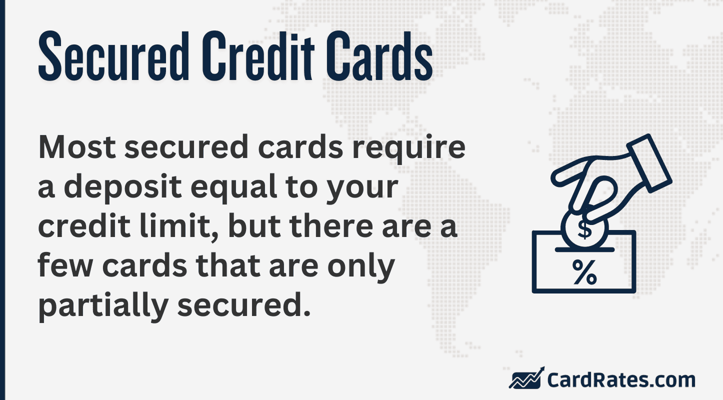
A secured credit card will require a refundable security deposit for approval. The amount of your deposit typically determines your card’s credit limit. Going the secured card route can provide you with a larger credit limit than an unsecured credit card for bad credit.
And just like any other credit card, a secured card will report your payment history to each major credit bureau, which helps you improve your credit score with on-time payments.
1. What is a Secured Credit Card?
A secured credit card is a financial product designed to help consumers build — or rebuild — their credit score. These cards work like any other credit card. You can use them to make purchases, pay bills, shop online, or pay for a service that does not accept cash.
To get a secured credit card, you’ll need to put down a refundable security deposit. As the name implies, that deposit backs your account in case you miss a payment.
Your deposit doesn’t replace your monthly payment obligation. You’ll still need to pay your bill each month after making the security deposit. If you close your secured credit card account in good standing with no balance, the issuer will refund your full deposit.
Unsecured Credit Cards
Secured Credit Cards
No deposit or collateral required to open an account
Refundable deposit required to open an account
High risk to the issuer
Low risk to the issuer
Low-fee cards require at least fair credit
Low-fee cards available to most credit types
Credit limit is based on your credit profile and income
Credit limit is based on the size of the deposit
Because you’re securing your account with a deposit, you don’t need to worry about your credit score preventing you from getting approved for a credit card. In fact, many secured credit cards don’t even require a credit check to get started.
If you open a secured credit card with an issuer that also has unsecured credit cards in its portfolio, you may undergo periodic reviews that check your account status and credit score so the issuer can upgrade you to an unsecured card if you qualify. Your security deposit will be refunded to you during the transition to an unsecured card, assuming you have no outstanding debts owed to the issuer.
Apart from the mandatory security deposit, your secured card functions just like any regular credit card, offering all the credit-building benefits you’d find with unsecured credit cards.
2. How Does a Secured Credit Card Work?
On the surface, you can not tell the difference between a secured credit card and a regular credit card. Both have a credit card network logo — typically Visa or Mastercard — on the front. You can use these cards anywhere that accepts that network’s cards.
But since a secured credit card is designed for someone who has poor credit or very limited credit, banks require a security deposit for approval. It’s like when you’re renting an apartment and the landlord requires a deposit before you move in.
Just as you get your deposit back if you don’t trash the apartment, the credit card issuer will refund your deposit once you close your account — as long as you have no debt with the issuer when you cancel the card.
You may not have to undergo a credit check to receive a secured credit card. Your cash deposit — and an eligible bank account — is enough for most issuers to approve your application. Your deposit will usually determine your credit limit. For example, a $500 security deposit will net you a $500 credit limit.
Some secured credit cards charge a lower APR (annual percentage rate) than unsecured credit cards because your deposit offsets the risk the bank assumes when it issues a collateral-free credit card to someone who has bad credit. Although the upfront deposit may seem unfair, you at least get that money back, and the interest rate will likely be much lower than an unsecured credit card for bad credit.
Most secured credit cards report your payment history to each major credit bureau, which is what helps build credit history when you consistently make on-time payments and keep your balance low. That can help you eventually upgrade to an unsecured credit card with fewer fees and more perks.
3. How Does a Secured Card Help You Build Credit?
Credit card issuers and other lenders report your payment history and current balance each month to one or all of the three major credit reporting bureaus: Equifax, TransUnion, and Experian.
The submitted information goes onto your credit history. On-time payments and low balances improve your credit scores. Late payments can sink your score by as many as 100 points in one fell swoop.
If you have negative items on your credit score from past mistakes — or if you’re new to credit and don’t have enough reported information to record a score — you can build your credit by adding new, positive items to your credit history.
Over time, reported entries lose their influence on your credit history. Lenders prioritize newer items because they reflect your current financial situation. By maintaining a good account standing, you can enhance your credit history and move closer to qualifying for an unsecured card.
4. What is the Easiest Secured Credit Card to Get?
There isn’t a concrete answer to this question because just about every secured card has the same odds of approval. As long as you aren’t in active bankruptcy, you have an active checking account, and can submit a security deposit, you will likely be approved for any secured credit card that you apply for.
Most of the cards on this list require a refundable security deposit of at least $200 or $300 to initiate your account. Some cards will not allow you to add to your deposit at a later date if you want to increase your credit limit. Others may accept another security deposit at a later date — for a fee.
The only exception to the security deposit rule is the Capital One Platinum Secured Credit Card. This card uses your credit history to determine the amount of security deposit you will need to pay. Depending on the condition of your credit score, you could pay as little as $49 to receive an initial $200 credit limit.
That is another big difference between the Capital One® card and other secured cards. You can get a larger credit limit based on the amount of your security deposit on other secured cards. For example, you can have up to a $4,900 credit limit with the Bank of America® Cash Back Secured Credit Card. But with Capital One, every new secured cardmember starts with the same credit limit.
The bank will monitor your account and check every six months to see whether you qualify for a card upgrade or credit limit increase. If you receive a credit limit increase, you will not have to add to your security deposit for the benefit.
5. What is the Minimum Credit Score Needed to Get a Secured Card?
There’s no minimum credit score needed for a secured credit card because your security deposit compensates for any lack of credit history or previous credit issues.
If you’re dealing with an active or just-resolved bankruptcy, unverifiable income, or don’t have enough funds for the deposit, you might find it challenging to qualify for a secured credit card. Recent foreclosures or accounts in collections could also affect your eligibility.
If you are denied, you can contact that card’s issuer and speak to a representative to explain your needs and current status. While this does not guarantee approval, it often helps you add some background information to your application, making it easier for the bank to consider your request for credit.
6. Which Banks Offer Secured Credit Cards?
Just about every major bank or credit union offers some form of a secured credit card.
On our list above, you can find secured cards from major national banks, including Bank of America, Capital One, and Citi. You can also find secured credit card offerings through many smaller regional banks and credit unions as well as independent online banks, such as Applied Bank, Merrick Bank, and OpenSky.
The number of secured credit card offerings in America alone can climb well into the thousands. If you have an active account at a bank or credit union and are interested in acquiring a secured credit card to improve your credit score, you can contact a branch and speak to a representative about the institution’s current offerings.
7. How Fast Can You Rebuild Credit with a Secured Card?
This depends on how bad your credit score currently is. If you have a recent bankruptcy, foreclosure, or other large negative item added to your credit profile, it could take more than a year to make a noticeable difference. If you are battling a few late payments, you may see improvement in a matter of months.
Every negative item lives on your credit report for a set amount of time. As each item gets older, you will find that it loses its impact on your credit score — as long as you replace it with newer and more positive items. This chart shows how long some common items can stay on your credit report:
Item Type
Time on Credit Reports
Soft Credit Report Inquiry
No Report Impact
Hard Credit Report Inquiry
2 Years
Delinquent Payment (30+ Days)
7 Years
Vehicle Repossession
7 Years
Defaulted Account
7 Years
Foreclosure
7 Years
Bankruptcy Discharge
7-10 Years
When building credit with a secured credit card, maintain a low balance to keep your credit utilization in good shape, and always make on-time payments. Your credit score will improve steadily over time, but remember to remain patient during this process. Rome wasn’t built in a day and neither is an excellent or good credit score.
8. Can You Be Denied a Secured Credit Card?
As with any other financial product, the bank or issuing company that receives your application can decide whether it wants to approve or deny you credit. Secured cards are fairly simply to qualify for, but there are instances in which you can be denied. These include:
A recent or active bankruptcy case
An extremely low credit score that shows an inability to repay debt
Recent foreclosures, repossessions, or collection accounts
Errors on your application that make the form impossible to process
No verifiable income
No way to verify your identity
Whenever you receive a credit card application rejection, the issuing bank must, by law, send you an adverse action letter that details why you did not qualify for the card or loan. You will get the full reasoning for the rejection as well as some tips on how to improve your credit report and score to change future application outcomes.
Create a realistic plan to raise your credit score over time. In many cases, that means being patient and letting older negative marks lose their impact as they age on your credit report.
You can often expedite the process by finding ways to add new, positive items to your history. You can do this by qualifying for a small personal loan with the help of a cosigner. You can also consider applying for a store-branded card or credit line.
Store credit cards are often closed-loop cards, which means they can only be used at the store where you applied for it — but they are often easier to qualify for and won’t require a security deposit for approval.
9. Do You Need a Bank Account to Get a Secured Card?
In just about every scenario, a secured credit card company will require an active checking or savings account to qualify you for a card.
You use this account to send your refundable security deposit and make your regular monthly payments. The bank will also use your account to verify income and payment history information.
The one positive is that you don’t necessarily need a checking or savings account with the bank that issues your card.
For example, you won’t need a checking account specifically with Citi to qualify for the Citi® Secured Mastercard®. Instead, you can link your active account through a local or online bank or credit union to send your deposit and make your monthly payment.
That said, it does not hurt to open an account with the bank that issues your secured credit card — especially if you are shopping for the card in hopes of improving your credit score.
A secured credit card can be the first step in building a stronger relationship with a lender. If you also open a regular account there — one that can receive direct deposits from your paycheck or benefits — you may strengthen that connection even further.
That can lead to an eventual card upgrade or approval for other loans and financial products. When you build a good history with a specific bank, it is far more likely to consider future applications than if you were a one-time customer who comes and goes.
10. How Long Before a Secured Card Becomes Unsecured?
Your ability to reapply largely depends on your current credit score. If you’ve had recent judgments, defaults, foreclosures, or repossessions, the bank might suggest waiting until more time has passed since those incidents were reported.
The same goes for late payments. Banks often view your most recent activity with more scrutiny than they do past items. A late payment last month is far more damaging than a missed payment last year. If you only have a few negative items that aren’t catastrophic, you could qualify for an upgrade to an unsecured credit card in as little as six months.
Some card issuers, most notably Capital One, provide an automatic credit line increase program that monitors your account every six months to see whether you qualify for a credit limit increase. If you have a secured credit card, you could qualify for either a credit limit increase or an upgrade to an unsecured credit card.
In most cases, a bank will not consider your application for an upgrade for at least six months. When you do officially qualify, the bank will send your new card in the mail, which can take seven to 10 business days. You will also receive a refund of your security deposit, minus any debts that you may owe to the credit card company.
11. What Fees Are Associated with Secured Cards?
Having bad credit is not cheap. Most financial products that cater to consumers who have bad or limited credit tack on substantial fees and charges to offset the risk that such products come with.
Fortunately, secured credit cards let you recover most of your card-related costs because your security deposit is fully refundable, provided you close your account in good standing and without debt.
That does not mean these cards are completely free to use, though. As a secured credit cardmember, you may have to pay:
Interest Rate Charges: This is the regular purchase APR you’re charged for eligible purchases made with the card. This charge generally ranges from 9.99% to 29.99%, depending on the card. You can avoid this fee altogether by paying your balance in full each month.
Annual Fee: These vary by card issuer. Some secured credit cards will not charge an annual fee, whereas others may charge anywhere between $35 and $99 each year to keep your account open. In most cases, the fee is deducted from your available balance.
Maintenance Fees: This is rare for secured cards, but becoming increasingly more common for unsecured cards for bad credit. These fees are charged monthly to your account and typically cost around $9.99. Check your credit card disclosure document to make sure your card doesn’t charge maintenance fees. If it does, find another card.
Cash Advance Fee: Some secured credit cards allow you to get a cash advance, where you withdraw money from your available credit line directly from an ATM machine or bank teller. The fee for this type of transaction is usually $10 or 3% to 5% of the cash advance amount, whichever is greater.
Foreign Transaction Fee: You may be charged a foreign transaction fee if you use your card to make a purchase overseas. This fee is usually around 3% of the purchase total. Banks charge this fee to cover the cost of converting foreign currency to U.S. dollars, but not all cards charge foreign transaction fees.
Balance Transfer Fee: Not all secured cards allow balance transfers, but if yours does, you may be charged a fee of between 3% and 5% of the total balance you transfer to the new account. You generally need a good credit score to be offered a balance transfer promotion.
Miscellaneous Fees: Some secured credit cards may charge you if you want to add to your security deposit to increase your credit limit. Other cards may qualify you for a credit limit increase without requiring you to add to your deposit — but you will still have to pay a fee. You may also have to pay a fee to replace a lost card, add another user to your account, or change your card’s design.
Fees are an unavoidable part of managing finances. However, with a top secured credit card, you can reduce these fees, gain access to credit, and boost your credit score over time. While the initial cost might seem overwhelming, you’ll get that money back eventually, provided you don’t owe anything to the issuer when you’re done.
Editorial Note: Our site content is not provided or commissioned by any credit card issuer(s). Opinions expressed on CardRates.com are the author's alone, not those of any credit card issuer, and have not been reviewed, approved, or otherwise endorsed by credit card issuers. Every reasonable effort has been made to maintain accurate information; however, all credit card offer details, including information about rewards, signup bonuses, introductory offers, and other terms and conditions, is presented without warranty. Clicking on any offer on CardRates.com will direct you to the issuer's website, where you can review the current terms and conditions of the offer.
The information on this page was reviewed for accuracy on .
About the Author
Brittney Mayer
Credit Analyst
Brittney is a Credit Strategist and Finance Expert who has spent years honing her knowledge of the credit industry both personally and professionally. Brittney applies her more than a decade of research experience to crafting in-depth consumer guides designed to help CardRates readers make better, more informed financial decisions.
Share the Knowledge!
Our finance experts work hard to show you the best credit cards. Want to show your appreciation? Share this page!
Advertiser Disclosure: The credit card offers that appear on this site are from credit card companies from which CardRates.com receives compensation. This compensation may impact how and where products appear on this site (including, for example, the order in which they appear). CardRates.com does not include all credit card companies or all available credit card offers. See the credit card issuer's website for specific terms and conditions of each card.