
Writer: Gerri Detweiler


Editor: Jon McDonald


Reviewer: Ashley Fricker

Opinions expressed here are ours alone, and are not provided, endorsed, or approved by any issuer. Our articles follow strict editorial guidelines and are updated regularly.
If you don’t use a credit card, you may lose it. It’s a lesson I learned firsthand recently when one of my card issuers closed a card I held for a very long time, but had rarely used in recent years.
It had started out as a co-branded card with an airline I don’t fly anymore, and while I liked having that generous credit line available just in case, it sat unused in my stack of cards.
When the issuer sent me a letter warning me that if I didn’t use it by a certain date, they would close my account, I finally conceded that I couldn’t find a good reason to keep it open.
There are several reasons issuers may close your account, and there are a few reasons you may want to close it first.
1. Issuers May Close Your Account Due to Inactivity
One of the most common reasons an issuer will close an account is because you aren’t using it. There are a few reasons for that, but the main reason is that you aren’t providing any revenue for the issuer.
At that point, the bank may want to extend that credit to someone who will charge more frequently.
The “Use It or Lose It” Policy
If you don’t use your credit card, it’s likely the issuer will eventually close the account. It may take a year or more of inactivity to trigger an account closure.
Issuers will often first send you a notice telling you that you need to use it or lose it, though they aren’t required to do that.
But if you’re not using the card, you may not be paying attention to notifications from the issuer, and you may discover the card was closed when you next try to use it, or when you check your credit report.
Why Banks Prefer Active Customers
Card issuers make money from swipe fees (the fees paid by retailers when your card is used) or from fees and interest you pay if you carry a balance. No activity means no income, beyond the annual fee (if there is one).
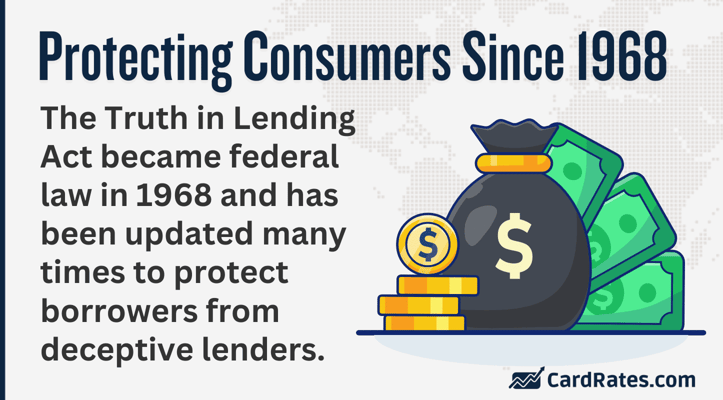
Under the federal Truth In Lending Act, a lender can’t terminate an open account before its expiration date just because the borrower doesn’t incur a finance charge (interest). But it can terminate an account that is inactive for three or more consecutive months.
It’s worth noting that if you are carrying a balance and paying interest, that will typically count as activity, even if you aren’t charging new purchases. In other words, you don’t have to keep adding to your debt to keep an account active.
Another reason issuers may close inactive accounts is that a credit limit represents potential risk. You could run into financial problems and charge more than you can afford to pay back, for example, or your card could be compromised and used fraudulently.
Regardless of the reason, if you fail to use your credit card, the issuer may decide it would be better off granting that credit line to someone who will likely use it.
2. The Ripple Effect on Your Credit Score
If your account is closed because you haven’t used it, it may impact your credit scores in a couple of ways. One is your credit utilization ratio, and the other is by lowering the average age of your credit accounts.
Both are factors in your credit scores, and understanding how they work will help you figure out if you need to stay vigilant about using your accounts.
How Utilization Ratios Shift
After payment history, the main factor that impacts credit scores is credit utilization. This ratio compares your credit card balances to your credit card limits, on a per-card basis as well as in the aggregate.
When an account is closed, that credit limit is no longer available. That, in turn, impacts your overall utilization level.
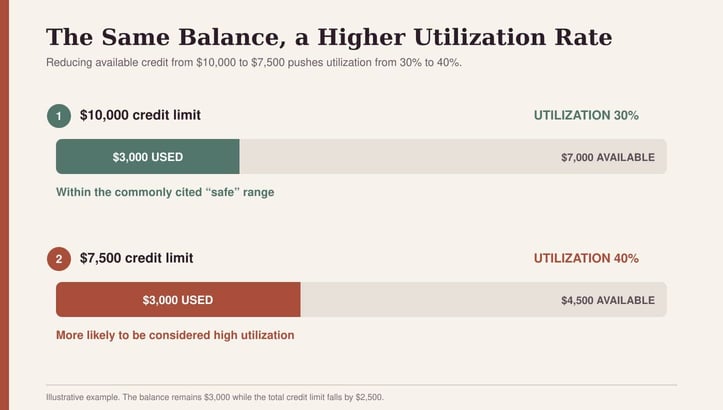
Let’s say, for example, you have four credit cards, each with a $2,500 limit for a total of $10,000 in available credit, and you have balances of $1,000 on three of those cards.
Your overall utilization is 30%. ($3,000 / $10,000 = 30%.)
A utilization ratio of 30% is often considered the upper limit of a “safe” range, though there’s no single ratio that’s best for everyone.
But now if you close one of those accounts, your total credit limit drops to $7,500, with the same $3,000 in balances.
Your overall utilization level is now 40%, which is more likely to lower your credit scores. ($3,000 / $7,500 = 40%.)
The specific impact of losing available credit will depend on your individual credit profile, but generally, more available credit gives you more leeway when it comes to this important credit score factor.
The Long-Term Impact on Credit Age
There’s another potential impact of closing an account: It may affect your credit age. Most credit scoring models consider how long you’ve had credit, and older is generally better when it comes to your credit history.
To evaluate credit age, credit scoring models typically consider the age of your oldest account, when you opened your most recent account, and the average age of all your accounts. Closing a credit card does not exclude it from this calculation.
| FICO Score Factor | Percentage of Your Score |
|---|---|
| Payment History | 35% |
| Amounts Owed | 30% |
| Credit History | 15% |
| Credit Mix | 10% |
| New Credit | 10% |
But closed accounts are not usually reported more than 10 years after they are closed, and that means they can have an impact on credit age in the future.
Once you build a well-established credit history, this becomes less of a concern, but if your credit history is relatively young or you have only a few accounts, closing an older account could have a fairly significant impact on your scores.
3. Hidden Risks Beyond Your Credit Score
Having a credit card account closed due to inactivity can certainly impact your credit scores. But there are other risks when it comes to credit cards you’ve stopped using.
Here are a few of the lesser-known drawbacks you could experience, especially if you are forgetful:
The Fraud Detection Blind Spot
If you don’t use a card, you may not notice when it’s being used fraudulently. This was another reason I finally let go of that card recently.
The issuer had a clunky website with a confusing autopay setup, and I didn’t want to worry that I’d miss activity on the account.
If you don’t have account activity alerts set up or miss notices from your card issuer, you could miss signs of credit fraud.
While you’re not legally responsible for more than the first $50 in unauthorized purchases, it’s a lot easier to deal with fraud if you catch it quickly.
Losing Perks You Didn’t Remember You Had
More than two decades ago, I lost several thousand airline miles on a card I stopped using. The issuer closed the account before I found a way to spend them. I still remember how annoyed I was to lose those points.
If you don’t use a card, the points, miles, or cash back rewards you have accumulated may go unused. And if the account is closed, you’ll forfeit them.
Forgotten Annual Fees
If you stop using a card but it carries an annual fee, you either need to cancel the card or pay the fee. It’s easy to forget about an annual fee on a card you’re not using.
Overlook it, though, and the issuer may close it for nonpayment and report a late payment to the credit bureaus. That could cause a lot more damage than having the issuer close it for lack of use.
When It Might Be Beneficial to Close a Card
Like me, you may decide it’s time to let a card go. Here’s how to know when it makes sense to proactively close an account.
Annual Fees vs. Value Proposition
If your card carries an annual fee, make sure the value you’re getting is more than the cost you’re paying. Do the math before your card renews.
Otherwise, you’re paying a fee to maintain a credit line you may not use again.
If you want to keep the credit limit but don’t want to pay the fee, ask the issuer whether your card can be downgraded to a less expensive (or even free) version. I did this recently with a premium card I wasn’t using enough to justify the cost.
I kept the credit limit, but no longer have to pay an annual fee of several hundred dollars.
Reducing Financial Clutter and Temptation
While there are credit card rewards enthusiasts who juggle dozens of cards, you may not want to devote time or energy to keeping track of more than a few. In that case, you may want to let go of cards you don’t value anymore.
Unless overspending or fraud concerns make you want to close all your unused cards at once, consider closing one at a time.
That way, you can monitor how your credit scores change with each closure. A credit score simulator can help you model out the impact of closing cards so you can better plan your strategy.
Be sure to look for ways to use rewards you’ve accumulated before you close your account. You may be able to transfer points to hotel or airline partners, for example, or spend points through online shopping portals.
Also, check for any subscriptions or automatic payments tied to the account.
How to Keep Accounts Open with Minimal Effort
One of the easiest ways to keep accounts open is to use them on a regular basis. You can use a card to pay for a monthly subscription, for example, or for specific types of purchases, like fuel or utilities.
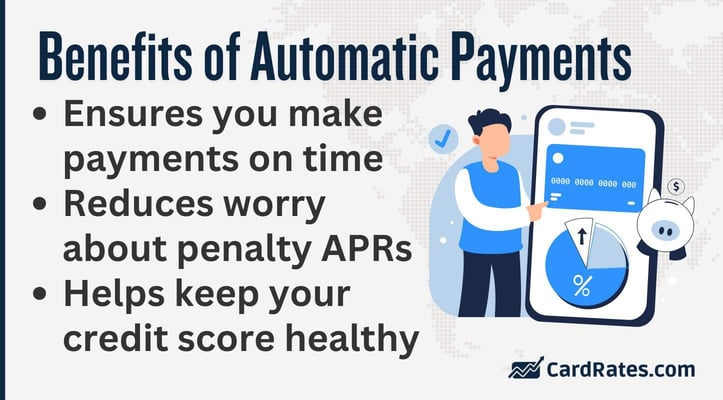
Be sure you’ve set up alerts so you know how much you’ve spent and when your payment is due. Consider using autopay to ensure you always pay on time.
While it’s possible the issuer could close your card or lower your credit limit if you use it only for small purchases, regular activity makes that less likely.
If your issuer closes your account and you still owe a balance, you can continue to pay it off under the current terms.
Credit Cards Can Be Powerful Tools, If You Use Them
Credit cards offer a credit line when you need one, and perks like cash back or travel rewards can add up.
They also offer one of the safest ways to pay for purchases. And paying a credit card bill on time is one of the top ways most people build their credit history over time.
Take an annual inventory of the cards you carry and decide which ones you want to keep. Use those cards on a regular basis and pay on time to help ensure they’ll be there for future purchases.
Editorial Note: Our site content is not provided or commissioned by any credit card issuer(s). Opinions expressed on CardRates.com are the author's alone, not those of any credit card issuer, and have not been reviewed, approved, or otherwise endorsed by credit card issuers. Every reasonable effort has been made to maintain accurate information; however, all credit card offer details, including information about rewards, signup bonuses, introductory offers, and other terms and conditions, is presented without warranty. Clicking on any offer on CardRates.com will direct you to the issuer's website, where you can review the current terms and conditions of the offer.
About the Author