
Writer: Andrew Allen


Editor: Lillian Guevara-Castro


Reviewer: Adam West

Our experts and industry insiders blog the latest news, studies and current events from inside the credit card industry. Our articles follow strict editorial guidelines.
Key Takeaways
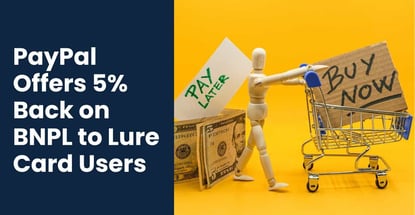
PayPal announced today that it is offering 5% cash back to American consumers who use its buy now, pay later (BNPL) options for purchases through the end of 2025.
For credit card issuers, PayPal’s offer is a sign that rewards-based competition from BNPL providers may escalate sooner than they thought.
The company’s move comes at a time when many people are preparing to start or ramp up their holiday spending.
As 2024 drew to a close, 36% of consumers in the U.S. took on holiday debt, and the average amount of that debt was more than $1,180.
Issuers who rely on the typically heavier transaction volume that flows through credit cards during the final months of a year may have already expected to lose some of those transactions to BNPL this holiday season.
More than half of U.S. shoppers, including nearly 60% of Gen Zers, already use BNPL services to complete purchases, according to a recent survey. Offers such as the one from PayPal stand to increase those numbers substantially.
Michelle Gill, General Manager, Small Business and Financial Services at PayPal, said in the release announcing the company’s cash back promotion that its BNPL products give people more shopping flexibility. She also spoke about the benefits that BNPL can bring to participants in the payments ecosystem.
“Our customers seek payment options that make holiday shopping easier and more rewarding,” Gill said. “And for the merchants, PayPal BNPL is a proven way to attract more shoppers and increase conversion during the busiest season of the year.”
BNPL Advances on Card Territory
Credit card rewards continue to be a key selling point with shoppers in the U.S. A recent study from the American Bankers Association shows that 80% of American consumers own at least one credit card that offers them access to rewards.
But if more BNPL providers begin attaching meaningful rewards programs to their products, fewer people may reach for their credit cards to pay for purchases in the future.
PayPal’s new reward program is just the latest instance of a BNPL provider encroaching on traditional credit card territory.
Klarna introduced a physical card in the U.S. over the summer that allows customers to pay for a purchase immediately or over time in installments. The payment tool has been an initial success with consumers, and more than 1 million people have signed up for a new Klarna card within the first 11 weeks the company offered it.
More than 1 million people in the U.S. signed up for Klarna’s new card in the 11 weeks following its release.
“The amazing response to our card in the U.S. shows just how strong the demand is for a fairer, more transparent way to pay,” David Sandstrom, Chief Marketing Officer for Klarna, said in a release detailing the early success of the card.
The transparency of BNPL products may be attractive to consumers who are experiencing financial struggles and want to avoid revolving credit card balances. PayPal’s press release indicates that 60% of consumers feel more financial stress ahead of the upcoming holiday season.
Now may be the right time for issuers to educate consumers about many of the features that credit cards can bring to their wallets, including more robust rewards programs and fraud protection services.
Issuers who consistently remind their cardholders about the benefits of the programs they offer can compete more effectively against BNPL providers looking to take market share away from credit cards.
Editorial Note: Our site content is not provided or commissioned by any credit card issuer(s). Opinions expressed on CardRates.com are the author's alone, not those of any credit card issuer, and have not been reviewed, approved, or otherwise endorsed by credit card issuers. Every reasonable effort has been made to maintain accurate information; however, all credit card offer details, including information about rewards, signup bonuses, introductory offers, and other terms and conditions, is presented without warranty. Clicking on any offer on CardRates.com will direct you to the issuer's website, where you can review the current terms and conditions of the offer.
About the Author