
Writer: Andrew Allen


Editor: Lillian Guevara-Castro


Reviewer: Adam West

Our experts and industry insiders blog the latest news, studies and current events from inside the credit card industry. Our articles follow strict editorial guidelines.
Key Takeaways
- Installment plans from private-label cards are growing faster than those attached to general-use cards.
- Card-linked installment plans may allow traditional credit card issuers to take market share away from companies offering buy now, pay later programs.
- Issuers can make their installment programs stand out by connecting them with benefits such as rewards on purchases.
Private-label installment plans have grown at a compound annual rate of 4.8% over the past two years, far outpacing similar payment plans traditional card issuers offer.
General-use card issuers could capture more customers and higher levels of card spend by fine-tuning their own installment-based options.
According to a new PYMNTS report, use of traditional card-based installments has only grown 0.8% in the past two years.
The growth in store card installment use comes in part from a somewhat surprising source — Generation Z, those born between 1997 and 2012. As older members of this group enter their thirties, they’re beginning to juggle the expenses of adulthood..
Many members of Gen Z may soon have car payments, homes to maintain and furnish, and children to support, if they don’t already. The generation’s size and spending power make them a valuable group for issuers to target.
A recent study reveals that Gen Z is the biggest generation the world has ever seen, accounting for nearly 25% of the earth’s population. In addition to being the largest generation, Gen Z is also likely to be the world’s wealthiest and highest-spending age group, according to the study.
Members of Gen Z turned to store card installment programs almost 20% more between 2023 and 2025.
The competition among payment providers to become Gen Z’s spending tool of choice stands to grow in intensity as this cohort ages.
From 2023 to 2025, members of Gen Z boosted their use of store card installment plans by nearly 20%, according to PYMNTS. That growth demonstrates that traditional issuers may have an opportunity to step in and offer a solution that aligns with Gen Z’s growing preference for card-based installment plans.
The rise in Gen Z’s store-card installment use may appear unusual at first glance, but the solutions come with a host of benefits.
The PYMNTS report found that store-card installment plans are easier to obtain than traditional card programs and let consumers break up payments while avoiding high interest costs.
“Younger consumers’ comfort with structured repayment is reshaping expectations, blurring the line between credit cards and buy now, pay later (BNPL) options,” according to the report.
“The slow adoption rate for installment use on general-purpose cards suggests that banks and networks will need more than cashback rewards to keep pace with retailers’ tailored offers,” they added.
Confronting the Rise of BNPL
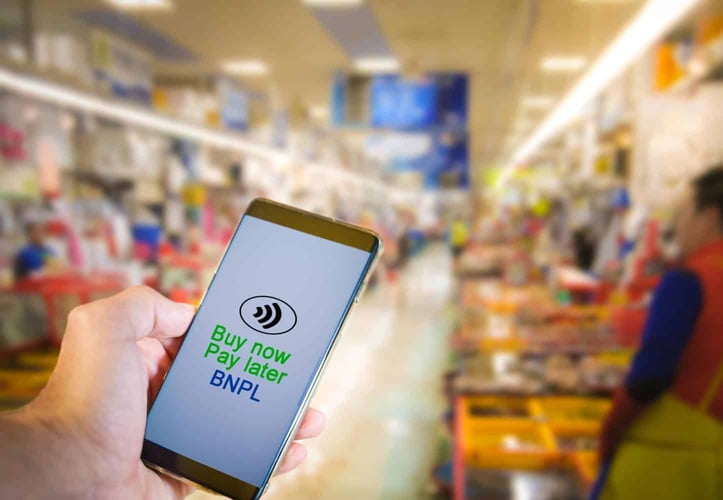
General-purpose credit cards that offer people the option of paying for a purchase in installments may allow issuers to win some business from store cards, but they may also position them to fight back against the growth of BNPL services.
Buy now, pay later programs have been a big hit with shoppers in recent years, and many more people are expected to turn to BNPL programs to finance their purchases through the end of the decade.
Experts estimate that the worldwide BNPL market will surpass $560 billion in 2025 and climb to more than $911 billion by 2030.
With that level of spend at stake, credit card issuers would be wise to figure out ways to swipe a piece or two of the swelling BNPL pie.
Issuers can achieve that by communicating to consumers the benefits of a traditional card.
Sunil Sachdev, SVP, Head of Embedded Finance and Digital Assets at Fiserv, told us that card-linked installment plans offer greater flexibility than traditional BNPL plans, letting people make larger installment purchases with pre-approved, fixed interest rates.
Installment plans attached to credit cards can provide a seamless checkout experience for shoppers while also giving merchants a shot in the arm by increasing their sales through trusted payment options, Sachdev said.
Popular BNPL services such as Klarna’s give consumers the option to pay in four equal installments. Credit card issuers could compete by creating alternative installment plans.
“Credit card installment payments also don’t have to fit the typical pay-in-four installments model and can be customized based on type of transaction and the length of relationship with the card member,” Sachdev told us.
Differentiation May Lead to Growth
More than 47 million adults in the U.S. used their general-purpose credit cards for installment payments over a three-month period earlier this year, according to PYMNTS Intelligence estimates.
If credit card issuers want to grow that number, they can leverage the advantages cards bring that make them more appealing than other payment tools. The rewards that accompany many card programs may be a good place to begin.
Numerous issuers offer points, travel miles, and cash back for every purchase a cardholder makes. Sachdev told us that BNPL services typically don’t offer these benefits, which can motivate people to spend more with their card.
American Express allows cardholders to split bigger purchases into monthly installments in a program that also offers rewards.
American Express offers a program called Plan It that, for a fixed fee, allows cardholders to split purchases of $100 or greater into equal monthly installments. The program, which is now available to select cardholders in the U.S., lets people earn rewards on their purchases.
The company says the program is easier to manage than major online installment programs. And Amex provides a Plan It calculator so cardholders can better understand their options.
“By offering exclusive features, and more robust consumer protections, financial institutions that offer pay-later systems can appeal to a wider range of consumer needs and behaviors,” Sachdev said. “This strategy also allows FIs to implement flexible repayment options while still serving their customers as a primary, long-term borrowing tool.”
Editorial Note: Our site content is not provided or commissioned by any credit card issuer(s). Opinions expressed on CardRates.com are the author's alone, not those of any credit card issuer, and have not been reviewed, approved, or otherwise endorsed by credit card issuers. Every reasonable effort has been made to maintain accurate information; however, all credit card offer details, including information about rewards, signup bonuses, introductory offers, and other terms and conditions, is presented without warranty. Clicking on any offer on CardRates.com will direct you to the issuer's website, where you can review the current terms and conditions of the offer.
About the Author