
Writer: Gerri Detweiler


Editor: Jon McDonald


Reviewer: Ashley Fricker

Opinions expressed here are ours alone, and are not provided, endorsed, or approved by any issuer. Our articles follow strict editorial guidelines and are updated regularly.
Filling up recently, I did a double-take when I swiped my credit card and saw $175 flash across the screen on the gas pump.
Fortunately, that wasn’t the total cost of the fuel — it was the hold being placed on my card to ensure there was enough money to cover my purchase.
Still, $175 is a lot of money. Add it to the cost of the fuel you put in your vehicle, and your fill-up can quickly eat up a lot of your available credit or checking account funds. If you’re not careful, it could even lead to overdrafts or other purchases getting declined.
How an Authorization Hold Works
When you swipe a card to pay for gas at the pump, reserve a hotel room, or secure a rental car, there may be a quick check to make sure the card is valid.
Until you finalize your purchase, though, neither your card issuer nor the merchant (gas station, hotel, or car rental agency, for example) knows how much you’ll spend.
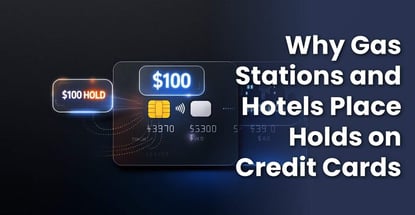
That’s where an authorization hold comes in: It holds funds to help ensure the merchant will get paid for the full transaction.
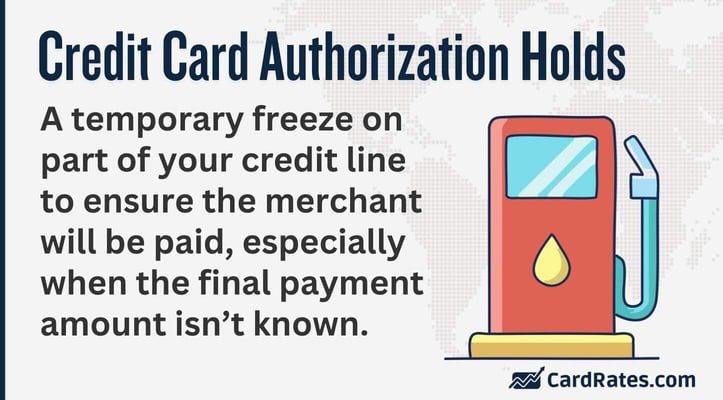
Typically, holds remain in place for up to 72 hours, but can sometimes remain longer.
Here’s how you’ll see it described in some cardholder agreements:
“With certain types of purchases (such as those made at restaurants, hotels, or similar purchases), your Card may be ‘preauthorized’ for an amount greater than the transaction amount to cover gratuity or incidental expenses.
“Any preauthorization amount will place a ‘hold’ on your available funds until the merchant sends us the final payment amount of your purchase.”
Why Gas Stations Freeze Your Funds
When you swipe your card at a gas pump, you may be about to pump $25, $50, $100, or more. You probably aren’t even sure how much you’ll spend, especially when gas prices are rising quickly.
A hold helps ensure you have enough available credit on your credit card — or if you use a debit card, money in your bank account — to pay for your fuel purchase. It can also help protect the station from theft by drivers who fill up and drive off without paying.
For fuel purchases, you may see holds as high as $175. That’s the limit Visa and Mastercard set in the summer of 2022 as gas prices surged.
What Hotel Room Holds Cover
Even if you pay for your hotel room in advance, you’ll often need to swipe a credit card when you check in. The hotel will then typically place a hold of up to a few hundred dollars to cover additional charges.
Common Expenses Covered by Hotel Room Holds
- Meals charged to the room
- Mini bar charges
- Spa services
- Parking
And similar to when you rent an apartment, hotels often use holds as protection against potential damage to the room, including smoking in a non-smoking room or pet damage.
Here’s how Hilton explains it in its policy:
“When you check in, the hotel may place a hold on your card for incidentals such as gratuities, food and drink, parking, and other charges… the hotel may authorize your card for the anticipated amount to be owed, which includes estimated incidentals.”
Credit vs. Debit: Why the Choice Matters
When it comes to holds, how you pay can make a difference in the hold you experience.
If you pay with a debit card and enter your PIN for your purchase, the transaction will be processed immediately, and the hold will typically drop right away.
| Main Differences Between Credit Cards and Debit Cards | |
|---|---|
| Credit Cards | Debit Cards |
| Borrowed funds issued by a bank | Money is deducted from your bank account |
| Can reap rewards, travel points, and discounts | Helps avoid debt accumulation |
| Can help you build credit | Won’t help you build credit |
| Have interest rates and potential fees | No interest charges and few fees (if any) |
| Offers fraud protection as well as protection against unauthorized purchases | Generally offer less protection against fraud or unauthorized purchases |
If you pay with a credit card or use a debit card without a PIN (called a signature-based transaction), the purchase takes longer to process, and the hold may take 1 to 3 days to drop off.
Paying with a debit card using your PIN may seem like a safer bet, but there is a risk. With a debit card, funds come from your linked bank account. That means fraudulent purchases could wipe out your balance.
Strategies to Minimize or Avoid Large Holds
The state of Tennessee requires merchants to notify consumers of debit card holds that will exceed 25% of the transaction amount or $50, whichever is greater. Other than that, you’re largely on your own when it comes to navigating holds.
Here are five key strategies to help protect yourself:
- 1. Use a Credit Card With Plenty of Available Credit: If you have a credit card with sufficient available credit, holds may not seem like much of a concern. But even then, you may want to pay attention. A trip where you move from one hotel to another, or fill up the tank on a rental car every other day, can tie up a good portion of your limit.
- 2. Ask About Hold Policies: If you aren’t sure whether a hold applies or how it works, ask. You won’t be the only customer with questions. One Redditor who says they work at a hotel writes, “Half of the emails I answer are addressing this very thing. I probably spend an hour per shift discussing this subject.”
- 3. Prepay For Fuel at the Cash Register: Go inside the station and use your card or cash to pay for an estimated amount of fuel. It’s less convenient, but it prevents a large hold from tying up your funds.
- 4. Be Careful When Splitting Payment Methods: If you use one card when you check into the hotel room but another (or cash) to pay for your stay, the final transaction may not trigger the release of the hold. Sometimes this results in a longer hold that doesn’t get released in a few days.
- 5. Track Your Available Balance: Use your issuer’s app to keep tabs on your available balance, which may be different from your current balance, as it will typically reflect holds that haven’t been released.
The Bottom Line On Authorization Holds
If you are close to your credit limits or keep a small balance in the checking account tied to your debit card, you’ll want to pay attention to how authorization holds work.
Otherwise, you risk tying up funds you may need to pay essential expenses.
Editorial Note: Our site content is not provided or commissioned by any credit card issuer(s). Opinions expressed on CardRates.com are the author's alone, not those of any credit card issuer, and have not been reviewed, approved, or otherwise endorsed by credit card issuers. Every reasonable effort has been made to maintain accurate information; however, all credit card offer details, including information about rewards, signup bonuses, introductory offers, and other terms and conditions, is presented without warranty. Clicking on any offer on CardRates.com will direct you to the issuer's website, where you can review the current terms and conditions of the offer.
About the Author