
Writer: Chris Taylor


Editor: Lillian Guevara-Castro


Reviewer: Adam West

Our experts and industry insiders blog the latest news, studies and current events from inside the credit card industry. Our articles follow strict editorial guidelines.
On its face, President Trump and the big banks would seem to be a match made in heaven: An industry that benefits from lighter regulation and lower tax burdens, allied with a billionaire chief executive on the political right who is typically responsive to big donors.
The reality is much more complicated.
When it comes to tinkering with the machinery of the financial system, Trump has demonstrated an occasional populist bent.
Whether it’s floating the idea of credit card rate caps, or funding so-called ‘Trump accounts’ for newborns, or slapping tariffs on trade, or taking direct stakes in private companies, none of that reflects the traditional laissez-faire, free-market principles of the Republican party.
It’s not philosophically consistent, which makes it challenging for financial institutions to chart a path forward. More than anything, corporations and C-suite executives like stability, clarity, visibility — and this New Normal is anything but.
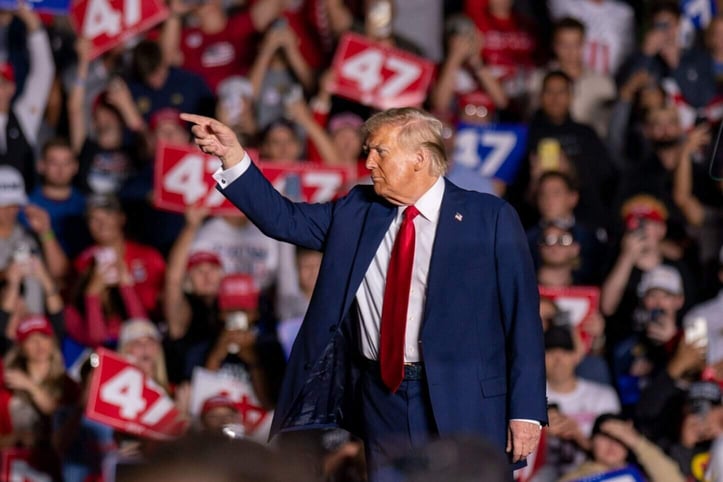
Instead, it’s highly erratic, and driven by a singular personality, which presents banks with an awkward choice.
Do they push back against moves that aren’t aligned with their values or their responsibility to shareholders? Or do they go along to get along, to preserve their seat at the table and influence policy going forward?
It’s a high-wire act that financial CEOs are trying to pull off, like Philippe Petit walking between the Twin Towers, trying not to get blown off by unpredictable gusts of wind. I don’t envy them the task.
When Policy Is Personal
When policy is driven by whim, rather than consistent principle, you run the risk of personal history coming into play.
To wit, Trump’s suit against JPMorgan Chase and Jamie Dimon for closing some accounts in the aftermath of the Jan. 6 riots at the Capitol. He’s seeking $5 billion for this “debanking” — which the company has said is meritless, but surely makes interacting with this administration even more complicated than it already is.
The president has a long memory when it comes to feeling wronged, which is perhaps why he feels freed up to take heterodox economic positions. But if grudges are at play — and the person holding the grudge happens to the most powerful person in the world — it raises the stakes for everyone involved.
A classic strategy to smooth relations — whether you agree with our current political system or not — is to donate money to favored causes. Many financial institutions, JPMorgan Chase included, contributed to Trump’s inaugural committee. Others, in particular crypto firms like Coinbase and Ripple, have chipped in funding for the planned ballroom project.
Now a new opportunity to curry favor has opened up: Trump accounts, which offer the prospect of savings for newborns, seeded with government money. Many financial firms like Bank of America, Charles Schwab, and BNY Mellon have pledged support, some even planning to match federal contributions with funds of their own.
Individuals like billionaire Michael Dell have also offered to help with funding such accounts out of their own resources. That’s a perfect encapsulation of the strange dynamics going on: A rather progressive idea of giving cash to children of all backgrounds, but offering access and alignment to a president who hails from the political right.
Relationship Status: It’s Complicated
That’s why the relationship between Trump and the big banks feels like the Facebook relationship setting: “It’s complicated.”
Consider tariffs, for example. For decades, free trade has been an article of faith on the right. Lower tariff burdens would enhance commerce and growth, while lowering consumer bills at the same time. But the current administration has laid waste to that philosophy, as tariffs have been used as a club on a near-constant basis to push political ends.
Or look at the government taking a direct stake in private firms, like the recent 10% deal with chipmaker Intel. Had that notion come from the left, it would have been decried as outright socialism, as was President Obama’s stake in automakers and AIG to help those struggling firms avoid collapse.
But this time, there was hardly any pushback, and the president has signaled interest in taking slices of even more companies.
Tariffs have been used as a club in the current administration.
Another area of concern for Trump: The profitability of credit cards, lending at rates he has deemed excessive. That helped bring about his suggestion of a 10% rate cap — which at first blush seems like a welcome reprieve for borrowers, but would likely slash credit availability and destabilize an already fragile economy.
None of these positions make any sense from a classic right-wing economic perspective. In a vacuum, banks should be more forceful about advocating for themselves and their shareholders. But bravery in standing up to political power seems to be in short supply.
Staying close to those in power certainly has its advantages. But to quote Hunter S. Thompson in the classic book “Fear and Loathing in Las Vegas”: Buy the ticket, take the ride.
Just know that the ride could turn out a whole lot bumpier than you expect.
Editorial Note: Our site content is not provided or commissioned by any credit card issuer(s). Opinions expressed on CardRates.com are the author's alone, not those of any credit card issuer, and have not been reviewed, approved, or otherwise endorsed by credit card issuers. Every reasonable effort has been made to maintain accurate information; however, all credit card offer details, including information about rewards, signup bonuses, introductory offers, and other terms and conditions, is presented without warranty. Clicking on any offer on CardRates.com will direct you to the issuer's website, where you can review the current terms and conditions of the offer.
About the Author