

Writer: Eric Bank


Editor: Lillian Guevara-Castro


Reviewer: Adam West

Our experts and industry insiders blog the latest news, studies and current events from inside the credit card industry. Our articles follow strict editorial guidelines.
Key Takeaways
- Citi launches Strata Elite card with $595 annual fee, edging out Chase Sapphire Reserve and Amex Platinum in affordability.
- The new premium product emphasizes simplicity, robust earning rates, and American Airlines incorporation.
- The move signals a larger initiative by Citi to restore its competitive ground in the premier travel rewards space.
Citibank’s latest addition to its credit card portfolio isn’t a rebranded rehash — it’s a calculated shot across the crowded field of luxury reward cards.
This past Sunday saw the introduction of the new Citi Strata Elite Card, a luxury alternative for affluent travelers, as worry grows about rising fees and outlandish perks on competitive cards.
With a $595 yearly fee, Citi’s new flagship reward card is a less flashy substitute for the Chase Sapphire Reserve ($795) and the American Express Platinum (currently $695, but expected to increase this year).
With the new premium card, Citi focuses instead on benefits cardholders actually use regularly: generous earn rates, no-hassle redemptions, and precisely aimed airline perks.
Strata Elite now culminates Citi’s new three-tier structure, positioned one notch above reinvigorated Strata Premier and the entry-tier Strata base card. But while the first two cards followed from older products, the Elite appears for the first time as a true introduction — at least by name — built from the ground up to target high-ticket spending clients.
Created for Travelers in Search of Clarity
Most luxury cards aim to wow with rotating perks and surprise benefits. Citi is taking a somewhat simplified approach. The Strata Elite earns cardholders 12X ThankYou points on hotels, car rentals, and attractions — provided they’re booked with Citi Travel.
Flights booked via the same service earn 6X the points. Restaurants, including delivery services, earn 6X the points on Friday and Saturday nights between 6 p.m. and 6 a.m. ET. Outside that window, dining earns 3X. All other spending bottoms out on a flat 1.5X.
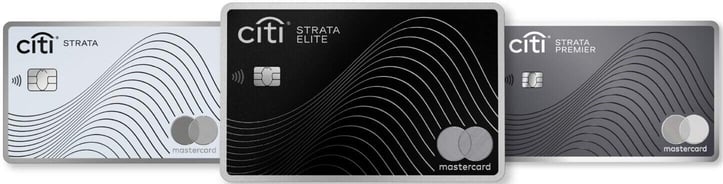
Rather than try to capture all possible spending niches, Citi zeroes in on the big-ticket spending buckets that high-income users pay most for: travel, restaurants, and day-to-day necessities. There is a plan behind this — drop the gimmicks and make it simple to understand the reward while making it difficult to improve upon.
That same logic translates to experiences and entertainment. Citi’s addition of 12X rewards for attractions — and its partnership with Live Nation — suggest it is more interested in spending that creates memories rather than merchandise.
Not a Prestige Reboot — Something New Altogether
This card does not replace Prestige from Citi. Prestige cardholders still keep their product. Strata Elite was made to stand alone, built from scratch with new rules and new priorities.
One of the more prominent points is that it also aligns with American Airlines. Cardholders get four Admirals Club access passes a year, along with 1:1 point transfers to AAdvantage. It makes it one out of a small set of proprietary issuer cards with intrinsic airline perks from a big carrier.
The card also includes a Priority Pass benefit, hotel benefits with The Reserve by Citi Travel, and lifestyle credits: $300 back toward hotels, a $200 Splurge Credit across companies from Best Buy to Live Nation to American Airlines, and a four-year reimbursement for a Global Entry or TSA PreCheck.
Citi Sees a Window and Acts
High-end cards have received criticism in recent months for creeping up in cost with minimal added value. It looks like what Citi is doing here is to fill that gap. The Elite card not only matches what is out there — it outdoes it with a fee that does not exceed $600 while providing strong everyday value.
It’s not one card. Mid-level cards still gobble up premium benefits while Venture X is touted by Capital One. And older iterations like Sapphire Reserve no longer produce the same hype they created five years ago. Citi is clearly looking to its new set that recently hit shelves — Strata Elite being the ultimate tier — to redefine conversation.
In the past couple of years, Citi was less prominent in the premium space. After backing away from the Prestige card and leaving competitors to scoop up heavy spenders who travel internationally, its strategy ventured into middle-tier territory. This new release signals a more forceful approach. Not a response, but a reevaluation.
Issuers have been refining portfolios as distinctions between mid-range and high-end further erode. But it is a rarity to witness a brand design a product that is readily distinguishable.
Citi’s Strata Elite isn’t here to turn everything on wheels upside down — but it provides enough clarity, relevance, and value that a category does pay attention. It’s not a rehash for Citi. It’s a stake in the ground. And for consumers, it’s one more reason to double-check the math on what they’re getting for $595 or more a year.
Editorial Note: Our site content is not provided or commissioned by any credit card issuer(s). Opinions expressed on CardRates.com are the author's alone, not those of any credit card issuer, and have not been reviewed, approved, or otherwise endorsed by credit card issuers. Every reasonable effort has been made to maintain accurate information; however, all credit card offer details, including information about rewards, signup bonuses, introductory offers, and other terms and conditions, is presented without warranty. Clicking on any offer on CardRates.com will direct you to the issuer's website, where you can review the current terms and conditions of the offer.
About the Author