


Writer: Andrew Allen


Editor: Lillian Guevara-Castro


Reviewer: Adam West

Our experts and industry insiders blog the latest news, studies and current events from inside the credit card industry. Our articles follow strict editorial guidelines.
Key Takeaways
- Stripe is turning to the CFPB in an effort to prevent banks from charging fees to third parties for accessing customer banking data.
- Earlier this summer, JPMorgan Chase began sharing pricing details for accessing customer banking information with data aggregators that work with fintechs.
- In response to new data-sharing charges, fintechs may pass fees on to their customers or eliminate free services they currently offer.
Stripe, a financial infrastructure platform offering a plethora of payment processing solutions to help businesses boost revenue, is leading the charge to fight back against fees financial institutions such as JPMorgan Chase levy against companies for accessing customer banking data.
The fintech has appealed to the Consumer Financial Protection Bureau (CFPB) to take action against banks that charge fees to third parties for accessing customer financial information, according to a Bloomberg report.
This follows JPMorgan Chase’s recent announcement that it plans to install fees for access to its customers’ banking data.
Credit card issuers will be watching closely to see if Stripe’s move ultimately impacts the future of open banking and an issuer’s ability to receive compensation for sharing data on its customers.
The CFPB stands to play a critical role in shaping the future of open banking. In October of 2024, the bureau finalized a rule to give people more privacy, rights, and security around their financial data.
“The rule requires financial institutions, credit card issuers, and other financial providers to unlock an individual’s personal financial data and transfer it to another provider at the consumer’s request for free,” the CFPB posted in an entry on its website last October.
That post from the Consumer Financial Protection Bureau came as the country was electing a new president, and the CFPB hasn’t been the same since the start of the Trump administration.
The Consumer Financial Protection Bureau has faced challenges from the Department of Government Efficiency in 2025.
Making changes to regulatory bodies is to be expected when a new administration takes the reins, but few in the CFPB likely anticipated the extent to which their agency would transform in the first few months of President Trump’s second term.
Attempting to Influence the CFPB
Under the leadership of Acting Director, Russ Vought, the Consumer Financial Protection Bureau is seeking to reshape rules around personal-financial data, and it is looking to industry stakeholders, including banks, data aggregators, and fintechs, to provide input into what those rules should look like.
Namely, the agency wants assistance in determining whether customers should be permitted to grant fintechs the power to function as their authorized representatives, collecting and sharing their banking data.
The CFPB also wants stakeholder opinions on whether the bureau can restrict banks from charging fintechs fees for accessing a customer’s financial data. A final ruling on the issue may take the agency several years to produce, and it may face litigation at that point, according to a separate Bloomberg report.
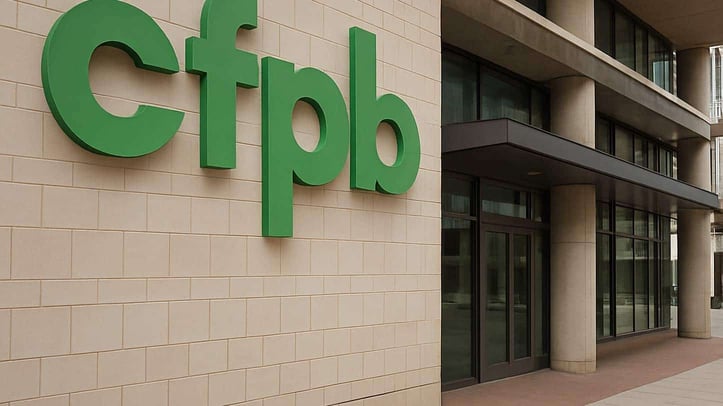
Stripe may not have felt it necessary to appeal to the bureau on the matter if it weren’t for JPMorgan Chase’s plans to charge fintechs for access to customer bank data.
One bank’s announced intentions may not seem like a cause for concern among fintechs. But when that one bank is the biggest commercial bank in the U.S., it is. JPMorgan Chase’s plans are past the conceptual phase, as it has begun sharing pricing information with data companies that connect banks and fintechs.
The banking giant’s recent comments on the matter suggest that data security is one of the issues at the heart of its decision to impose fees for accessing customer banking details.
“We’ve invested significant resources creating a valuable and secure system that protects customer data,” a spokesperson with JPMorgan Chase said. “We’ve had productive conversations and are working with the entire ecosystem to ensure we’re all making the necessary investments in the infrastructure that keeps our customers safe.”
Safeguarding Data is an Essential Step
Stripe isn’t the only stakeholder to oppose JPMorgan Chase’s decision. A number of trade groups that represent digital asset companies and fintechs joined forces in late July to send a letter to President Trump seeking his support on the issue.
The groups, including the Financial Technology Association and the American Fintech Council, implied in the letter that banks that oppose free access to customer banking data are blocking fintechs from pursuing innovation in the U.S.
“We respectfully urge you to act decisively to protect open banking, preserve consumer financial data rights, and secure America’s continued leadership in financial innovation,” the associations wrote in the letter.
If JPMorgan Chase and other banks begin collecting fees from fintechs for data access, it’s unlikely that the companies they charge will cover those costs without changing their operations.
Chief executive officers who oversee personal financial apps are considering raising the prices they charge people for their services to counter the impact potential new fees from banks may have on their bottom lines, a new Forbes article reveals.
Trade associations representing fintech interests recently sent a letter to President Trump seeking his support of their view on open banking.
Fintechs are also considering reining in the number of free features they offer to their users.
“Consumers are going to take the hit in the end,” Rocket Money CEO and Co-Founder Haroon Mokhtarzada said. “That’s just the way these things work.”
Banks and credit card issuers may have a valid point in citing security risks as a reason for why they seek compensation for sharing customer data with fintechs. People may want to give their banking data to a third party, but that likely doesn’t trump their desire to keep their data out of the hands of criminals.
Institutions that charge third parties for accessing their data can use those monies to fortify security protocols, ensuring they have the necessary safeguards in place to protect data they transmit outside their systems.
Of course, fintechs would prefer to be able to access the information for free. But a fintech may feel otherwise the first time they see their name connected to a breach resulting from new data-sharing initiatives.
Jamie Dimon, JPMorgan Chase’s CEO, is committed to making sure that banks don’t get the short end of the stick when it comes to open banking.
“Third parties want full access to banks’ customer data so they can exploit it for their own purposes and profits,” Dimon wrote earlier this year in a letter to shareholders. “Banks provide fantastic services, and it’s time to defend ourselves — in the public realm or in court if need be.”
Editorial Note: Our site content is not provided or commissioned by any credit card issuer(s). Opinions expressed on CardRates.com are the author's alone, not those of any credit card issuer, and have not been reviewed, approved, or otherwise endorsed by credit card issuers. Every reasonable effort has been made to maintain accurate information; however, all credit card offer details, including information about rewards, signup bonuses, introductory offers, and other terms and conditions, is presented without warranty. Clicking on any offer on CardRates.com will direct you to the issuer's website, where you can review the current terms and conditions of the offer.
About the Author

![15 Cheap Credit Cards: Low Interest & $0 Fees[updated_month_year before=" (" after=")"]](https://www.cardrates.com/images/uploads/2017/12/cheap.png?width=158&height=120&fit=crop "15 Cheap Credit Cards: Low Interest & $0 Fees[updated_month_year before=\" (\" after=\")\"]")
![4 Credit Card Comparison Charts: Rewards, Fees, Rates & Scores[updated_month_year before=" (" after=")"]](https://www.cardrates.com/images/uploads/2018/03/charts.png?width=158&height=120&fit=crop "4 Credit Card Comparison Charts: Rewards, Fees, Rates & Scores[updated_month_year before=\" (\" after=\")\"]")
![6 Best Prepaid Debit Cards with No Fees[updated_month_year before=" (" after=")"]](https://www.cardrates.com/images/uploads/2018/10/prepaid--1.png?width=158&height=120&fit=crop "6 Best Prepaid Debit Cards with No Fees[updated_month_year before=\" (\" after=\")\"]")
![7 Credit Card Fees & How to Avoid Them[updated_month_year before=" (" after=")"]](https://www.cardrates.com/images/uploads/2021/03/Credit-Card-Fees.jpg?width=158&height=120&fit=crop "7 Credit Card Fees & How to Avoid Them[updated_month_year before=\" (\" after=\")\"]")
![6 Ways to Save on Credit Card Interest Fees[updated_month_year before=" (" after=")"]](https://www.cardrates.com/images/uploads/2021/11/Ways-to-Save-on-Credit-Card-Interest-Fees.jpg?width=158&height=120&fit=crop "6 Ways to Save on Credit Card Interest Fees[updated_month_year before=\" (\" after=\")\"]")
![8 Best Debit Cards With No ATM Fees[updated_month_year before=" (" after=")"]](https://www.cardrates.com/images/uploads/2023/10/Best-Debit-Cards-With-No-ATM-Fees.jpg?width=158&height=120&fit=crop "8 Best Debit Cards With No ATM Fees[updated_month_year before=\" (\" after=\")\"]")

