
Writer: Erica Sandberg


Editor: Jon McDonald


Reviewer: Ashley Fricker

Opinions expressed here are ours alone, and are not provided, endorsed, or approved by any issuer. Our articles follow strict editorial guidelines and are updated regularly.
If you’re like me, you want certain things to be predictable, from flight departure times to the weather. And while it would be marvelous to count on your credit card interest rates being consistent from one month to the next, there are circumstances when they too may change, and often not in your favor.
The annual percentage rate (APR) attached to your credit card account can vary for several reasons, including the rate it’s based on and how you handle your account. One month it may be 0% and the next 25%.
To keep financing costs as low as possible, know the five main reasons interest — from the rate itself to how it’s calculated — may fluctuate.
The good news is that you can actually force a level of predictability and keep interest costs down. Here’s how.
Reason 1: Shifts in The Prime Rate
If the APR on your credit card is fixed (check your statement if you don’t know offhand), feel free to jump to the next reason. That’s because the APR is not connected to a different rate that can go up or down.
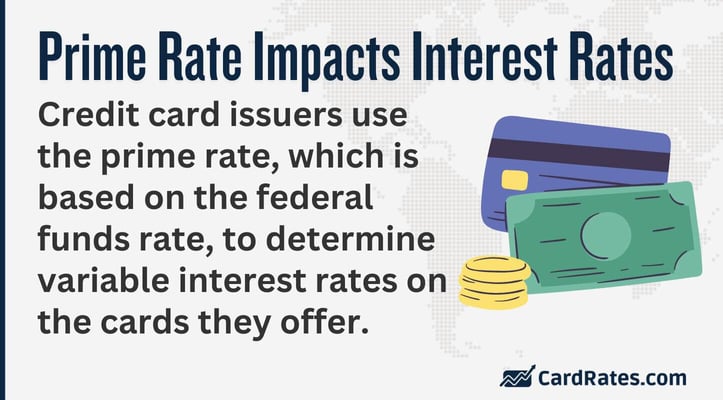
But the majority of these financial products have variable APRs. That means the credit card company has tied the rate to a benchmark. Typically, it’s the Prime Rate, which is the interest rate banks offer to their most creditworthy customers, such as large corporations.
The prime is based on the Federal Reserve’s federal funds rate, which is what banks offer to each other, and is about 3 percentage points over the Fed Funds rate.
So if the Fed funds rate is 3.65%, the prime will likely be around 6.65%. If the Fed adjusts its rate, your credit card’s APR may soon follow suit.
There is a consistent portion of your APR, however. It’s the margin, which is the percentage the issuer will add to the Prime to calculate your APR.
What does all this mean to you? If the prime is 6.65% and the margin is 15%, your APR will be 21.65%. But if the prime increases by .15%, your new APR will be 21.8%.
But don’t worry. The financial impact of these changes is minor, even when your balance is major. If your average daily balance is $10,000 and the card has a variable APR of 21.65%, the monthly interest would be $177.95.
If the rate goes up to 21.8%, it would be $179.18; a mere $1.23 more.
Reason 2: Payment Timing and Your Average Daily Balance
When you make a payment matters. By timing it just right, you can lower the amount of interest you pay on any revolving debt, even with the same APR.
It works like this: The credit card company totals your account balance at the end of each day in the billing cycle, then divides that amount by the number of days in the cycle. That results in your average daily balance (ADB).
To calculate the interest, the credit card company will multiply your ADB by the daily interest rate and the number of days in the billing cycle.
OK, that’s a lot of math, but an example can bring this to life.
Let’s say you charged $5,000 worth of furniture on a card with a 22% APR and a 30-day billing cycle:
| Metric / Scenario | Scenario 1: No Early Payment | Scenario 2: Early Payment (Day 15) |
|---|---|---|
| Starting Balance | $5,000 | $5,000 |
| Payment Amount | $0 | $3,000 (Paid on Day 15) |
| Days 1–15 Balance | $5,000 | $5,000 |
| Days 16–30 Balance | $5,000 | $2,000 |
| Average Daily Balance | $5,000 | $3,500 |
| Card APR | 22% | 22% |
| Billing Cycle Length | 30 Days | 30 Days |
| Calculated Interest | $90.41 | $63.29 |
| Total Interest Saved | None | $27.12 |
Leave the entire $5,000 on the account for all 30 days, and the ADB will be $5,000. The calculated interest on that balance would then be $90.41.
Make a $3,000 payment on the 15th day of your billing cycle, and your ADB drops to $3,500. The calculated interest then would be $63.29.
In short, by lowering the ADB with an early payment, you reduce the interest, even when you charge the same amount!
Reason 3: The Length of the Billing Cycle
The more time a credit card balance accrues interest, the more it will cost you. Which brings me to the billing cycle. That’s the number of days in which the company tallies up all of your purchases, payments, fees, and interest.
Credit card billing cycles typically range from 28 to 31 days. A longer billing cycle gives interest more days to accrue on your average daily balance.
Impact of Billing Cycle Length on Interest Cost
Based on $5,000 ADB at 24% APR
For example, if your 24% APR credit card has an average daily balance of $5,000, the calculated interest on a 28-day billing cycle would be about $92.05. On a 31-day cycle, it would rise to about $101.92.
You can't change the company’s billing cycle length, but if you are in the market for a new credit card (and all other things being equal), you may prefer one with a shorter average billing cycle.
Reason 4: Different Types of APRs on Your Account
Check the terms of your account, and you may find a variety of APRs that are attached to your credit card:
- Intro: If you open a new credit card or transfer an existing balance to a new card and get the 0% APR for 12 months or longer, remember, it's not a forever deal. Eventually, it will rise to the regular purchase rate, so any remaining balance will be subject to the new APR.
- Regular purchase: When you buy things with your credit card and carry a balance from one month to the next, the regular purchase rate will apply. Many credit card issuers show an APR range, such as 17.49 to 27.49%, which is based on your creditworthiness when you open the account.
- Penalty: If you fall behind on payments or exceed your credit limit, the credit card company may increase your APR to a higher rate. If you have an intro rate, missing the due date can also nullify the deal early, causing the 0% APR to disappear. The company is required to review your account after six consecutive on-time payments to potentially reinstate your original rate, but if you keep missing payments, the higher APR may be permanent.
- Cash advance: Issuers often charge a higher APR for money you withdraw from your account instead of charging goods and services. If you bought things with your card and took out cash, you might have two APRs going at the same time.
You can minimize the APR by having a good credit score when you apply. When you get it, pay on time, keep the account in good standing, and avoid cash advances.
Reason 5: Losing or Re-Establishing Your Grace Period
Grace is a powerful concept. For credit cards, it gives you a fixed number of days to pay for things you charged without interest being added. If your credit card offers a grace period, it will last at least 21 days. It begins at the end of your billing cycle and ends on your payment due date.
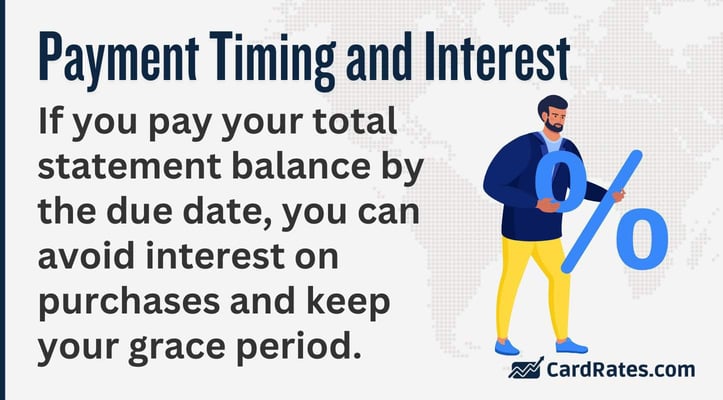
To ensure the interest-free grace period is always intact, pay your previous statement balance in full by the due date. If you carry over an unpaid balance or pay late, you lose that grace.
Be aware that there is no grace period on cash advances, so interest will begin as soon as you withdraw the funds. It won’t affect the grace period on your purchases, though, as long as you pay the previous statement’s entire balance by the due date.
Complicated? Yes. So make it easy on yourself by enrolling in your credit card issuer’s autopay system. Set it up so you pay exactly the balance from your last statement by the due date.
Don’t Let Interest Fluctuations Surprise You
Look, it's important to know how and when credit card interest is charged. With that information, you can make decisions that will result in little to no unnecessary financing fees.
While you can’t stop flight delays or unexpected rain, you can prepare for APR fluctuations and keep expensive surprises at bay.
Editorial Note: Our site content is not provided or commissioned by any credit card issuer(s). Opinions expressed on CardRates.com are the author's alone, not those of any credit card issuer, and have not been reviewed, approved, or otherwise endorsed by credit card issuers. Every reasonable effort has been made to maintain accurate information; however, all credit card offer details, including information about rewards, signup bonuses, introductory offers, and other terms and conditions, is presented without warranty. Clicking on any offer on CardRates.com will direct you to the issuer's website, where you can review the current terms and conditions of the offer.
About the Author