
Writer: Andrew Allen


Editor: Lillian Guevara-Castro


Reviewer: Adam West

Our experts and industry insiders blog the latest news, studies and current events from inside the credit card industry. Our articles follow strict editorial guidelines.
Key Takeaways
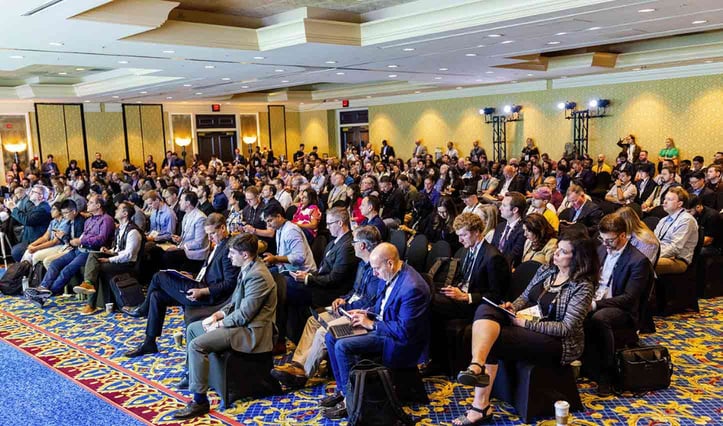
Leaders from banking and payments companies recently convened in Las Vegas for this year’s Money20/20 conference. CardRates was on the ground to soak it all in, rubbing elbows with key players in the industry and learning about trends that stand to impact the financial landscape in the coming months and years.
Money20/20 began in 2012, when industry insiders launched the event that brings stakeholders together to share their ideas about the future of money. The conference now runs in Asia, Europe, and the Middle East in addition to the U.S.
This year’s event covered a variety of topics, honing in on those most likely to transform the financial ecosystem over the coming quarter. To no one’s surprise, numerous speakers touched on artificial intelligence and how it stands to influence the payments arena in the near future.
Innovators in the payments space, including Mastercard and PayPal, have rolled out solutions in 2025 that expand the use of AI in the shopping sphere. Agentic commerce is likely to be a topic of conversation in many boardrooms in 2026 as companies strategize on how to best incorporate AI-powered shopping agents into their services.
Numerous presentations at the Money20/20 conference focused on how artificial intelligence can reshape the industry.
One of the challenges that leaders can face in those planning sessions is crystallizing not only what AI can do today, but what it will be able to do by the time the next quarter rolls around.
Mike Krieger, Chief Product Officer at Anthropic, a company that focuses on AI safety and research, framed the problem succinctly in comments he delivered at the conference.
“AI capabilities are increasing so fast that some of these products are unrecognizable from where they were three to six months ago,” Krieger noted.
Sharing Solutions to Emerging Problems
Artificial intelligence opens the doors for payments companies to bring innovative solutions to market. Unfortunately, bad actors can also use AI to commit fraud.
Participants at the conference, including Lili Tomovich, Chief Marketing and Experience Officer at Barclays U.S. Consumer Bank, addressed the impacts of AI when it comes to security in banking and payments.
“In an era of AI deepfakes, fake news, fake reviews, algorithmic opacity, we need to ask what this means for building trust with customers,” Tomovich said. “We are entering a scary era. As AI comes at us from all directions, trust will be one of the most important currencies of the modern world.”
In addition to presenting the problem, a number of leaders at the conference spoke about tools they offer to help companies combat fraud.
Casap, a New York-based fintech that recently raised new funding to the tune of $25 million, can help companies prevent fraud losses. Shanti Shanmugam, the company’s CEO and Co-Founder, shared in a session from the conference that Casap’s clients have seen their fraud losses decrease by 51% within six months of working with the company.
Other speakers at the conference discussed the importance of rethinking cybersecurity programs and authenticating users in an era where AI-driven fraud may soon grow rapidly.
While every fraud-fighting tool may not meet the needs of all banks and payments companies, part of the value of a conference such as Money20/20 is hearing different perspectives and strategies from a diverse group of trailblazing industry leaders.
Editorial Note: Our site content is not provided or commissioned by any credit card issuer(s). Opinions expressed on CardRates.com are the author's alone, not those of any credit card issuer, and have not been reviewed, approved, or otherwise endorsed by credit card issuers. Every reasonable effort has been made to maintain accurate information; however, all credit card offer details, including information about rewards, signup bonuses, introductory offers, and other terms and conditions, is presented without warranty. Clicking on any offer on CardRates.com will direct you to the issuer's website, where you can review the current terms and conditions of the offer.
About the Author