
Writer: Andrew Allen


Editor: Lillian Guevara-Castro


Reviewer: Adam West

Our experts and industry insiders blog the latest news, studies and current events from inside the credit card industry. Our articles follow strict editorial guidelines.
Key Takeaways
- Bilt has rolled out a new credit card program, and its structure caused some confusion among the fintech’s customers.
- The company’s CEO provided a swift and thorough response to clarify the program and address customer concerns.
- Credit card issuers can turn to market research to test the efficacy of their communications to cardholders.
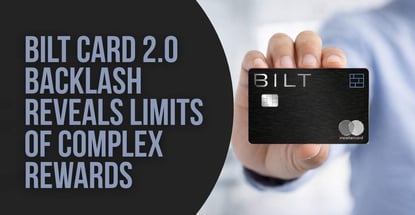
Financial technology company Bilt has introduced a new credit card program, which it is calling Bilt Card 2.0, to expand on its rewards ecosystem that offers perks to people who make their rent payment using the card.
The initial response from consumers to the structure of Bilt Card 2.0 probably wasn’t what the company was hoping to see. Credit card issuers can learn tips on how to communicate changes to their products by studying some of the criticism people lobbed at the company as well as Bilt’s reaction to it.
“Bilt 2.0 is officially dead on arrival for anyone who understands basic math,” one Redditor wrote on the online forum in response to the new program. “Bilt 1.0 is replaced by a convoluted system designed to force you into making this your primary daily driver.”
A recent report indicates that some cardholders saw value in the new Bilt program. But after reviewing card details, many more said the program was too confusing.
Consumers went online to voice their concerns over the structure of the new Bilt card program.
In particular, people didn’t appreciate the company’s introduction of Bilt Cash — a new rewards currency for the program — and the hoops they felt they had to jump through to maximize the card’s benefits.
Some cardholders may enjoy breaking out their calculators and strategizing over which credit card to use in which circumstance to attain the maximum possible benefit. But others want access to a rewards program that is easy to understand and suits their lifestyle.
“I already have to keep track of Amex Platinum and Gold perks, which I got to replace the Chase Sapphire Reserve after they nerfed that,” another Redditor wrote. “I’m not doing that and keeping track of this Bilt thing.”
Reaching Out to Set Things Straight
Bilt released details about its new card program on Jan. 14. Ankur Jain, the company’s Founder and CEO, sent an email to Bilt members shortly thereafter.
In the email, which Bilt has posted on its website, Jain said he had spent the past few days reviewing messages from the company’s customers over Bilt Card 2.0. Jain indicated that only some of that feedback was from frustrated customers, though he didn’t specify how many messages he reviewed or what percentage of them were negative.
The way Bilt communicated its new program — and how the company structured its rewards component — may give credit card issuers an outline of moves they should and shouldn’t make when developing and rolling out a new set of products.
The company and its leaders, including Jain, were commendably swift to reach out to customers to try and correct any missteps they had made. Jain also took accountability for any confusion customers may have experienced upon learning the details of Bilt Card 2.0.
Jain’s message to cardholders contained comprehensive details about Bilt’s new program and included a list of FAQs customers could reference.
“On one hand, there have been record applications for the cards, and I’m excited for members to get them,” Jain wrote in the email. “However, I’ve also seen real and reasonable confusion about the new value proposition — especially around rent and mortgage points. That’s on me, and we’re fixing it.”
Jain then went on to address customer concerns over the program in a detailed message that included an FAQ section and a table outlining the relationship between customer spend on the card and points.
By responding to the negative feedback quickly and comprehensively, Bilt may have saved many of its customers from leaving the company for other payment pastures.
Public backlash to a product launch may cause a CEO to lose sleep at night. But by taking customer feedback seriously and considering how it can inform product development, credit card companies can take steps to correct wrongs they’ve made in their customers’ eyes.
“We move fast at Bilt,” Jain wrote toward the end of his lengthy email. “That means we won’t always get everything right the first time, but I read all of your feedback, and we will adjust quickly when we miss.”
Market Research Can Help Issuers Spot Problems
Bilt could have avoided the backlash it received on its new card program if it had taken steps prior to Jan. 14 to ensure its customers would understand how to best derive value from Bilt Card 2.0.
Focus groups and other forms of market research can help issuers gauge the response that different customer segments will have about a product update before sharing its details with the general public.
But the reaction to the introduction of Bilt Card 2.0 may be emblematic of a larger problem in the credit card industry — some rewards programs have grown too complex for customers to understand and use to their benefit.
“Existing Bilt Rewards members were left confused after hours of back-of-the-napkin calculations and value comparisons to determine whether having a Bilt card at all was the right move for them going forward,” a report on the matter explained.
Figuring the value of a credit card rewards program on the back of a napkin may sound like a walk in the park to some cardholders. But a recent report from The Wall Street Journal indicates that making the most of high-end rewards credit cards can feel like a part-time job to some cardholders.
The complexity of certain credit card rewards programs can present a challenge for customers determined to get as much value as they can from their card.
The report revealed that cardholders in the U.S. earned more than $40 billion in rewards in 2022. But cardholders didn’t claim more than $33 million of that amount, which suggests that consumers either don’t know how to redeem the rewards they’ve earned through their cards or they don’t mind taking their time to claim them.
Issuers would prefer cardholders use their cards for every transaction they make, if possible. Rewards are a way to motivate consumers to reach for their credit cards even in instances where paying via another method is more convenient. But cardholders aren’t likely to value rewards programs they don’t understand.
Issuers should do everything in their power to make sure the benefits they offer match what consumers are looking for. And issuers should test their communications regarding changes to the rewards programs structure to verify that consumers can easily interpret them.
Credit card companies that don’t follow those steps may end up in a similar situation to the one Jain found himself in earlier this month — reading a lot of messages from unhappy customers.
Editorial Note: Our site content is not provided or commissioned by any credit card issuer(s). Opinions expressed on CardRates.com are the author's alone, not those of any credit card issuer, and have not been reviewed, approved, or otherwise endorsed by credit card issuers. Every reasonable effort has been made to maintain accurate information; however, all credit card offer details, including information about rewards, signup bonuses, introductory offers, and other terms and conditions, is presented without warranty. Clicking on any offer on CardRates.com will direct you to the issuer's website, where you can review the current terms and conditions of the offer.
About the Author