
Writer: Gerri Detweiler


Editor: Jon McDonald


Reviewer: Ashley Fricker

Opinions expressed here are ours alone, and are not provided, endorsed, or approved by any issuer. Our articles follow strict editorial guidelines and are updated regularly.
Whether the credit limit on your credit card is large or small, it’s smart to think about how much of it you should use.
That’s because using too much of your credit limit may hurt your credit scores. Understanding how credit utilization works helps you avoid that.
Here’s how using your available credit can affect your credit scores, and even one strategy for using as much as you like while keeping your utilization low.
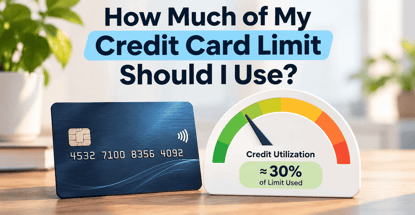
The General Rule is 30%, But You May Need to Use Less
For years, a standard recommendation has been to keep credit utilization under 30% for credit score purposes. I shared that advice in my first book, “The Ultimate Credit Handbook”, written decades ago when FICO scores were still relatively unknown.
There’s a problem with the 30% rule of thumb, though: It’s not a hard-and-fast rule, and you may need to keep your utilization lower than that if your goal is to maintain high credit scores.
FICO has said in the past that consumers with the highest credit scores (they called them “FICO high achievers”) tend to use less than 10% of their available credit. For many people, utilization in the range of 20% to 30% is a good starting point.
How Credit Utilization Works
After payment history, debt is the second most important factor in most credit scoring models. It evaluates debt in several ways, including your balances on different types of accounts. But one of the most important calculations is your credit utilization ratio.
This ratio compares your balance to your credit limit. For example, if you have a credit limit of $1,000, a balance of $250 works out to 25% credit utilization, while a $500 balance on the same $1,000 limit puts credit utilization at 50%.
FICO Credit Score Factors
Amounts owed, which includes credit utilization, is the second biggest factor in your FICO score.
- Payment history
- Amounts owed
- Credit history length
- New credit
- Credit mix
Utilization is calculated with the information available on credit reports when your credit score is calculated. For credit scoring purposes, it doesn’t matter what your current balance is. That’s because the latest balance on your credit reports is the number used to calculate utilization.
And to complicate matters, there’s no ideal utilization ratio for everyone. FICO offers dozens of versions of FICO scores, and each one may treat individual factors slightly differently. Plus, the individual details in your credit history can change how much utilization affects your scores compared with someone else’s.
Here’s an example: Let’s say I have a long credit history with lots of accounts and a robust payment history. My daughter has a shorter credit history with fewer accounts.
She may see her credit scores drop if her utilization hits, say, 25%, while I may not see my scores change much at 35%.
Know the Difference Between Per-Card and Total Utilization
Credit scoring models look at utilization in two ways: on each individual account and in the aggregate. Here’s an example for someone with four credit cards:
| Card | Balance | Credit limit | Utilization |
|---|---|---|---|
| Card 1 | $1,000 | $5,000 | 20% |
| Card 2 | $350 | $1,000 | 35% |
| Card 3 | $1,200 | $2,000 | 60% |
| Card 4 | $500 | $2,000 | 25% |
| Totals | $3,050 | $10,000 | 30.5% |
A single card with high utilization can hurt your credit scores even if overall utilization is fine. That’s why it’s helpful to understand utilization for individual accounts in addition to total utilization.
Payment Strategies to Keep Utilization Low
Unless you have a very high credit limit or spend very little, consistently less than 10% of your credit limit can be tough unless you have a very high limit or spend very little.
There is a way around it: Pay faster.
Credit scores use the balance listed on your credit reports at the time the score is calculated, not necessarily your balance today.
Your credit card issuers likely report your balances to the credit bureaus around the end of the billing cycle. That’s when your issuer totals your activity for the month and sends you a bill. Even if you pay your balance in full by the due date, your credit report will likely show the balance at the statement date when the issuer reports to the credit bureaus.

That means you can lower utilization by paying faster. Make your payment before the billing cycle closes, not after, and the balance reported to the credit bureaus will likely be lower.
Always pay the statement balance in full by the due date to avoid interest, provided your card offers a grace period, as most do.
You may need to experiment a bit with the timing to understand your credit card issuer’s reporting cycles, but once you figure it out, you can create your own pay-by with the goal of reducing utilization. (Just to be clear — your issuer sets the due date, and making payments late can result in late fees or even negative items on your credit report.)
If you want to take this approach to the next level, you may want to try a strategy known as “AZEO,” which stands for “all zero except one.” The goal with AZEO is to keep all revolving accounts reporting a zero balance, except one. Then aim for a very low reported balance on that one account.
You can still use multiple cards — just pay them off in time to avoid a balance on your credit reports.
Keeping Credit Usage Low Can Really Help Your Score
If you’re trying to build or rebuild your credit, pay close attention to utilization. It’s a factor that can change every month. Unlike trying to remove negative information from your reports (which can be difficult to do), you may be able to influence results quickly.
One way to know how utilization is affecting your credit scores is to use a credit monitoring service that provides insights to what’s affecting your credit scores. You may even be able to set alerts so you’ll know when your scores change.
If you’re carrying high balances on credit cards and you can’t pay them down, you may need to consider other approaches to reducing utilization, such as asking your issuers to raise your credit limits or consolidating credit card debt with a personal loan.
Utilization is calculated on revolving accounts like credit cards, but personal loans are usually installment loans.
You may even want to put your credit‐rebuilding efforts on the back burner and get help from a credit counselor to get out of debt. Once you’ve paid off your credit card debt, you can focus on rebuilding your credit.
Editorial Note: Our site content is not provided or commissioned by any credit card issuer(s). Opinions expressed on CardRates.com are the author's alone, not those of any credit card issuer, and have not been reviewed, approved, or otherwise endorsed by credit card issuers. Every reasonable effort has been made to maintain accurate information; however, all credit card offer details, including information about rewards, signup bonuses, introductory offers, and other terms and conditions, is presented without warranty. Clicking on any offer on CardRates.com will direct you to the issuer's website, where you can review the current terms and conditions of the offer.
About the Author