


Writer: Lynn Cadet


Editor: Ashley Fricker


Reviewer: Adam West

We deploy a step-by-step methodology to each piece of research we publish to ensure our studies offer complete coverage and meet our rigorous editorial standards.
Key Takeaways
- Although 72% of Americans report wanting to improve their credit in 2026, nearly half (49%) have not identified a specific credit score target.
- Boomers (43%) stand out as the most likely generation to name an exact credit score they want to reach in 2026, signaling a more deliberate approach than younger groups.
- Nearly half (44%) of men report having a specific credit score target for 2026, compared with just 31% of women.
The new year usually brings fresh resolutions, whether that’s getting rid of bad habits or aiming for goals with a renewed sense of purpose. Yet, when it comes to financial goals, particularly credit scores, many Americans haven’t set clear benchmarks.
According to a new CardRates.com survey conducted in December 2025, 72% of Americans report wanting to improve their credit score in 2026, but nearly half (49%) can’t translate that intention into a specific target number.
As high borrowing costs and financial uncertainty follow millions of Americans into the new year, financial decisions matter more than ever. Still, gaps in credit literacy and planning exist, keeping many Americans from making informed credit decisions at a time when every financial step carries more weight.
72% of Americans Say They Have a Credit Goal for 2026
Our results point to widespread awareness and intent surrounding credit improvement among the American public. Nearly 3 in 4 (72%) adults surveyed said they have a credit goal for 2026, showing a common initiative among consumers to improve their credit standing in the year ahead.
It is likely that concerns about the economy could be shaping financial intent within the American public. With interest rates and credit debt remaining high, many Americans are entering the new year with their financial wellness at the top of mind. And setting a credit score goal as a resolution could be their way of rectifying their current credit status.
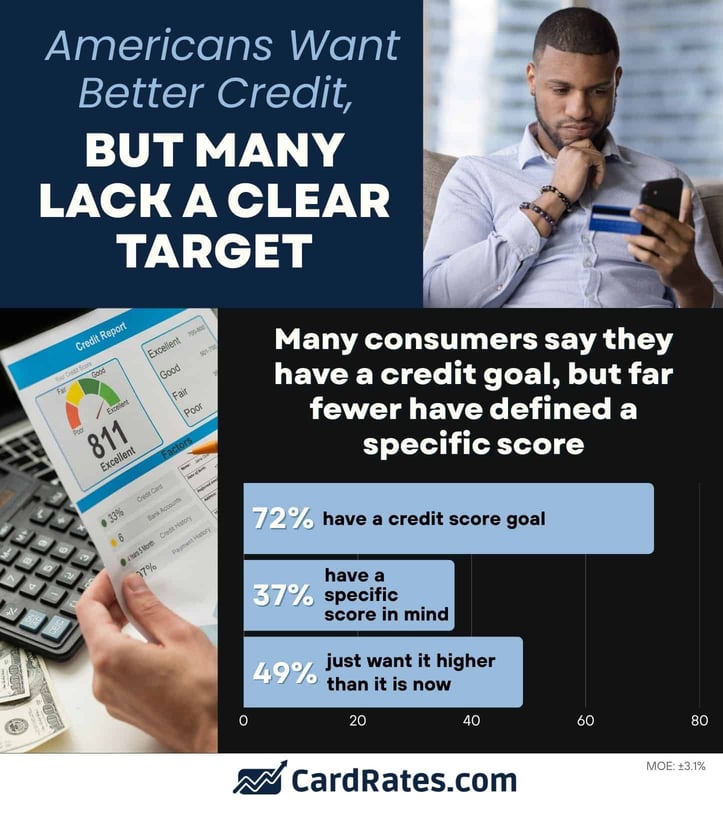
“Given the continued anxiety over interest rates and the cost of living, more Americans see improving their credit score as a way to improve their financial health. That’s a good start. But to really see an impact, it is essential to get clear on your numbers and set specific and realistic goals,” says Bobbi Rebell, consumer finance expert and CFP® at CardRates.com.
Yet, setting a goal and having a plan are two different things. And as our study shows, many Americans have set a credit score goal without defining what it means or what it takes to achieve it.
This distinction became clear when respondents were asked how they’re actually approaching their credit in 2026, with 44% of respondents not being able to identify a specific target score.
Rebell adds, “This is not that different from the classic New Year’s resolution to be healthier, without defining exactly what that is. Financial goals like improving credit become more realistic when there are specific targets and ideally, benchmarks along the way to stay motivated. It’s like saying you want to have more money without any idea what amount will constitute “more.”
Older Americans Show the Most Precision in Credit Score Planning
While setting goals is an essential part of the financial wellness journey, the path to financial health doesn’t stop there. And for some, achieving their credit goals is easier said than done.
Our study reveals generational gaps in credit planning behavior. While younger Americans appear more engaged with their credit, older Americans, specifically boomers, had them beat in execution and precision.
Gen Z (75%) and millennials (77%) showed more interest in credit score goal setting than their older counterparts (Gen X: 67%, boomers: 66%). Perhaps because older generations already have better average credit scores than younger generations.
But boomers were more likely to have a precise goal in mind, compared to other groups:

At first glance, it seems Gen Z and millennials show more ambition when it comes to improving their credit health. But when looking closer, it’s clear boomers may be better positioned to achieve their credit goals, as they show more precision in identifying their targets.
But what can help explain this credit planning divide? Our results suggest that older Americans approach credit planning more strategically, while younger adults primarily show more eagerness.
Differences in life stage, credit experiences, and knowledge could help provide more context. While older generations are more likely to have extensive credit experience, younger people may feel a little lost or uninformed about how to improve their credit standing, making it more challenging for them to set a clear credit score they want to achieve.
Men More Often Set Numeric Credit Goals Than Women
Our study also reveals a sharp gender divide between how men and women approach credit score planning and confidence. Men stood out in both categories.
Not only did they (77%) show more interest in setting credit goals than women (68%), but men (44%) were also more likely to set numeric goals over their female counterparts (31%).

Although both groups desire better credit, women were more likely to frame their goals in an aspirational view, while men took a more strategic or numeric approach.
Vague goals are often the crux of making real progress. It takes more than intent to achieve a goal; it takes planning and strategy. Those who plan with more precision and insight will most likely have an easier time tracking growth and setting up a clear path toward building their credit.
According to Rebell, “Improving credit is about progress, not perfection. But it also can’t be just a general idea that they want their credit to be better. Good intentions only go so far. Setting realistic goals will often naturally lead to a road map to get to those goals. That in turn will increase motivation and eventually success.”
As Americans map out their financial priorities in 2026, credit scores will definitely be at the top of the list, especially for those who are seeking housing access and new financial opportunities in the new year.
Consumers with established benchmarks can take more deliberate steps to achieve meaningful credit growth in the year ahead — and avoid drifting throughout the year.
Methodology
This survey was conducted in December 2025 among 1,000 U.S. adults via an online panel. The overall margin of error is approximately ±3.1% at 95% confidence.
All questions were single-selection, and each received 1,000 completes. Crosstabs by demographic group (gender, generation, region, etc.) are available upon request.
For media inquiries, please reach out to catherine@cardrates.com.
Editorial Note: Our site content is not provided or commissioned by any credit card issuer(s). Opinions expressed on CardRates.com are the author's alone, not those of any credit card issuer, and have not been reviewed, approved, or otherwise endorsed by credit card issuers. Every reasonable effort has been made to maintain accurate information; however, all credit card offer details, including information about rewards, signup bonuses, introductory offers, and other terms and conditions, is presented without warranty. Clicking on any offer on CardRates.com will direct you to the issuer's website, where you can review the current terms and conditions of the offer.
About the Author


![Kohl’s Card vs. Target Card: Which Is Better?[updated_month_year before=" (" after=")"]](https://www.cardrates.com/images/uploads/2018/05/vs2.png?width=158&height=120&fit=crop "Kohl’s Card vs. Target Card: Which Is Better?[updated_month_year before=\" (\" after=\")\"]")


