I Explored the Arro Card — Here’s What You Should Know Before Applying
I think the Arro Card can be a fun, rewarding way to establish or repair your credit profile.
By: Laura Gariepy
Laura Gariepy, Contributing Expert
Laura is a personal finance expert who primarily focuses on credit, credit cards, loans, and other consumer-facing topics. Her insights have been featured in U.S. News & World Report, Fortune, Yahoo Finance, The New York Post, USA Today, and many other financial publications. She also earned her MBA and a Bachelor's Degree in Psychology during her previous career in human resources.
Close
Editor: Jon McDonald
Jon McDonald, Managing Editor
Jon leverages 15-plus years of journalism expertise to inform financial consumers about emerging trends and companies making an impact in the industry. He is most knowledgeable in the areas of budgeting, credit card rewards, and responsible credit use. Jon has a passion for writing and editing, and his articles have appeared in publications produced by The New York Times.
Ashley Fricker has more than a decade of experience as a finance contributor and editor, and has specialized in the credit card industry since 2015. Her credit card commentary is featured on national media outlets that include CNBC, MarketWatch, Investopedia, and Reader's Digest, among many others. She has worked closely with the world’s largest banks and financial institutions, up-and-coming fintech companies, and press and news outlets to curate comprehensive content and media. Ashley holds a bachelor's degree in multimedia journalism from Florida Atlantic University.
Our experts rate credit card offers based on factors like rewards, APRs, signup bonuses, fees, and approval rates, with a focus on benefits that provide the best value. We also consider cardholder needs such as credit-building potential, issuer reputation, and customer service. Our ratings are unbiased, updated regularly, and not influenced by issuers.
With a low or non-existent credit score, you may have been taught that the only way you can borrow money is to beg your great aunt or take out a loan with a sky-high interest rate.
Now, you can add the Arro Card to your list of potential options and avoid the judgmental looks and predatory fees.
Watch on
I’ll explain how the Arro Card works (including what it costs) and walk you through the application process step by step. When you’re done reading, you should know if this card deserves a role in your financial life.
What to Expect From the Arro Card
The Arro Card is designed for consumers with thin or blemished credit files and is issued by Community Federal Savings Bank. It runs on the Mastercard network, so you can use it practically anywhere in the world.
Disclosure: When you apply through links on our site, we often earn referral fees from partners. For more information, see our ad disclosure
Advertiser Disclosure
CardRates.com is a free online resource that offers valuable content and comparison services to users. To keep this resource 100% free, we receive compensation for referrals for many of the offers listed on the site. Along with key review factors, this compensation may impact how and where products appear across CardRates.com (including, for example, the order in which they appear). CardRates.com does not include the entire universe of available offers. Editorial opinions expressed on the site are strictly our own and are not provided, endorsed, or approved by advertisers.
Our experts rate credit card offers based on factors like rewards, APRs, signup bonuses, fees, and approval rates, with a focus on benefits that provide the best value. We also consider cardholder needs such as credit-building potential, issuer reputation, and customer service. Our ratings are unbiased, updated regularly, and not influenced by issuers.
Get up to $300 with the unsecured Arro Card. Grow your credit line up to $2,500.
Earn 1% cash back on gas & groceries, including Walmart and Target
Instantly increase your credit limit as you master your personal finances in the Arro app.
Reports to all 3 credit bureaus.
The Arro Card is issued by Community Federal Savings Bank, member FDIC, pursuant to license by Mastercard International.
Intro (Purchases)N/A
Intro (Transfers)N/A
Regular APR24.99%
Annual Fee$60 (discounted in Year 1 for starting credit lines under $300)
Credit NeededAll Credit Types Accepted
However, there are a few limitations. For example, you can’t use the card for:
Balance transfers
Cash advances
Buy now, pay later (BNPL) purchases
Cryptocurrency purchases
Gift card purchases
Online gambling or gaming purchases
But if you’re planning to use it for more traditional purchases or to build credit, it could be worth a look. One reason is that it is more accessible than many other unsecured credit cards out there.
An Unsecured Credit Line With No Hard Credit Check
The Arro Card is unsecured, so you won’t have to pay a security deposit to open and use your account. You can keep your money in the bank for other purposes (like ordering a pizza or paying your first credit card bill).
Plus, Arro won’t run a hard credit check when you apply for an account. That means your score won’t take a hit just because you attempted to obtain new credit.
The card has a revolving credit line. You can spend up to your limit, pay off what you owe, and use your account again.
1% Cash Back Rewards on Everyday Spending
Many credit cards designed for folks with subprime credit don’t offer rewards, so the fact that the Arro Card does is a big point in its favor. You can earn unlimited 1% cash back on gas and grocery purchases (including at major retailers like Walmart and Target, which is uncommon).
Cash back never expires and is automatically applied as a statement credit on the last day of each billing cycle. While it won’t wipe away a large chunk of your balance, it can help offset part of your account’s annual membership fee (more on the card’s fees in a moment).
For example, let’s say your annual membership fee is $60. If you buy $200 worth of groceries per month ($2,400 yearly), you’ll earn $24 in cash back, effectively reducing your fee to $36.
Monthly Credit Reporting
At the end of each month, the Arro Card reports your account activity to the three consumer credit bureaus (Equifax, Experian, and TransUnion). This regular data transmission is what builds (or breaks) your credit.
For best results, always pay your bill on time and keep your balance low (ideally under 30% of your credit line). If possible, pay off your card every month to avoid interest charges.
Missing payments or maxing out your card can severely damage your credit score.
Annual Membership Fee and Other Costs
Here’s what you can expect to pay as a cardholder:
Annual percentage rate (APR): 24.99%
Annual membership fee: $60 (discounted in Year 1 for starting credit lines under $300)
Late payment fee: Up to $40
Returned payment fee: Up to $40
Foreign transaction fee: None
Over-the-limit fee: None
Your annual membership fee could be less than $60 for your first year if you have a low initial credit line. For example, you’ll pay just $12 if your starter limit is $50. Your fee will go up to $60 for year two (and beyond).
The APR is a non-issue if you pay your card off in full every month. But if you carry a balance, it can significantly inflate your debt.
For example, let’s say you owe $1,000 on your card and you take a year to pay it off. You’ll end up paying $1,140.47, so the privilege of borrowing that money cost you $140.47 in interest.
Mobile App and Customer Support
Arro is a mobile-only platform, so you’ll need the Arro app to manage your account. Your phone number and mobile service plan must be from a US carrier.
Once you download the app from the Apple App Store or the Google Play Store, you can use it to:
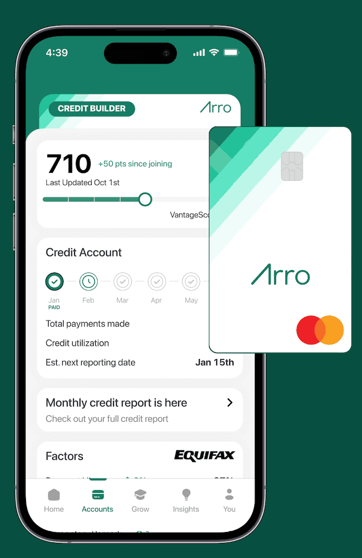
The Arro app has a lot of tools to help you track and improve your credit score.
Review account activity
Update your personal information
Change or add payment methods (the default must be a connected checking account, and you must have a checking account connected to the app at all times).
Make payments and set up autopay
Access your credit score and personalized recommendations to improve it
Learn about personal finance concepts
Get answers to basic questions from AI Assistant, Artie
The app is pretty well-rated, with Android users giving it 3.3 out of 5 stars and Apple users giving it 4.6 out of 5 stars. However, some people report that it is glitchy and shows incorrect account information.
I downloaded and explored the app. Since I don’t have an Arro Card, I can’t get the full experience, but I can report that the user interface is fairly intuitive.
The biggest functionality gap is that, from what I can tell, there is no way to contact customer service directly within the app. Artie could answer several pre-programmed questions, but I couldn’t type in a query or request to live chat with a human. Your experience as a cardholder may vary.
In-App Money Coach & Educational Tools
Artie is your in-app money coach. Arro bills Artie as a “FinConcierge” (financial concierge) that offers real-time advice and personalized guidance.
Available 24/7, it can do things like:
Artie can spot patterns in your spending and credit score.
Send cash flow alerts
Track whether you’ll be over or under budget
Identify spending patterns before they become problematic
Coach you to make smart(er) credit and financial decisions
My experience with Artie was far less robust, but I think that’s because I’m not an Arro Card user. If you’re an actual customer, my guess is that Artie can be pretty useful.
The app also houses an extensive collection of micro-lessons covering a range of personal finance topics, such as:
Credit
Budgeting
Money management
Debt
Savings
Wealth building
Investing
The system adapts to your knowledge level and goals, delivering a personalized and relevant learning experience.
Customer Support Channels & Response Times
In my opinion, the Arro Card’s biggest drawback is that you can’t call customer service if you have a question or concern. You have to send all inquiries to support@arrofinance.com.
If you have a routine question about your account, sending an email (and waiting for a reply) may be a minor inconvenience.
But what if your card gets stolen? Time is of the essence to lock the card and ensure the thief can’t go on a shopping spree.
I emailed the support inbox on a weekday afternoon to ask about response times in urgent situations. The automatic reply said that I would receive an email back during business hours — Monday to Friday, 9 AM to 5 PM PST.
Based on that, if someone stole my card on a Friday night, they could potentially use it all over town (or the internet) for 3 days before Arro was aware.
Fortunately, a customer service representative answered my email about two hours later and offered some reassurance. Despite what the automatic reply indicated, representatives are available seven days a week from 9 AM to 6 PM, and the team strives to answer all inquiries within 24 to 48 hours.
While that’s an improvement, it pales in comparison to companies you can call 24/7. I really wish I could have a live conversation with someone because it would be a lot more efficient than emailing back and forth.
Tip: The Arro Help Center has a large library of Q&A articles, which may limit your need to email customer service.
Potential Credit Limit (And How to Earn Increases)
If approved for the Arro Card, your starting credit limit will be between $50 and $300. You can’t request credit limit increases.
However, Arro may boost your spending power to up to $2,500 if you complete financially positive tasks, such as:
Setting up automatic payments
Finishing financial lessons
Making consistent, on-time payments
Plus, you can earn a $25 credit limit bump for every approved applicant you refer to the Arro Card (capped at $300).
You can also convert the points you earn for healthy financial behaviors into gift cards. Every 100 points you bank is worth $1. The financial lessons I see in the app pay 50 points for completion, and you need to rack up at least 1,000 points before you can cash out.
You can boost your rewards balance by stringing together multiple months of on-time payments of at least the minimum amount due (something Arro calls a streak). Streak rewards get applied once per statement cycle and increase with the length of your streak.
Note: You may be able to lower your APR by completing financial education lessons.
What Credit Score You Need to Qualify
Arro doesn’t consider your credit score when evaluating your application, so it doesn’t have a minimum credit score requirement to qualify for the card. Instead, the company bases its decision on your:
Income
Cash flow
Other credit factors
Arro doesn’t specify what the other credit factors are, but my guess is that they could include payment history, account delinquency, and your overall credit utilization.
To apply, you must:
Be a US citizen or resident
Be age 18 or older
Have a valid Social Security number (SSN) or Individual Taxpayer Identification Number (ITIN)
Have a valid US bank account with a positive balance
During the application process, you’ll connect your bank account with Plaid so Arro can verify your income and cash flow.
How to Apply (A Step-By-Step Guide)
While you won’t need good credit to apply for the Arro Card, you’ll still need to provide plenty of information to get approved. The issuer still wants to ensure your finances are stable enough to afford monthly payments.
That’s not to say the application is long, but it still includes most of the information you’d find on an application that would result in a hard credit check.
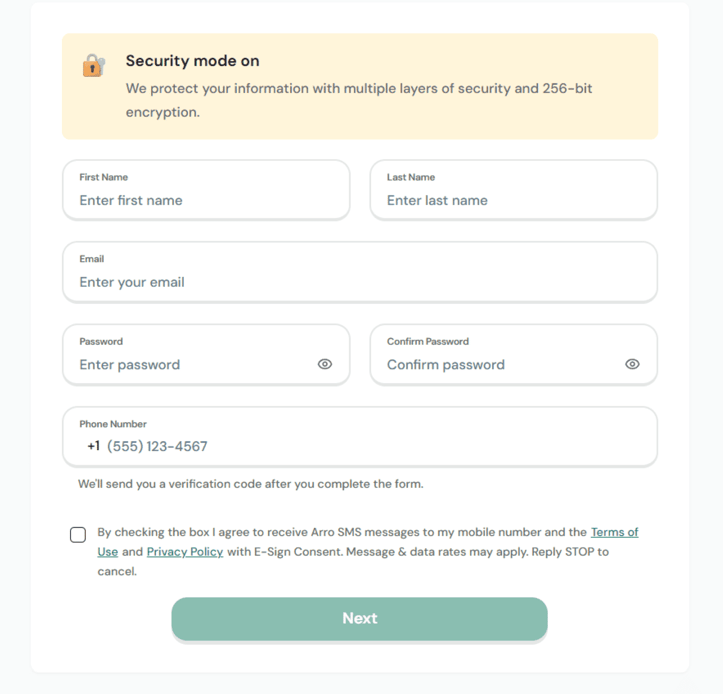
Step 1: Name, Email, and Phone Number
After I click “Apply Now,” I’m taken to the first page of the application. Here, I enter my:
First name
Last name
Email address
Password (twice to confirm accuracy)
Phone number
Next, I click on the links to read the Terms of Use and Privacy Policy.
The Terms of Use contain standard legalese you’ll find on pretty much any website. One notable point: Disputes between you and the company will be decided by binding arbitration instead of a lawsuit unless you send Arro a signed letter to reject this resolution method.
The Privacy Policy is fairly run-of-the-mill, too. However, there are a few highlights:
You can’t use a work email address as a contact method with Arro. You must provide a personal email address.
You must consent to electronic communication to do business with Arro. If you withdraw your consent, you won’t be able to access or use your account.
You can’t request paper records. You must print them from your online account.
After reading the documents, I click the checkbox to agree to the terms and receive text messages from Arro.
Then, I receive a text verification and an email verification and click “Next.”
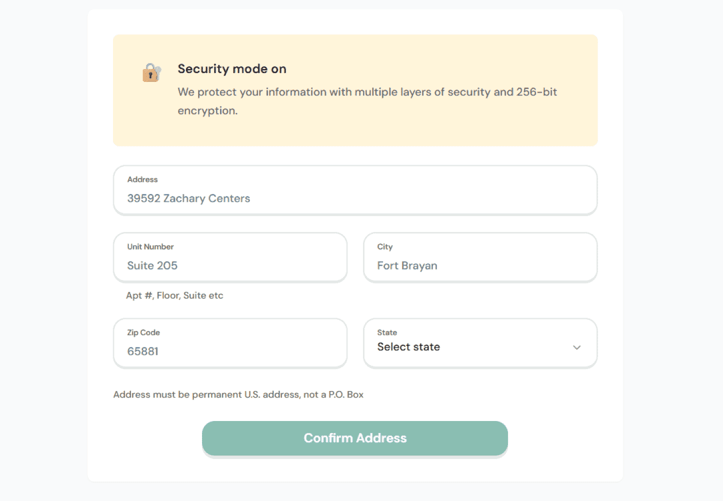
Step 2: Residential Address
I enter my residential mailing address. (P.O. boxes aren’t accepted.) The field auto-populates as I type. Then, I click “Confirm Address.”
Step 3: Birth Date and Social Security Number
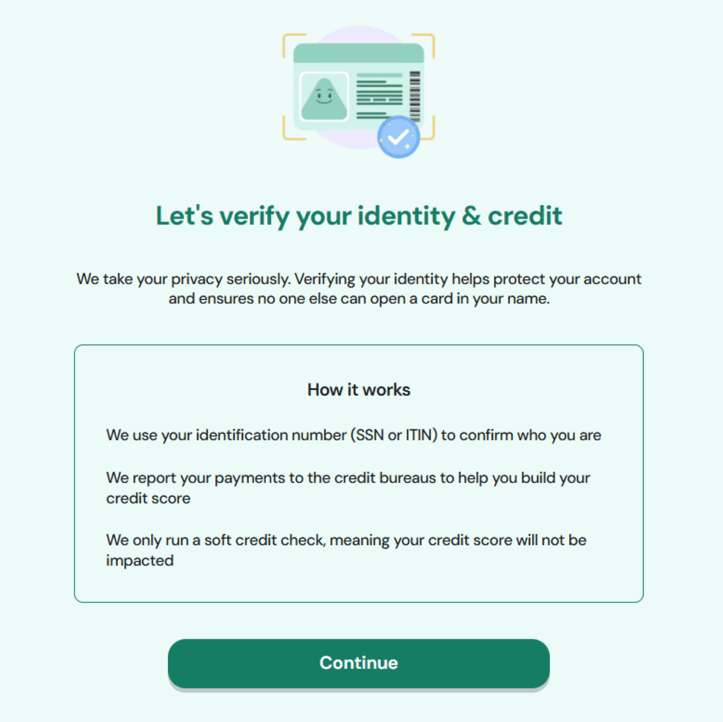
I see a screen about verifying my identity and credit. It mentions using my SSN or ITIN to confirm I’m who I say I am.
It also mentions running a soft credit check during the application process, which won’t hurt my credit score. I click “Continue.”
Then, I enter my date of birth and SSN. Then, I click “Next.”
Step 4: Review Your Information
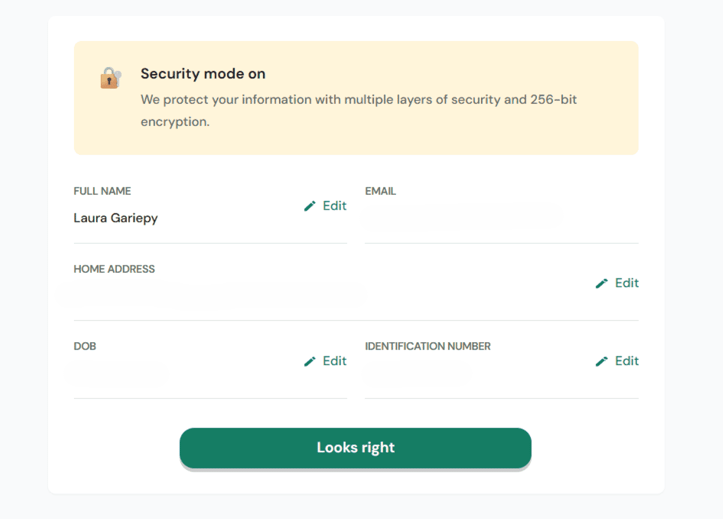
I review my (redacted) information to make sure my fingers didn’t trip while typing. Then, I click “Looks right.”
Step 5: Income, Bank Account, and Housing Payment
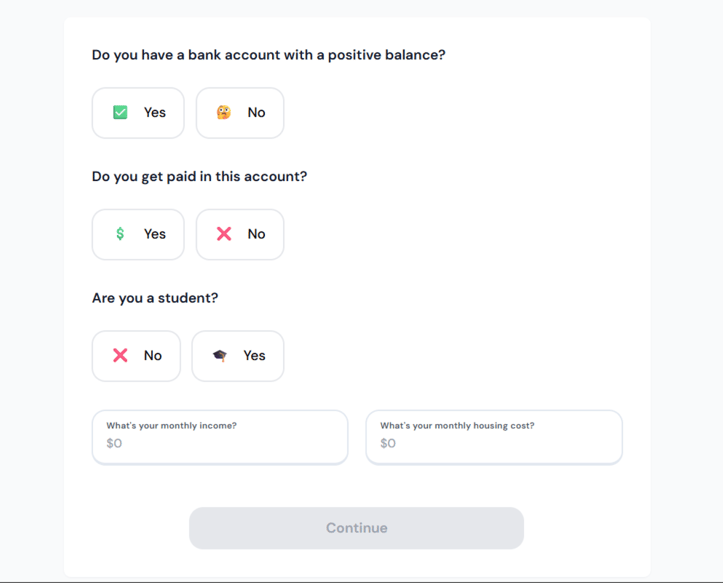
I answer the questions on the screen about my bank account, student status, monthly income, and monthly housing cost. Then, I click “Continue.”
Step 6: Connect Bank Account With Plaid
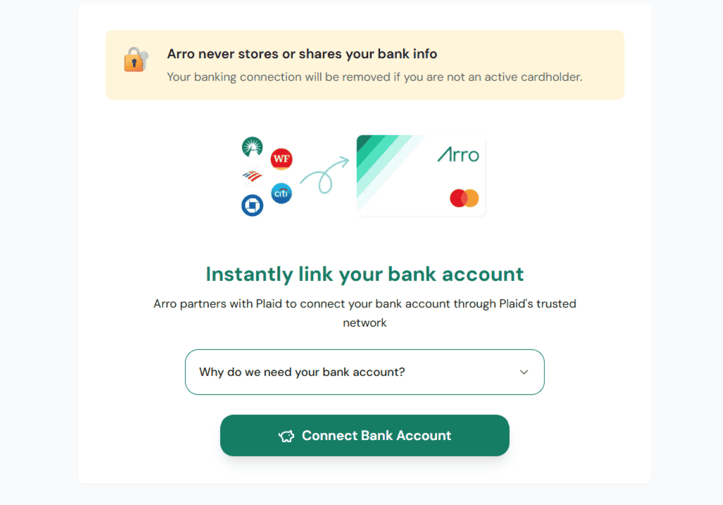
I see a screen about connecting my bank account with Plaid. I click on “Why do we need your bank account?”
It says it’s to verify my information, comply with financial regulations, provide personalized financial insights, and enable seamless money transfers. Next, I click “Connect Bank Account.”
I see a pop-up asking for a text code. I enter it and choose the bank account I want to share with Arro.
Next, I enter my bank’s login credentials (the same information I use for online banking). Then, I follow the on-screen prompts and read the disclosures that pop up.
Note: I didn’t screenshot this step because of data privacy, and because what you see may differ depending on what bank you use.
Then, I see a screen that says “Processing your bank connection.” I didn’t know this at the time, but this step was also my overall application submission
Step 7: Application Decision
I did not intend to apply for this account, but I see an application decision at this stage. There was no “Submit Application” button, and it was not clear that connecting my bank account would finalize the application.
You may receive an instant application decision, too. But be prepared to submit additional information if Arro requests it.
Arro issues virtual and physical cards. You can use your virtual card immediately after application approval. Your physical card will arrive within seven days.
Who Should (and Shouldn’t) Apply
The Arro Card isn’t for everyone, but it may be right for you if you:
Have a limited or blemished credit history and want to build a strong credit profile
Can pay your bill on time every month and keep your balance low
Plan to use the card to buy gas and groceries so you’ll earn cash back
Intend to use the in-app tools to increase your financial knowledge and improve your financial situation
Are comfortable managing your account from a mobile app
Don’t mind receiving customer support via email during set operating hours
Have positive cash flow and meet the other eligibility criteria
On the other hand, you may want to consider other options if you:
Have good to excellent credit and can qualify for a card with a lower APR, better perks, or both
May struggle to pay your bill on time most months or keep your balance in check
Plan to use a new credit card for purchases other than gas or groceries
Don’t intend to use the in-app tools (they’re really some of the card’s biggest draws)
Would prefer to manage your account online
Need 24/7 phone support to feel comfortable
Don’t have sufficient cash flow or meet the stated qualification requirements
You should have a pretty good idea about which category you fall into. That should guide your decision about whether or not to apply for the Arro Card.
Pros and Cons
The Arro Card doesn’t require a security deposit, a hard credit inquiry, or a specific credit score, which may make it more accessible than other cards on the market.
However, the low barrier to entry comes at a cost: A high APR and annual membership fee.
Pros
Tri-credit bureau reporting
Unlimited 1% cash back on gas and grocery spending
App features, such as Artie, credit monitoring, and personal finance lessons
Cons
No phone or evening customer support
High APR & low initial credit limit
No financial product is perfect. Each will have its perks and pitfalls. The Arro Card’s cash back and in-app tools outshine many of its competitors.
However, its initial credit limit and customer support are lacking. You’ll have to decide what’s most important to you.
Similar Cards Worth Considering
The Arro Card isn’t your only option to build credit. Here are two other cards to explore and consider:
Disclosure: When you apply through links on our site, we often earn referral fees from partners. For more information, see our ad disclosure
Advertiser Disclosure
CardRates.com is a free online resource that offers valuable content and comparison services to users. To keep this resource 100% free, we receive compensation for referrals for many of the offers listed on the site. Along with key review factors, this compensation may impact how and where products appear across CardRates.com (including, for example, the order in which they appear). CardRates.com does not include the entire universe of available offers. Editorial opinions expressed on the site are strictly our own and are not provided, endorsed, or approved by advertisers.
Our experts rate credit card offers based on factors like rewards, APRs, signup bonuses, fees, and approval rates, with a focus on benefits that provide the best value. We also consider cardholder needs such as credit-building potential, issuer reputation, and customer service. Our ratings are unbiased, updated regularly, and not influenced by issuers.
Earn Cash Back Rewards* – 3% on Eligible Gas, Groceries, and Utilities, and 1% on All Other Eligible Purchases
Up to $1,000 credit limit subject to credit approval
Prequalify** without affecting your credit score
No security deposit
Free Access to your Credit Score†
*See Program Terms for important information about the cash back rewards program.
** Prequalify means that you authorize us to make a soft inquiry into your credit history (that will not affect your credit) to create an offer. If you accept an offer a hard inquiry will be made. Final approval is not guaranteed if you do not meet all applicable criteria (including adequate proof of ability to repay). Income verification through access to your bank account information may be required.
† Your credit score will be available in your online account starting 60 days after your account is opened. (Registration required.) The free VantageScore 4.0 credit score provided by TransUnion® is for educational purposes only. This score may not be used by The Bank of Missouri (the issuer of this card) or other creditors to make credit decisions.
Intro (Purchases)N/A
Intro (Transfers)N/A
Regular APR36% Fixed
Annual Fee$85-$175 first year, $229 thereafter
Credit NeededPoor, Fair, or No Credit
You can use the Aspire® Cash Back Rewards Mastercard to rack up rewards faster than with the Arro Card. You’ll earn 3% cash back on eligible gas, grocery, and utility spending, and 1% on all other purchases.
Like the Arro Card, you can track your credit score for free. You can also prequalify for an account without a hard inquiry appearing on your credit report.
The card’s Achilles’ heel is its cost. The APR is 36% Fixed and the annual fee is $85-$175 first year, $229 thereafter. It’s less expensive to have and use the Arro Card.
Disclosure: When you apply through links on our site, we often earn referral fees from partners. For more information, see our ad disclosure
Advertiser Disclosure
CardRates.com is a free online resource that offers valuable content and comparison services to users. To keep this resource 100% free, we receive compensation for referrals for many of the offers listed on the site. Along with key review factors, this compensation may impact how and where products appear across CardRates.com (including, for example, the order in which they appear). CardRates.com does not include the entire universe of available offers. Editorial opinions expressed on the site are strictly our own and are not provided, endorsed, or approved by advertisers.
Our experts rate credit card offers based on factors like rewards, APRs, signup bonuses, fees, and approval rates, with a focus on benefits that provide the best value. We also consider cardholder needs such as credit-building potential, issuer reputation, and customer service. Our ratings are unbiased, updated regularly, and not influenced by issuers.
No annual or hidden fees. See if you’re approved in seconds
Building your credit? Using the Capital One Platinum Secured card responsibly could help
Put down a refundable security deposit starting at $49 to get at least a $200 initial credit line
You could earn back your security deposit as a statement credit when you use your card responsibly, like making payments on time
Be automatically considered for a higher credit line in as little as 6 months with no additional deposit needed
Enjoy peace of mind with $0 Fraud Liability so that you won’t be responsible for unauthorized charges
Monitor your credit score with CreditWise from Capital One. It’s free for everyone
Get access to your account 24 hours a day, 7 days a week with online banking to access your account from your desktop or smartphone, with Capital One’s mobile app
The Capital One Platinum Secured Credit Card has a $0 annual fee and no foreign transaction fees. If you don’t carry a balance at 29.24% (Variable) APR, using this card can be cheaper long-term than the Arro Card.
This card is secured, so you’ll need to make a security deposit to open and use your account, which might be challenging if your budget’s tight. However, you may be able to get an initial credit line of $200 for just $49 down (subject to your creditworthiness).
If you close your account, you’ll get your deposit back (less any amount you owe Capital One). You may also qualify for a credit line increase in as little as six months (and an eventual upgrade to an unsecured card) with responsible use.
Would I Recommend the Arro Card?
Yes, I would recommend the Arro Card to select consumers. If you’re looking for a first credit card or you’re trying to rebuild your credit after hardship, this may be the tool you need.
It’s a good fit if you’re a digital native and already manage your life from your phone. It’s also a smart match if you want to learn about personal finance and like the idea of gamifying your credit-building experience.
One caveat: You need a long-term credit card strategy. Let’s say you get the Arro Card and use it for a couple of years to boost your score into the good-to-excellent range. Then what?
Unlike other companies, Arro doesn’t offer an upgrade path. Sure, you can potentially increase your credit limit and decrease your APR, but it’ll still have the same annual membership fee and rewards structure.
If you eventually want a better card, start researching now. Discover the cards you aspire to qualify for and use your Arro Card as a stepping stone to get there.
Arro Card
★★★★★4.0/5.0
Arro Card
4.0/5.0
About this rating
Our experts rate credit card offers based on factors like rewards, APRs, signup bonuses, fees, and approval rates, with a focus on benefits that provide the best value. We also consider cardholder needs such as credit-building potential, issuer reputation, and customer service. Our ratings are unbiased, updated regularly, and not influenced by issuers.
Laura is a personal finance expert who primarily focuses on credit, credit cards, loans, and other consumer-facing topics. Her insights have been featured in U.S. News & World Report, Fortune, Yahoo Finance, The New York Post, USA Today, and many other financial publications. She also earned her MBA and a Bachelor's Degree in Psychology during her previous career in human resources.