
Writer: Andrew Allen


Editor: Lillian Guevara-Castro


Reviewer: Adam West

Our experts and industry insiders blog the latest news, studies and current events from inside the credit card industry. Our articles follow strict editorial guidelines.
Key Takeaways
The Illinois Interchange Fee Prohibition Act (IFPA) may have run into its biggest roadblock yet. The Office of the Comptroller of the Currency is moving to stop the act in its tracks before it goes into effect on July 1, 2026.
The act stands to prevent financial institutions from charging interchange fees on the tax and tip portions of a bill that a customer pays with either a credit or debit card. This isn’t just an Illinois issue. It’s a test case for whether states can regulate fees set by networks like Visa and Mastercard.
Stakeholders across the country are closely monitoring the issue as lawmakers in states beyond Illinois consider moving forward with their own plans to remove interchange fees from taxes and tips.
Many parties have come out in recent months to either support or criticize the act. But the Office of the Comptroller of the Currency (OCC) has launched the most recent effort to stop the Illinois Interchange Fee Prohibition Act. And it comes as time is beginning to run out for those who oppose the act to block it before it takes effect.
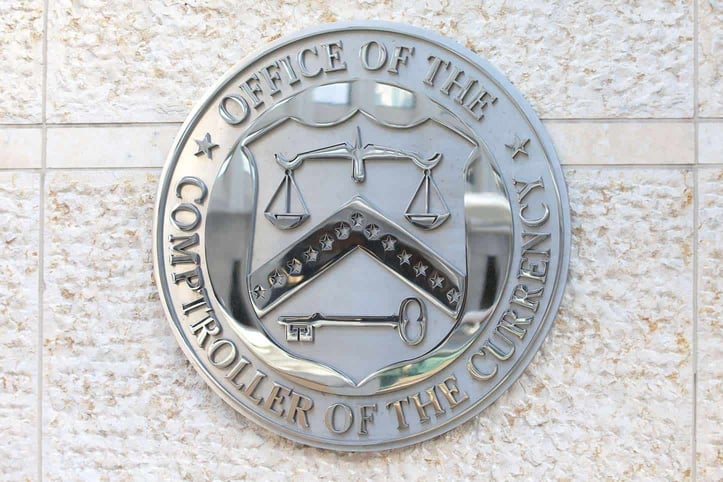
The regulator for the U.S. banking industry sent a draft interim final rule last week to the Office of Management and Budget, according to American Banker. While the Office of Management and Budget did not make the language in the draft rule available to the public, it now includes a notice regarding the rule on its website.
The draft rule isn’t the OCC’s first involvement in this matter. The banking regulator filed an amicus brief on March 16 that heavily criticized the IFPA and said it is “an improper and undeniable state interference with federally authorized banking powers that drive the nation’s economy.”
The OCC went on to say in the brief that the act would harm the payments system’s essential infrastructure and would require financial institutions to spend significant amounts to comply with what the IFPA calls for.
Merchants Support Cutting Interchange Fees
The Office of the Comptroller of the Currency oversees national banks, so it has a strong interest in how things play out in the coming months regarding IFPA. If the act does indeed go into effect this summer, it would cause substantial upheaval for banks and other companies that issue credit cards.
Groups including the American Bankers Association and America’s Credit Unions have taken steps to stop IFPA, claiming the rule isn’t workable from a technical perspective. Similar to the OCC, these groups pointed to the millions of dollars in costs the act would heap on issuers, according to American Banker.
Merchants sit on the other side of the argument. Many of them are in favor of the IFPA and likely aren’t too happy with the OCC’s moves to stop it.
“The OCC is taking advocating for big Wall Street banks to a whole new level,” Doug Kantor, National Association of Convenience Stores General Counsel and Executive Committee Member of the Merchants Payments Coalition, told Payments Dive. “The court clearly ruled that Illinois can regulate credit card swipe fees.”
Credit card issuers may resort to lowering the value of the rewards programs they offer if efforts to stop IFPA fail.
What’s less clear is whether consumers would see any benefits should the IFPA survive efforts to block it from going into effect.
If the act causes credit card issuers to lose a significant amount of revenue, cardholders may be the ones to suffer the most. The Illinois Interchange Fee Prohibition Act could bring tens of millions of dollars in losses every year to large issuers, according to the International Center for Law & Economics.
That may force issuers to raise annual percentage rates and lower the value of card benefits and rewards programs. In addition, issuers could impose new fees on cardholders or raise current ones in attempts to make up some of the lost revenue.
We should know soon enough what results the OCC’s latest move on IFPA will produce. Jaret Seiberg, Financial Services Policy Analyst at TD Cowen, revealed to American Banker that some Office of Management and Budget reviews can take months while others can finish in a matter of days.
“In this case, we expect an expedited review with the agency able to issue the interim final rule within a few weeks,” Seiberg added.
Editorial Note: Our site content is not provided or commissioned by any credit card issuer(s). Opinions expressed on CardRates.com are the author's alone, not those of any credit card issuer, and have not been reviewed, approved, or otherwise endorsed by credit card issuers. Every reasonable effort has been made to maintain accurate information; however, all credit card offer details, including information about rewards, signup bonuses, introductory offers, and other terms and conditions, is presented without warranty. Clicking on any offer on CardRates.com will direct you to the issuer's website, where you can review the current terms and conditions of the offer.
About the Author


![“Do Prepaid Cards Work For PayPal?”[updated_month_year before=" (" after=")"]](https://www.cardrates.com/images/uploads/2020/09/Do-Prepaid-Cards-Work-For-PayPal.jpg?width=164&height=85 "“Do Prepaid Cards Work For PayPal?”[updated_month_year before=\" (\" after=\")\"]")
![“Do Prepaid Cards Work on Venmo?”[updated_month_year before=" (" after=")"]](https://www.cardrates.com/images/uploads/2021/06/Do-Prepaid-Cards-Work-on-Venmo_--1.jpg?width=164&height=85 "“Do Prepaid Cards Work on Venmo?”[updated_month_year before=\" (\" after=\")\"]")
![5 Prepaid Cards That Work With Apple Pay[updated_month_year before=" (" after=")"]](https://www.cardrates.com/images/uploads/2021/10/Prepaid-Cards-That-Work-With-Apple-Pay.jpg?width=164&height=85 "5 Prepaid Cards That Work With Apple Pay[updated_month_year before=\" (\" after=\")\"]")