
Writer: Marcie Geffner


Editor: Jon McDonald


Reviewer: Ashley Fricker

Opinions expressed here are ours alone, and are not provided, endorsed, or approved by any issuer. Our articles follow strict editorial guidelines and are updated regularly.
Patience isn’t one of my strengths, but I don’t often fret about pending card transactions. That’s because I know most of them are simply charges that have been authorized, but not yet fully completed and posted to my account. In other words, some technical processing is still underway behind the scenes, and waiting 3 to 5 business days is standard.
Sometimes, though, a pending transaction isn’t resolved as quickly as I expected. If you’ve experienced that situation (and who hasn’t?), it can be helpful to understand why pending transactions occur and what you can do if one seems to get stuck or creates other problems on your card account.
Here, I’ll explain the entire process — and when you might want to ask some questions.
What Does a Pending Credit Card Charge Mean?
A pending transaction is one that’s been started, but not yet completed. Maybe you’re pumping gas into your car, checking into a hotel room, or buying something online that will be shipped to you later, to give just a few examples.
In these and similar situations, the merchant may want to confirm that your card’s valid and you have enough credit available to complete the transaction. Because if not, you might check out or drive away without paying the amount you owe.
| Common Reasons for Pending Transactions | ||
|---|---|---|
| Why the Hold is Placed | Typical Outcome | |
| Gas Stations | To ensure you can pay for a full tank before you pump. | To cover the rental cost, potential damages, or late fees. |
| Hotels | To cover the room rate plus potential “incidentals” (room service, etc.). | Hold often includes a daily buffer (e.g., $50/night) above the room rate. |
| Car Rentals | To cover the rental cost and potential damages or late fees. | Large holds that may stay active until the car is returned and inspected. |
| Restaurants | To verify funds for the meal before a tip is added. | Pending amount may be the subtotal; Posted amount includes the tip. |
| Online Retail | To verify the card is active before the item is packed. | Transaction may stay pending until the item actually ships. |
Once the merchant requests authorization from your card company, the transaction can show up on your account as pending. Refunds or payments can also show as pending while they’re being processed.
If your card isn’t valid or the transaction amount exceeds your available credit, your card issuer may decline the transaction. In that case, it shouldn’t show as pending on your card account.
How Long Do Pending Credit Card Charges Last?
Pending purchase transactions are usually completed within three to five business days, although some may take longer. Payments are normally posted within seven days.
Refunds can take longer. The exact timeframe depends on the type of transaction, your bank or card issuer, the card network, and the merchant.
In some cases, a longer time period may be normal and not a cause for concern. For example, transactions initiated on a weekend or a holiday, or international charges that involve foreign currencies, may take longer.
Understanding the Life Cycle of a Card Transaction
That’s an overview of the process. What happens behind the scenes from the merchant’s point of view is a bit more technical.
When you present your card for payment either in person or online, the merchant’s payment processor requests an authorization for that transaction from the card issuer through the card network.
Card issuers are banks and other financial companies that provide cards to consumers and businesses. Payment processors and card networks are companies that authorize and process card payments for issuers and merchants.
In the U.S., Visa, Mastercard, American Express, and Discover are the major card networks.
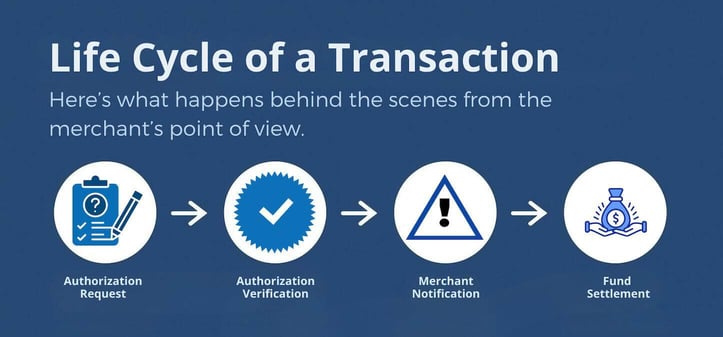
Once the issuer verifies that your card is valid, it hasn’t been reported as stolen, lost, or frozen, you’re authorized to use it, and you have enough credit available for the transaction, it sends an authorization code back through the card network to the payment processor.
The processor then notifies the merchant that the transaction has been authorized. For most transactions, the entire authorization process happens electronically and within seconds.
After a transaction is authorized, the payment processor will transfer the funds to the merchant’s financial account.
This part of the process, known as settlement, may take a few days to be completed. Until the transaction is completed and posted to your account, it will appear as pending. Posted is an accounting term.
What Happens While a Charge is Pending
With one or more transactions pending, you should still be able to use your card as you normally would, but there are some issues you should be aware of.
First, pending transactions may be added to your balance and typically will be deducted from your credit limit. That makes sense because while a transaction is pending, you can’t use that portion of your credit for another transaction.
If you had a card with a $4,000 limit, a $2,500 balance, and a pending charge of $1,000, another $1,000 charge might be declined until you made a payment or received a refund, or your first $1,000 pending charge was canceled.
You shouldn’t be charged interest on a pending transaction, and you won’t receive any cash back, airline miles, shopping points, or other rewards for it either—at least not yet. Once the transaction is settled, interest may be charged and rewards earned.
Typically, you won’t be able to cancel or dispute a pending card transaction with your card company. Instead, you’ll have to ask the merchant to cancel or complete the transaction.
| Pending vs. Posted Transactions | ||
|---|---|---|
| Feature | Pending Status | Posted Status |
| Deducted from Credit Limit? | Yes | Yes |
| Added to Current Balance? | Usually | Yes |
| Earns Rewards/Points? | Not yet | Yes |
| Accrues Interest? | No | Yes |
| Can it be Disputed? | No (Contact Merchant) | Yes (Contact Bank) |
One exception is if you suspect a charge is fraudulent, you should contact your card company as soon as possible, even if it’s shown as pending.
Merchants may be more willing to cancel a pending charge if you make your request immediately, your order hasn’t yet shipped, you were billed the wrong amount or billed twice by mistake, or you already returned your purchase.
Be ready to provide the date of the transaction, the amount, and your order number, if you have one.
Once a charge has been settled and is posted to your account, you can contact your card company for help if you believe the amount is wrong or if you have a dispute with the merchant about the transaction.
When a transaction is settled, the amount may change from what was shown when it was pending. Typically, you’ll know why the amount changed. Usually, it’s due to incidental charges, such as snacks or bottled water you charged to your hotel room or a tip you added to a restaurant bill.
Payments or refunds typically won’t be added to your available credit until they’re posted. Depending on your payment due date and grace period, you may even need to pay amounts you expect to be refunded to avoid interest charges.
Can Pending Charges Affect Credit Scores?
Pending transactions don’t directly affect your credit scores, but there is an important indirect way that they could have an impact.
One component of your scores is your credit utilization ratio, which measures how much of your available credit you’re using. Because pending transactions set aside a portion of your available credit, they can raise your utilization ratio and, consequently, lower your credit scores.
| How Pending Charges Impact Your Credit Card Account | |
|---|---|
| Available Credit | Reduced. Funds are “reserved” and cannot be spent elsewhere. |
| Account Balance | Usually not added to the “Current Balance” yet. |
| Credit Utilization | Increases. Higher utilization can temporarily lower scores. |
| Minimum Payment | Not included in the minimum payment calculation. |
The impact is usually small, but if you’re seeking additional credit, you may want to avoid large pending transactions until your application is reviewed.
What to Do if a Charge Stays Pending Too Long
If a transaction appears to be stuck in pending status, you should contact the merchant and try to resolve the issue. If the merchant can’t explain why the transaction remains pending, then you can contact your card company for further assistance.
Be sure to tell your card company that you have already contacted the merchant.
Closing your card account might seem like a smart way to resolve a stuck transaction, but it’s unlikely to work. If you close your account or your card is canceled while a charge is pending, your card company will still charge you the full amount even if the transaction is posted after your card is no longer valid.
Pending Charges Are Normal, But Worth Monitoring
Pending charges may appear worrisome, but most of the time, they’re a normal part of the card payment process.
Unless a charge gets stuck for weeks, you can simply wait patiently for it to be resolved. Sooner or later (usually sooner), it should be.
Editorial Note: Our site content is not provided or commissioned by any credit card issuer(s). Opinions expressed on CardRates.com are the author's alone, not those of any credit card issuer, and have not been reviewed, approved, or otherwise endorsed by credit card issuers. Every reasonable effort has been made to maintain accurate information; however, all credit card offer details, including information about rewards, signup bonuses, introductory offers, and other terms and conditions, is presented without warranty. Clicking on any offer on CardRates.com will direct you to the issuer's website, where you can review the current terms and conditions of the offer.
About the Author