
Writer: Andrew Allen


Editor: Lillian Guevara-Castro


Reviewer: Adam West

Our experts and industry insiders blog the latest news, studies and current events from inside the credit card industry. Our articles follow strict editorial guidelines.
Key Takeaways
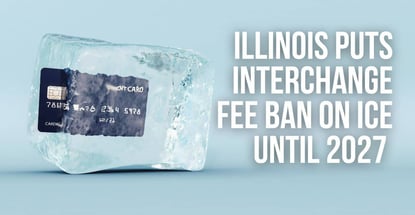
Those looking forward to seeing the Illinois Interchange Fee Prohibition Act (IFPA) go into effect on July 1 will have to wait at least one more year.
In passing its budget over the weekend, the Illinois General Assembly pushed the implementation date of the IFPA back by 12 months to July 1, 2027, in a temporary win for banking groups.
The act aims to prevent financial companies from charging interchange fees on the tax and tip portions of a bill paid with a credit or debit card. Banking and credit union groups have been vocal in their opposition to the IFPA because of the trouble it could bring to participants in the payment ecosystem.
“What (the charts) don’t show is that merchant revenue on cards has grown in proportion to (interchange growth).” — Kelvin Chen, Consumer Bankers Association
A group including the American Bankers Association, Illinois Bankers Association, America’s Credit Unions, and the Illinois Credit Union League published a statement welcoming the Illinois General Assembly’s decision to move the IFPA’s implementation date back by one year.
“This reasonable step will protect Illinois businesses and consumers from facing payment chaos in just a month, without interrupting our ongoing legal challenge to IFPA,” the groups said in a press release. “We remain confident in the strength of our case and look forward to securing permanent relief from this misguided law.”
In late April, the Office of the Comptroller of the Currency said that the IFPA would introduce a complex standard for national banks that would not be workable.
Merchants Point to Possible Savings
Though the interchange act in Illinois won’t go into effect over the summer, other states, including Colorado, are moving forward with plans to reduce interchange charges.
While credit card issuers generally stand in opposition to bills such as the IFPA, many merchants are in favor of them. The Merchant Payments Coalition issued a press release in May stating that the interchange legislation in Colorado will provide millions of dollars in savings annually to small businesses and consumers in the state.
“Unfortunately for Illinois consumers, small businesses, community banks, and credit unions, delaying the chaos is not the same as fixing it.” — Richard Hunt, Executive Chairman of the Electronic Payments Coalition
But consumers don’t have any guarantees that plans to restrict interchange will result in more cash in their pockets.
Kelvin Chen, Senior Executive Vice President and Head of Policy at the Consumer Bankers Association, told us recently that merchants may benefit from credit cards more than people think.
“There’s always this chart that comes up in these debates … that shows that what merchants pay in interchange fees has grown over the years,” Chen told us. “But what they don’t show is that merchant revenue on cards has grown in proportion to that.”
While some are celebrating the decision by the Illinois General Assembly, others are looking for a stronger move than just a delay.
Richard Hunt, Executive Chairman of the Electronic Payments Coalition, issued a statement today saying consumers and financial institutions in Illinois deserve a permanent solution.
“Unfortunately for Illinois consumers, small businesses, community banks, and credit unions, delaying the chaos is not the same as fixing it,” Hunt said. “The only real solution is full repeal.”
Editorial Note: Our site content is not provided or commissioned by any credit card issuer(s). Opinions expressed on CardRates.com are the author's alone, not those of any credit card issuer, and have not been reviewed, approved, or otherwise endorsed by credit card issuers. Every reasonable effort has been made to maintain accurate information; however, all credit card offer details, including information about rewards, signup bonuses, introductory offers, and other terms and conditions, is presented without warranty. Clicking on any offer on CardRates.com will direct you to the issuer's website, where you can review the current terms and conditions of the offer.
About the Author