
Writer: Andrew Allen


Editor: Lillian Guevara-Castro


Reviewer: Adam West

Our experts and industry insiders blog the latest news, studies and current events from inside the credit card industry. Our articles follow strict editorial guidelines.
Key Takeaways
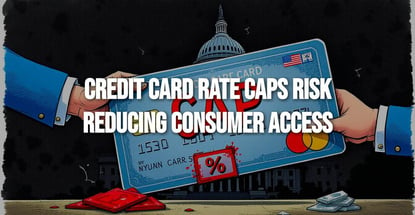
- In early January, President Donald Trump posted on social media that he wanted a 10% cap on credit card interest rates to go into effect for one year beginning on January 20.
- Senator Bernie Sanders believes a 10% cap should last for a minimum of five years.
- One financial expert told us politicians may realize that a cap on credit card rates won’t work as they claim it will, yet they still promote the idea to win favor with voters.
Nothing has happened more than two months since President Donald Trump called for placing a 10% cap on credit card interest rates for one year.
Yet certain politicians keep calling for the cap to move forward. Whether these lawmakers don’t believe arguments that the cap will have dangerous effects on many people in the U.S. — or they simply haven’t paid attention to the finer points of those claims — is unclear.
Many people close to the credit card industry spoke out in the aftermath of the president’s call for a cap to explain why it may not be an effective way to improve the financial situations of many U.S. consumers.
A Forbes report explained that a cap on interest rates — which can serve as a tool for pricing risk — wouldn’t simply shield lower-income Americans from relatively high rates. Instead, a cap would cause many credit card issuers to cut off or reduce access to card products for people they deem to be less creditworthy.
Further, financially responsible cardholders who pay off their balances in full every month may see issuers eliminate or decrease the value of card rewards programs if a 10% cap were to take place. Card companies often fund those initiatives with the income they earn on interest, Forbes revealed.
A 10% cap on credit card interest rates could restrict access to cards to only the most creditworthy consumers in the U.S.
Another article exploring the consequences of a 10% cap on card interest rates disclosed that if a cap doesn’t cause banks to stop offering credit cards to people with low incomes, then institutions will have to make up lost revenue by increasing fees and charges elsewhere.
“It’s unrealistic to think that credit card companies would not adjust in other ways if rates were capped at 10%,” Leslie H. Tayne, Esq., finance and debt expert and Founder of Tayne Law Group, told us. “They would have to — to keep their business afloat.”
Politicians Back the Cap
Senator Bernie Sanders (I-VT) is one politician who hasn’t been shy about his support to cap credit card interest rates. In a post on his website, Sanders outlined that many people in the U.S. are struggling to make ends meet while billionaires pay effective tax rates that are lower than those that the average truck driver pays.
But Sanders doesn’t think Trump’s plan to cap rates goes far enough. Sanders is in favor of a 10% cap lasting for a minimum of five years and proposes moving to a permanent cap of a maximum of 15% after that.
“A 28% interest rate on a credit card balance of $5,000 can cost a consumer as much as $11,000 in interest and take up to 24 years to pay off,” Sanders wrote. “With a 10% credit card interest rate cap, that consumer would save more than $7,200 in interest. The bank would still be able to make over $3,700 in profit off that consumer.”
Senators Bernie Sanders and Elizabeth Warren have both supported placing a cap on card interest rates.
But that’s only true if the credit card issuer can afford to offer that consumer a credit card with an interest rate of 10%.
Senator Elizabeth Warren (D-MA) took a similar position to Sanders in an opinion piece that appeared on the Fox News website.
In the article, Warren noted that banks had issued warnings that a cap on card rates could lead to economic problems. But Warren didn’t find the arguments from banks to be persuasive.
“These are the most profitable financial institutions in the history of the world,” Warren wrote. “There is no reason for them to demand 25% or 30% interest rates when smaller banks and credit unions are offering much lower credit card interest rates and are still making solid profits.”
Experts Weigh In On Cap Issues
We caught up with a few experts in the credit space to uncover explanations for why politicians continue to push a cap on credit cards despite multiple reports that point to the problems a cap would bring to the economy.
Ari Page, CEO at Fund&Grow, told us that the reason that politicians are calling for a 10% cap — regardless of whether they truly believe it will be the solution they claim it will be — is so they can sound heroic to working class people.
Politicians may be able to win voter support, at least in the short term, by backing issues that appear to protect consumer finances.
“I think the politicians know these policies won’t work, but they’re being disingenuous to get votes,” Page said. “Unfortunately, most people just don’t know that [a cap is] not going to help them in any way. Financial literacy in America is abysmal, and that plays a huge role in why politicians push these policies and why voters seem to love them.”
For credit card issuers, having to defend their business practices from politicians who don’t fully grasp how the card industry functions is something they may just have to deal with from time to time.
Thomas Aiello, Vice President of Federal Affairs at National Taxpayers Union, told us that in this day and age it’s politically popular to attack big banks.
“We live in an unusually political time where politicians are looking for easy targets that might appeal to their party base,” Aiello said.
Editorial Note: Our site content is not provided or commissioned by any credit card issuer(s). Opinions expressed on CardRates.com are the author's alone, not those of any credit card issuer, and have not been reviewed, approved, or otherwise endorsed by credit card issuers. Every reasonable effort has been made to maintain accurate information; however, all credit card offer details, including information about rewards, signup bonuses, introductory offers, and other terms and conditions, is presented without warranty. Clicking on any offer on CardRates.com will direct you to the issuer's website, where you can review the current terms and conditions of the offer.
About the Author