
Writer: Andrew Allen


Editor: Adam West


Reviewer: Ashley Fricker

Our experts and industry insiders blog the latest news, studies and current events from inside the credit card industry. Our articles follow strict editorial guidelines.
Key Takeaways
- As credit card rewards become increasingly similar, some issuers, including American Express and Chase, are offering exclusive lounges outside of airports to create stronger connections with cardholders.
- A comfortable place to escape crowds may seem like a small luxury, but lounges may offer enough benefits to keep cardholders paying hundreds of dollars per year in annual card fees.
- Issuers are using pop-up lounge experiences at major events to attract new customers while also building permanent lounge spaces in prominent locations.
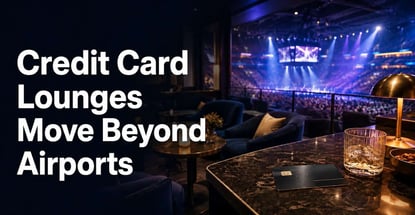
Credit card companies are taking the airport lounge far beyond the terminal.
American Express, Chase, and other premium card issuers are increasingly using lounges at concerts, sporting events, and entertainment venues to give cardholders a perk they can feel — not just measure in points and credits.
That strategy may matter more as premium cards get more expensive. Some consumers pay high annual fees for the privilege of carrying certain credit cards, and issuers including American Express and Chase have recently raised fees on flagship premium cards.
American Express now charges cardholders an $895 annual fee for its Platinum Card, while the Chase Sapphire Reserve now carries a $795 annual fee. Those relatively high annual charges could have cardholders thinking twice about whether the cards are worth the cost.
But by offering lounges at popular events, card issuers may give cardholders another reason to justify those fees.
CNBC recently reported that American Express has used lounges at major U.S. music festivals, including Austin City Limits and Coachella, as part of a broader push to make card membership feel more experiential.

In past years, companies that sponsored music festivals may have been satisfied to simply have their logo plastered throughout the venue — or at least on a backdrop hanging behind the stage. However, just having robust brand visibility at an event may no longer give credit card issuers the return they want on their sponsorship investment.
Offering cardholders an experience at an event that allows them to rest and refuel — away from the chaos of the publicly accessible event grounds — may be a more memorable way for issuers to make those sponsorship dollars count.
Making Annual Fees More Palatable
The move by credit card companies to install lounges in locations people don’t typically find them helps explain why issuers are thinking beyond airport perks.
Anyone who’s ever attended a music festival on a hot and humid day knows that having the opportunity to retreat to a space that offers comfortable seating and refreshments can mean the difference between leaving early to escape the heat and sticking it out until the final act unplugs its gear.
After all, who wouldn’t want access to private lounge bathrooms and respite from the crowds filling a festival’s general admission areas? Cardholders are likely to remember which company offered them that experience the next time they consider whether a premium card is worth keeping — or applying for.
“All it takes is for one element of this bundle of rewards or perks … to swing a customer.” — Chenzi Xu, UC Berkeley
Building a lounge at a music festival or sporting event may be expensive. But for issuers that want to grow their card portfolios, the cost of installing a new lounge may be a small price to pay if it leads to strong customer retention and acquisition results.
Chenzi Xu, Assistant Professor of Economics at UC Berkeley, explained to CNBC that lounges are especially valuable when card companies offer a set of them that cardholders can access at exclusive events and other locations beyond just airports. She also shared her opinion that pop-up lounges are designed with customer acquisition in mind.
“They are meant to draw in the person who, perhaps beforehand, didn’t see the benefit of this particular card network,” Xu said. “All it takes is for one element of this bundle of rewards or perks or whatnot to swing a customer.”
From LaGuardia to Lollapalooza
The first airport lounge was opened in 1939 by C.R. Smith, who at that time served as Chairman of American Airlines, according to Business Traveller. Select customers were invited to access the lounge in what’s now known as LaGuardia Airport in New York City.
Lounges underwent many changes over the years before American Express came along and launched what it says was the first airport lounge opened by a credit card issuer in 2013 at Harry Reid International Airport in Las Vegas. That move helped turn lounges from an airline loyalty perk into a credit card selling point.
Now, consumers can find lounges at many large-scale events that aren’t anywhere near an airport terminal. Chase has recently offered lounge access to attendees at events including the music festival Lollapalooza, the PGA Tour, and the Sundance Film Festival.
Depending on card issuers’ budgets, people may start to see more of these temporary lounges at major events in the near future. But permanent lounges are also becoming increasingly common.
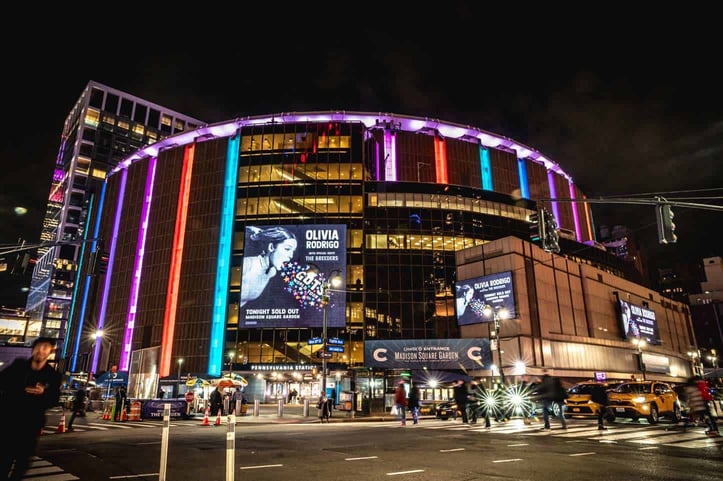
American Express has also expanded its lounge strategy beyond airports, including into select entertainment venues like London’s O2 Arena, and the company is planning a new lounge at Barclays Center in New York City. Meanwhile, Chase offers lounge access to cardholders at Madison Square Garden.
Rolling out lounges in arenas that attract numerous fans stands to put them on more consumers’ radars and, in turn, create additional demand for the credit cards that can get a person through a lounge’s doors.
As airport lounges grow more crowded, credit card companies have turned to innovation to develop new lounge concepts that can keep cardholders engaged with their brands.
The next phase of the lounge wars may not be about who has the best airport space, but who can make cardholders feel like VIPs wherever they spend their free time.
Editorial Note: Our site content is not provided or commissioned by any credit card issuer(s). Opinions expressed on CardRates.com are the author's alone, not those of any credit card issuer, and have not been reviewed, approved, or otherwise endorsed by credit card issuers. Every reasonable effort has been made to maintain accurate information; however, all credit card offer details, including information about rewards, signup bonuses, introductory offers, and other terms and conditions, is presented without warranty. Clicking on any offer on CardRates.com will direct you to the issuer's website, where you can review the current terms and conditions of the offer.
About the Author