

Writer: Gerri Detweiler


Editor: Jon McDonald


Reviewer: Ashley Fricker

Opinions expressed here are ours alone, and are not provided, endorsed, or approved by any issuer. Our articles follow strict editorial guidelines and are updated regularly.
Asking for a credit limit increase should feel like a straightforward request. You may check your credit score and see a comment that a high balance is hurting your score, and you want to reduce your credit utilization ratio. Or maybe you just need to finance a large purchase.
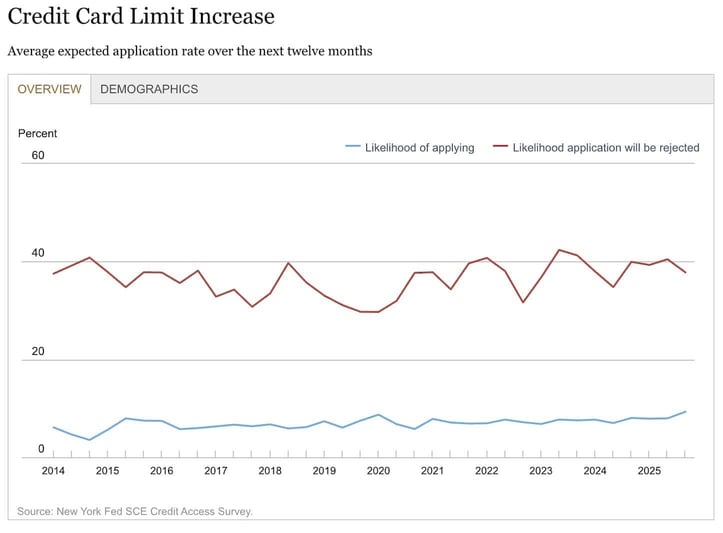
Data show that requests for credit limit increases reached a “series high”, according to the New York Fed’s latest Survey of Consumer Expectations (SCE).
But the more you need a credit limit increase, the more nervous you may be to ask. The SCE found that about 40% of consumers surveyed expect their application for a credit line increase to be rejected.
Understanding how credit limit increases work can make the process feel less intimidating. Here’s what you need to know to take away some of the anxiety.
How Often Can You Ask for a Limit Increase?
While you can ask as often as you like, it’s usually considered smart to wait until you have at least six months of on-time payment history before asking.
If you’ve made the request and been denied, set a reminder to try again in six months.
And keep in mind, you don’t have to wait until you need more credit to ask for a limit increase. If you’re planning a dream vacation or home reno where you know you’ll be charging a lot on your card, you may want to ask for more credit in advance.
It may be easier to get it before you need it, rather than waiting until your account has a high balance.
How Do You Qualify for a Higher Limit?
Credit history and income are two of the main factors most issuers consider when evaluating your limit.
If your credit limit is low due to low credit scores when you applied, but they’ve improved since then, your card issuer may automatically raise your limit without you having to ask. But if they don’t, you may need to be the proverbial squeaky wheel and ask them to take a look at your account again.
Similarly, if your income has increased since you applied, you may be eligible for a larger limit. You can often update your income online, and doing so may result in a credit limit increase. If it doesn’t, you’ll need to ask.
Your account history will also be a factor when you request a review. Paying on time and using your card regularly are two additional data points that often help you qualify for more credit.
But there is a common hurdle you may encounter when trying to get a higher limit, and that’s having high balances.
If your limits are low, your credit scores are probably lower due to high utilization. To calculate utilization, most credit scoring models compare your credit card balances to their credit limits as listed on your credit reports.
That means a card with a $1,000 limit and a $200 balance has 20% utilization.
Here’s an example of how to calculate the credit utilization ratio for someone who has three credit cards and a $10,000 overall credit limit:
| Card A | Card B | Card C | Overall | |
|---|---|---|---|---|
| Balance | $500 | $0 | $2,250 | $2,750 |
| Credit Limit | $2,000 | $3,000 | $5,000 | $10,000 |
| Utilization Ratio | 25% | 0% | 45% | 27.50% |
There’s no ideal utilization percentage, but as it creeps up above 25% to 30%, you may see your scores drop as a result.
If you pay your balance in full each month, you may want to pay your balance off a few days before your billing cycle ends. (Check your statement for the closing date.) This can lower the balance reported to the credit bureaus.
But if you have debt and can’t pay it off, this may be a catch-22: you need a higher credit limit to lower your utilization, but you can’t get one because your utilization is too high.
According to VantageScore Credit Gauge, average utilization stood at just under 31% (30.6%) for all credit tiers in November 2025.
But for those with near-prime scores of 601-660, it was 67.5% and for those with subprime scores of 300-600, it was just shy of 88%.
Those high balances are no doubt contributing to lower scores, and will make it more difficult to get approved for a higher limit.
If that’s where you’re at, you may need to focus on finding ways to pay off debt fast.
How Do You Apply for a Higher Limit?
There are a couple of ways to ask for a credit line increase. The first is to log in to your account online or through the issuer’s mobile app and look for that option.
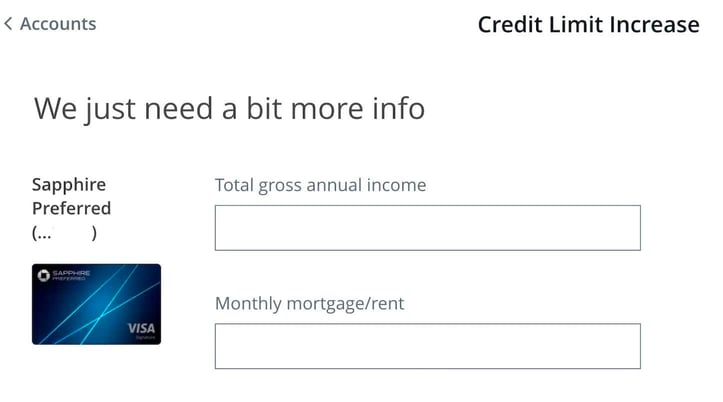
An example from Chase is below. Under account information, when you select “More”, you’ll see a link that says “Credit Limit Increase”. Click on it, and you’ll be taken to a page where you are asked for your current gross annual income and the amount of your rent or mortgage.
The other option is to call your issuer and ask. Don’t worry too much about what you’ll say. Just keep your request simple and polite; for example, “I’d like to see if I can increase my credit limit.”
If you want to point out that your income has increased, feel free to do so, but you don’t have to provide an explanation.
If you don’t get the increase, you can ask to speak to someone who can review your request in more detail.
Will It Hurt Your Credit Scores To Apply?
When card companies check your credit, an inquiry will be logged. If the issuer initiated the account review, it will result in a “soft inquiry” that doesn’t affect your credit scores.
But when you initiate the request, it may result in either a hard or soft inquiry, though soft inquiries are common in this situation.
A hard inquiry may lower your credit scores by a few points, though the effect is usually short-lived. Additionally, the inquiry will only appear on the credit report that was consulted, such as Equifax, Experian, or TransUnion.
If you have frozen your credit reports, you may need to lift those freezes first.
Card issuers don’t always check your credit reports or scores for a credit limit increase. Sometimes, they will base their decision on your account history with them instead.
Still, if you’re concerned about whether requesting an increase will result in a hard inquiry that lowers your credit scores, just ask the card issuer first whether the inquiry will be a hard or soft credit pull.
Can You Ask for Too Much Credit?
There’s a common misconception that too much available credit hurts your credit scores. While some scoring models may take available credit into account, how you manage your accounts is by far the most important factor in the most commonly used scoring models.
Here are the factors FICO takes into account when determining your credit score, and how much weight it gives each one:
| FICO Score Factor | Percentage of Your Score |
|---|---|
| Payment History | 35% |
| Amounts Owed | 30% |
| Credit History | 15% |
| Credit Mix | 10% |
| New Credit | 10% |
Payment history and utilization make up most of your credit scores, and there are plenty of people with dozens of cards and high credit scores.
Again, don’t be afraid to ask for a larger limit if you need it. (Though you may want to ask about hard inquiries first.)
What Happens if You’re Turned Down?
Overall, about a quarter (24.8%) of applications for any type of credit (not just credit cards) were rejected over the past 12 months, according to the Fed’s SCE.
If your issuer won’t budge, find out why you don’t qualify. Is it income? Credit history? Or something else?
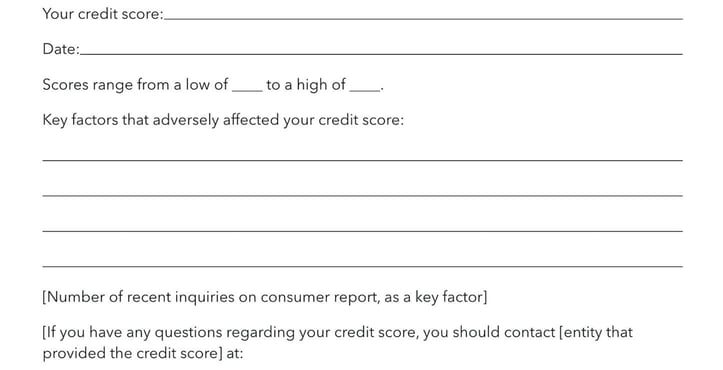
By law, the issuer must tell you in writing the main reasons for rejection. Read the adverse action notice they provide to review the reasons your request wasn’t approved.
Then, focus on addressing those reasons, but don’t feel you have to go it alone.
A credit counseling agency can help you review your finances to see where you may be able to free up funds to pay debt more effectively, and their services will likely be free or at a low cost. Some also offer free or inexpensive credit report reviews to help you identify next steps for improving your credit.
Editorial Note: Our site content is not provided or commissioned by any credit card issuer(s). Opinions expressed on CardRates.com are the author's alone, not those of any credit card issuer, and have not been reviewed, approved, or otherwise endorsed by credit card issuers. Every reasonable effort has been made to maintain accurate information; however, all credit card offer details, including information about rewards, signup bonuses, introductory offers, and other terms and conditions, is presented without warranty. Clicking on any offer on CardRates.com will direct you to the issuer's website, where you can review the current terms and conditions of the offer.
About the Author