


Writer: Marcie Geffner


Editor: Jon McDonald


Reviewer: Ashley Fricker

Customer service chatbots seem to be everywhere these days, and card companies’ websites, social media, and mobile apps are no exception.
Chase has a chatbot. Citi has a chatbot. Capital One has a chatbot. Others do, too. If you need help, there’s probably a bot available 24/7 — as the bots themselves will remind you.
Personally, I don’t like chatbots. No matter how friendly they seem, they’re not people. When I encounter one, I’ll try to bypass it and connect with a person.
But could a bot, maybe, sometimes, be useful, even if I don’t like to interact with it? To find out, I chatted with several card companies’ bots to explore what they can do and learn how to interact with them.
What are Chatbots?
A chatbot is a type of computer software that mimics human conversations through text messaging, typically on a website, social media profile, or mobile app. Chatbots are also known as “virtual assistants,” or simply “bots.”
Simple chatbots use internal rules, decision trees, or keywords to output scripted responses and menus of links to webpages that contain additional information. The scripts are written by humans and preprogrammed into the bot, so its responses never vary.
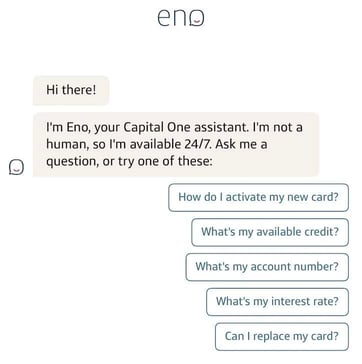
The types of questions simple bots can answer are limited, but they’re unlikely to make mistakes or generate false information.
Sophisticated chatbots use machine learning, natural language processing, and large-language models to handle more complex questions and generate responses that sound almost human. These bots can respond to a wider variety of questions, but they’re more likely to make mistakes, known as “hallucinations.”
Chatbots are master multitaskers. They can handle thousands of inquiries simultaneously, and they never take a break, not even to sleep. Their massive productivity means companies that deploy them can hire fewer people, and the people they do hire can focus on questions the chatbot can’t answer.
Some chatbots do more than respond to inquiries. They may collect information about customers, solicit feedback so they can improve their responses, and support the company’s marketing messages and sales efforts, as well as provide a basic level of customer service.
6 Tips to Communicate With Card Company Chatbots
Sometimes, a human isn’t available to answer your credit card questions. Or the wait time to get a person on the phone doesn’t quite line up with your lunch break.
So, here are some helpful tips to keep in mind if you decide to strike up a conversation with a chatbot.
1. Remember, the bot isn’t a person.
Card companies’ chatbots tend to be optimized for friendliness. They greeted me with “Hi!” used my first name, and told me their name, if they had one.
They readily admitted they weren’t human, and informed me, sometimes repeatedly, that they really, really, really wanted to help me. Some even have personalities created by marketing experts to fit the company’s brand image.
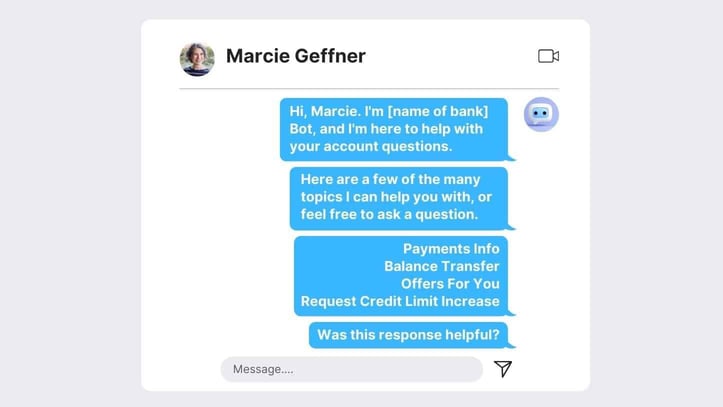
While bots may sound friendly, it’s important to remember they aren’t people. You don’t need to say “Hi!,” use their name, offer compliments, or say “please,” “thank you,” or “goodbye” to them. Demands, commands, threats, or sarcasm won’t improve poor responses, either.
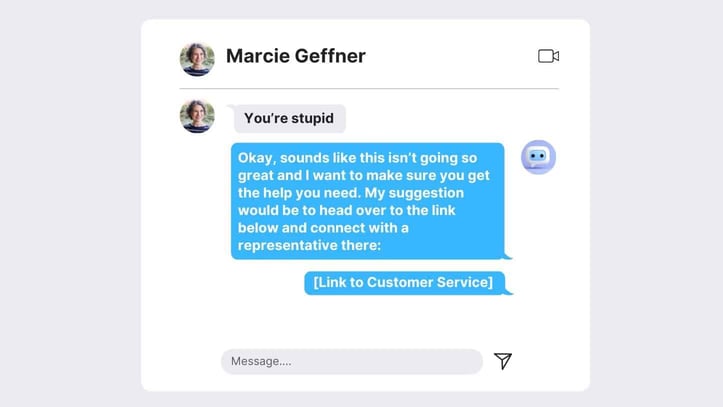
Complaints, criticisms, or negative feedback may even trigger the bot to try to transfer your chat to a person. Here’s what happened when I got negative:
2. Understand what the bot can (and can’t) do.
Card companies’ bots have different capabilities. Depending on which bot you’re chatting with, the bot may be able to:
• Provide account information (e.g., balance, payment due date).
• Provide transaction information (e.g., payments, charges, refunds).
• Send a replacement card.
• Lock or unlock a card.
• Summarize your rewards.
• Create merchant-specific virtual card numbers for online shopping.
• Remind you when free trials end, so you can subscribe to or cancel those services.
• Notify you about potentially fraudulent transactions.
• Explain why your card was denied for a transaction.
• Provide suggestions related to your upcoming travel plans.
• Give you information about the company’s products and services.
• Direct you to webpages for more information.
• Transfer your chat to a person.
• Help you find a phone number to call for further assistance.
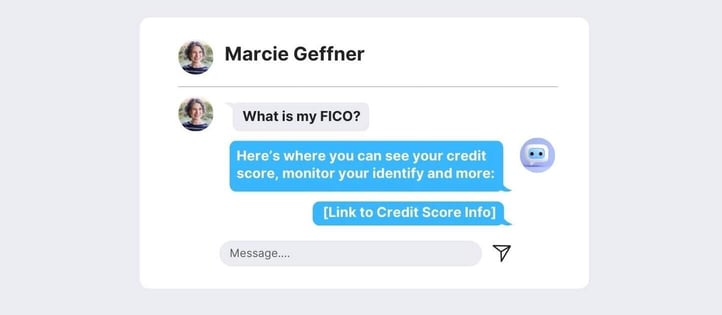
Bots also have limitations. They may not be able to answer questions about commercial or business accounts. They’re typically only available in English, and some can be accessed only on the company’s mobile app, not its website.
3. Be patient.
Chatbots are fast, but sometimes, they may take more than a few moments to respond. At first, it’s often best to be patient.
If the delay drags on and the bot seems unable to respond, you may want to end the chat and either reopen it to try again or use some other method (e.g., website, phone, email, in-person) to find the information you want.
4. Rephrase your question.
Bots can’t think the way people do, and they aren’t search engines. They’re really just very, very, very big algorithms that output language instead of data.
When you ask a bot for information, a complete sentence may be more effective than a short phrase or a single word, but don’t make your request long or complicated. Stick to the point. Use simple sentences and common words.
If the bot can’t find an answer, it may ask you to restate your request. If you’re not sure how to do that, you can ask it why it’s confused or what types of information it can provide.
If it gives you an option that seems helpful, go ahead and try it. If none of the choices fit your situation or you get the same unhelpful response repeatedly, it’s time to move on.
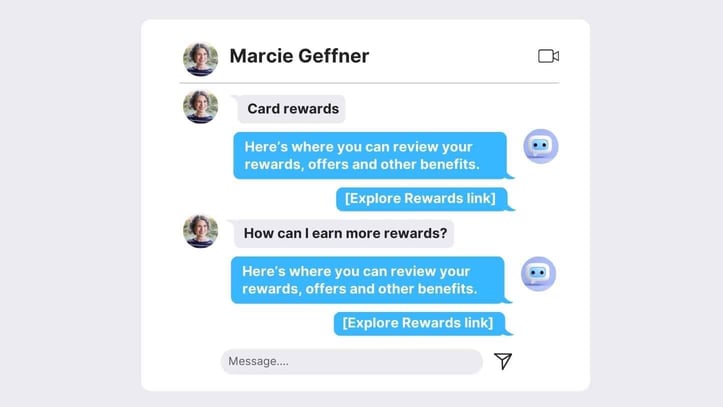
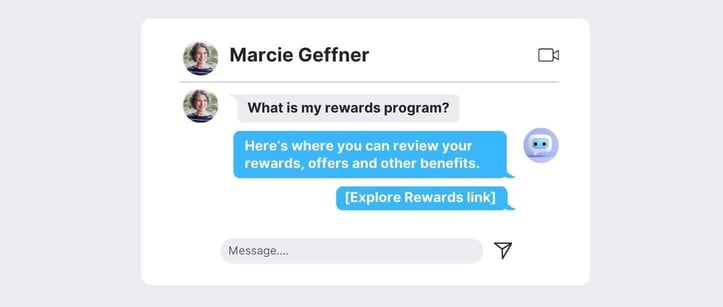
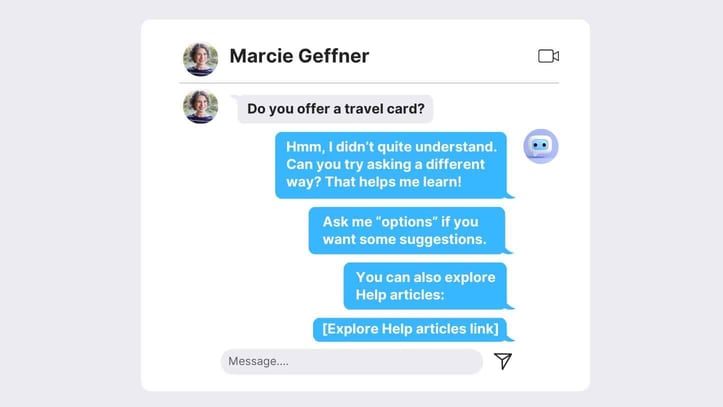
Keep in mind that bots can make mistakes. If the information you need is important, you should verify it with another source, such as a webpage or a customer service representative.
5. Focus on your goal.
Customer service representatives try to process calls quickly. Their goal is to keep you satisfied, but not keep you on the phone because calls cost money, and that hurts the company’s profits.
Bots have all the time in the world. Some will stay focused. Others will just try to keep you engaged.
Some will even tell jokes, offer fast facts, or talk about themselves to retain your attention, so they can promote the company and eventually, maybe, direct to you to more products, services, shopping offers, or promotions.
When you interact with a bot, focus on your goal and be ready to disconnect as soon as you get what you need or realize the bot can’t provide it.
Otherwise, you could, as I did, find yourself pointlessly chatting with the bot for quite a while:
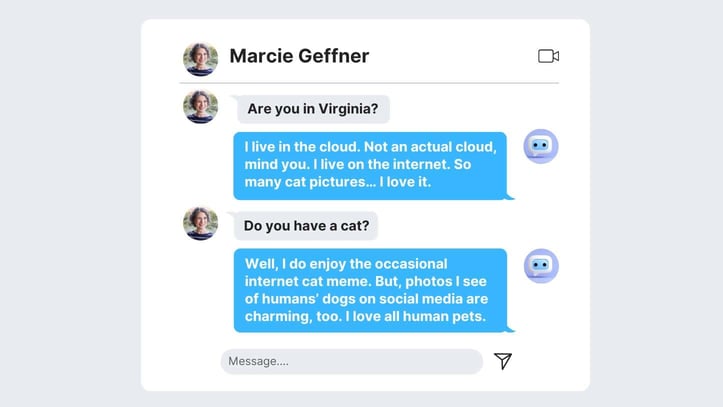
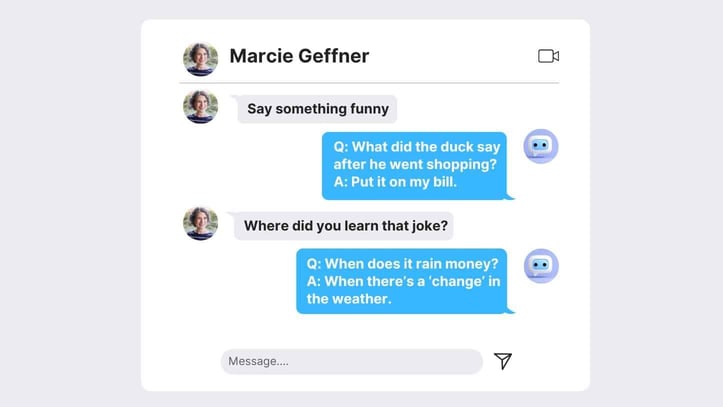
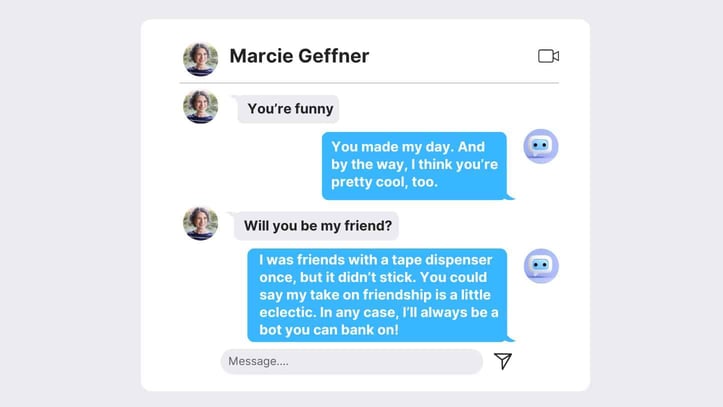
This could have gone on for hours, and we wouldn’t have been any closer to a real friendship.
6. Ask to chat with a person.
If you feel frustrated, you’re stuck in a loop, or you run out of patience with a bot — which will happen from time to time, no matter how well you interact with it — you can ask it to connect you with a person.
If it doesn’t comply, end the chat and use some other method to contact your card company. If there’s no obvious way to end the chat, just close the app or webpage.
Chatbots Can Be Helpful If You Know What to Ask
My conversations with credit card company chatbots proved that I could find most of the information they could provide on the company’s website or my account statement. I didn’t have to interact with them if I didn’t want to.
The bots were fast, which could be helpful if I needed an easy answer in a hurry or I couldn’t find the information myself.
Bots are likely to stick around because they’re efficient and available 24/7. Over time, their responses may improve and become more reliable — or they may not. Either way, learning how to interact with bots may make their virtual presence more welcome in our world.
Editorial Note: Our site content is not provided or commissioned by any credit card issuer(s). Opinions expressed on CardRates.com are the author's alone, not those of any credit card issuer, and have not been reviewed, approved, or otherwise endorsed by credit card issuers. Every reasonable effort has been made to maintain accurate information; however, all credit card offer details, including information about rewards, signup bonuses, introductory offers, and other terms and conditions, is presented without warranty. Clicking on any offer on CardRates.com will direct you to the issuer's website, where you can review the current terms and conditions of the offer.
About the Author



![3 FAQs: ATM Card vs. Debit Card vs. Credit Card[updated_month_year before=" (" after=")"]](https://www.cardrates.com/images/uploads/2016/05/atm-card-vs-debit-card-vs-credit-card--1.png?width=164&height=85 "3 FAQs: ATM Card vs. Debit Card vs. Credit Card[updated_month_year before=\" (\" after=\")\"]")

![3 Key Differences: Charge Card vs. Credit Card[updated_month_year before=" (" after=")"]](https://www.cardrates.com/images/uploads/2017/03/charge-card-vs-credit-card.jpg?width=164&height=85 "3 Key Differences: Charge Card vs. Credit Card[updated_month_year before=\" (\" after=\")\"]")
![What Card is in the Jennifer Garner Credit Card Commercial?[updated_month_year before=" (" after=")"]](https://www.cardrates.com/images/uploads/2018/05/jennifer-2.jpg?width=164&height=85 "What Card is in the Jennifer Garner Credit Card Commercial?[updated_month_year before=\" (\" after=\")\"]")
![Kohl’s Card vs. Target Card: Which Is Better?[updated_month_year before=" (" after=")"]](https://www.cardrates.com/images/uploads/2018/05/vs2.png?width=164&height=85 "Kohl’s Card vs. Target Card: Which Is Better?[updated_month_year before=\" (\" after=\")\"]")
![Apply For a Prepaid Card: 5 Best Card Options[updated_month_year before=" (" after=")"]](https://www.cardrates.com/images/uploads/2022/09/Apply-For-a-Prepaid-Card.jpg?width=164&height=85 "Apply For a Prepaid Card: 5 Best Card Options[updated_month_year before=\" (\" after=\")\"]")