

Writer: Lynn Cadet


Editor: Ashley Fricker


Reviewer: Adam West

We deploy a step-by-step methodology to each piece of research we publish to ensure our studies offer complete coverage and meet our rigorous editorial standards.
Key Takeaways
-
A recent CardRates.com survey reveals that 76% of residents across the U.S.’s 11 host cities say life has gotten more expensive since the tournament arrived.
- 43% of residents surveyed in World Cup host cities say they are now spending an extra $100 or more per month since the tournament began.
- Groceries (33%) are the number one cost affecting residents’ budgets, showing that the “World Cup tax” is showing up at checkouts, not just bars, restaurants, or hotels.
- Nearly a third (30%) of residents are covering extra costs with their credit cards.
- More than half (54%) of the residents say higher prices haven’t stopped them from going out during the tournament.
For FIFA™ World Cup host cities, the tournament has brought excitement, an influx of tourist dollars, and a major economic boost. But residents living in these cities are also experiencing a far less charming World Cup side effect: higher costs.
A recent CardRates.com survey reveals that 76% of residents across the U.S.’s 11 host cities say life has gotten more expensive since the tournament arrived. And these inflated costs aren’t just affecting bar tabs and dinner bills; they’re also impacting everyday essentials.
Price increases aren’t the biggest surprise. What’s more revealing is where residents say they’re feeling them most — and how they’re paying for them.
For Many Residents, the Added Costs Are Adding Up Fast
Hosting the World Cup has its benefits: a surge in visitor spending, a revenue boost, and even a dating boom. But for residents of host cities, the fringe benefits also come with a personal price tag.
For 3 in 4 host city residents surveyed, the cost of daily life has climbed since the tournament began. And for a meaningful share, this price increase isn’t just a minor bump.
One in 10 residents said their monthly expenses have increased by $300 or more since the sporting event began, while another 43% said they now spend an extra $100 per month on top of normal expenses.
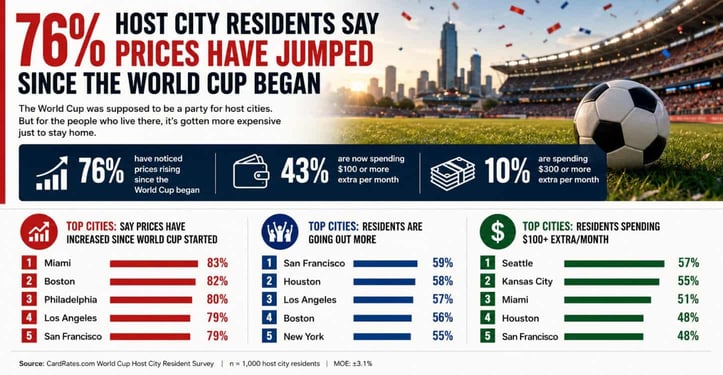
The problem isn’t just that prices are increasing; it’s the extent of the increase. Our results show that residents in host cities are facing major price hikes in monthly expenses at a time when financial pressure is already high for Americans.
It’s Not the Bar Tab — It’s the Grocery Bill
While online narratives may point to tourist-driven price increases for bar tabs and hotel accommodations during the World Cup, our findings show that inflation is also impacting something far less tourism-related.
When residents were asked which World Cup-related cost had hit them hardest, groceries edged out nightlife and dining for respondents:
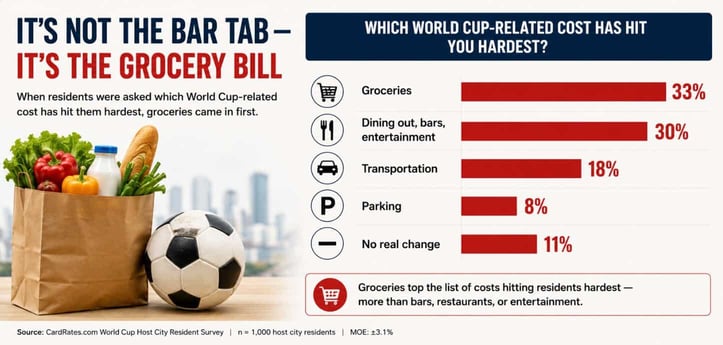
Residents may have expected to budget more for entertainment during the tournament. Instead, many say rising grocery costs have become the biggest surprise, and those everyday expenses are prompting some to rely on credit cards to bridge the gap.
Nearly One-Third Are Putting the Extra Costs on Credit Cards
When asked how they were financing the extra costs, this is how respondents answered:
- Cutting back on other spending: 31%
- Putting costs on a credit card: 30%
- Dipping into savings: 20%
- Picking up extra hours/a side gig: 7%
While residents reported higher budgeting rates, they were nearly equally likely to say they were using credit cards to cover the higher costs.
Credit cards were a common fallback across demographics. Lower-income households (30.1%) used credit cards at a similar rate to higher-income households (27.3%), suggesting that credit use is a coping mechanism across income levels, not just for discretionary spending.
But even as grocery bills climb at home, that hasn’t necessarily kept residents off the streets during the tournament.
Rising Costs Have Not Kept Residents Home
Despite rising costs at the grocery store and beyond, more than half of host city residents say they’re going out as much or more than before the tournament began.
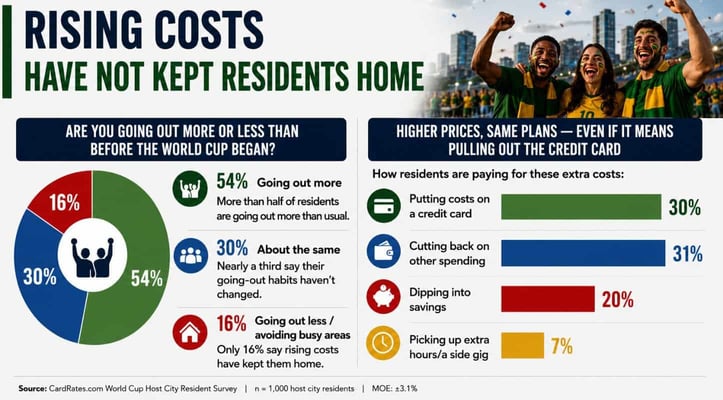
Here are the cities where residents are most likely to go out more, despite high costs:
- San Francisco: 59%
- Houston: 58%
- Los Angeles: 57%
- Boston: 56%
- New York: 55%
These results suggest that higher prices aren’t exactly impacting people’s plans during the tournament. For most, the excitement has outweighed the added expense.
Higher prices haven’t kept residents home. Most say the thrill of hosting the world’s biggest sporting event is worth the extra cost, even if their wallets disagree.
Methodology
This survey was conducted among 1,000 U.S. adults living in the 11 metro areas hosting 2026 FIFA World Cup matches, including Atlanta, Boston, Dallas, Houston, Kansas City, Los Angeles, Miami, New York/New Jersey, Philadelphia, San Francisco Bay Area, and Seattle. Conducted via an online panel, the overall margin of error is approximately ±3.1% at 95% confidence.
Margins of error are larger for individual metro areas due to smaller sample sizes. Crosstabs by metro area, income, and demographic group are available upon request.
For media inquiries, please reach out to catherine@cardrates.com.
Editorial Note: Our site content is not provided or commissioned by any credit card issuer(s). Opinions expressed on CardRates.com are the author's alone, not those of any credit card issuer, and have not been reviewed, approved, or otherwise endorsed by credit card issuers. Every reasonable effort has been made to maintain accurate information; however, all credit card offer details, including information about rewards, signup bonuses, introductory offers, and other terms and conditions, is presented without warranty. Clicking on any offer on CardRates.com will direct you to the issuer's website, where you can review the current terms and conditions of the offer.
About the Author